-
FORSIDE

- Blog
Gedser Fuglestation Blog
Her på Gedser Fuglestations blog bringes korte nyheder i dagbogsformat om hændelser på fuglestationen.
Welcome back, female blackcap!
Ringmærkningen: Typically, the morning at the bird station begins around an hour before sunrise. Most of us have made it to the dining table and are enjoying the first coffee / tea and are struggling to open our eyes. Then, the first question of the day is always: “How’s the weather looking now?”, and each of us look at our own favorite weather service. The weather seems rather difficult to predict in Gedser, a place surrounded by water on almost all sides. So, naturally, each weather service suggests something different. Today, the rain was supposed to start at 08:00 or 10:00 or 12:00 or even later, depending on who you asked.
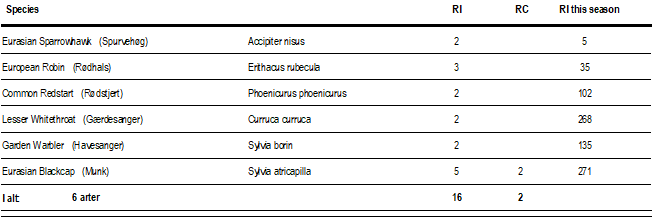
So, we crossed our fingers and prayed to the weather gods for rain later in the day. The nets went up (not all, but those mostly sheltered by the wind – a step into the right direction) and we caught an European robin (Erithacus rubecula) in the first five minutes. Otherwise, the day was filled with more robins, a handful of Common redstarts (Phoenicurus phoenicurus), Lesser whitethroats (Curruca curruca), Garden warblers (Sylvia borin), and Eurasian blackcaps (Sylvia atricapilla).
Most memorable was a recapture, the ring number starting with letters we did not recognize as ours from this year. Sure enough, the beautiful female blackcap was ringed here at the bird observatory in 2024, where it was marked as a juvenile. Moments like these remind us why ringing is necessary – to understand bird migration patterns and their behavior in the least invasive way possible. This individual, most likely born in this very garden, migrated as far as Africa, only to spend its second summer in the very place it originated from.
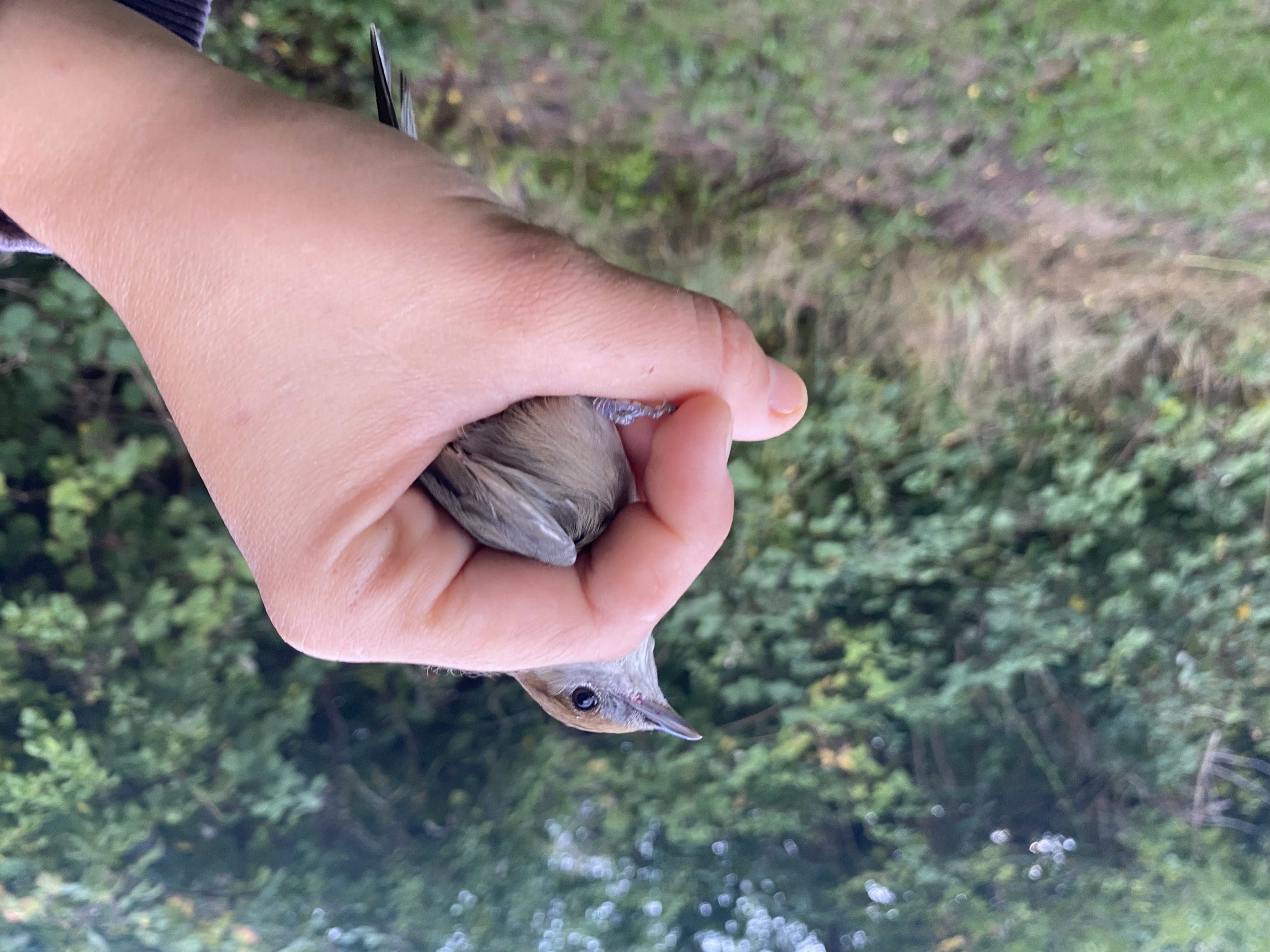 Our bird of the day – a recapture of a female Eurasian blackcap (Sylvia atricapilla), ringed in 2024.
We caught two more Eurasian sparrowhawks (Accipiter nisus), a female and a male individual. This species has been filling the skies around the station more and more these days and it was only a mater of time before they filled our nets as well.
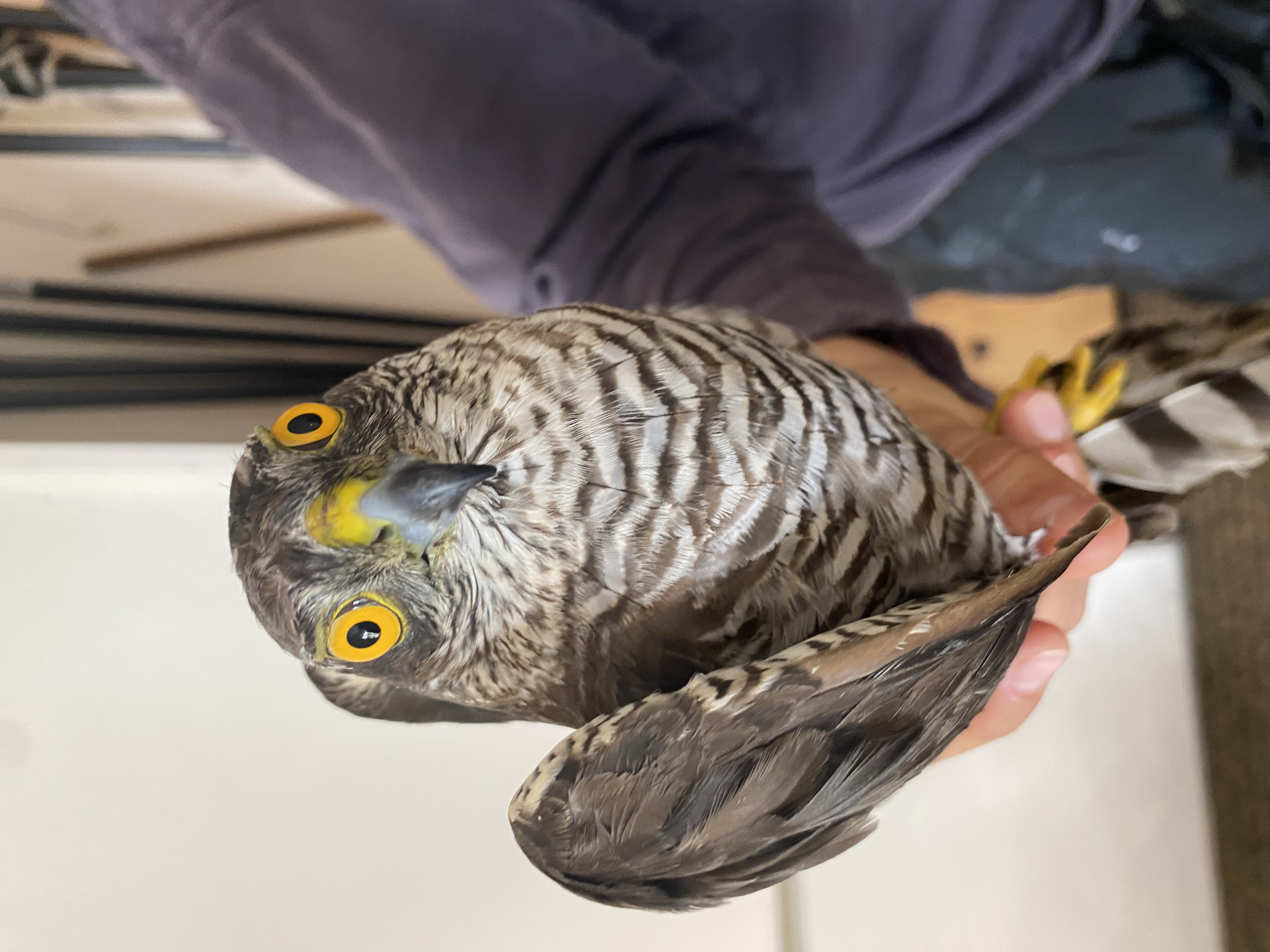 A female Eurasian sparrowhawk. Compared to the individuals we have caught in the past week, her size was visible greater and eyes in a deeper and darker yellow.
While the wind did not stop, the clouds parted ways and the early morning was filled with blue skies here and there. In total, we caught 18 birds of 6 different species.
[...]