-
FORSIDE

- Blog
Gedser Fuglestation Blog
Her på Gedser Fuglestations blog bringes korte nyheder i dagbogsformat om hændelser på fuglestationen.
Completely SWALLOWed
Ringmærkningen:
Our prediction of the day was far off from what we expected. Increasingly better days after the past week of bad weather, along with low winds and cloud coverage but no rain, made for perfect conditions.
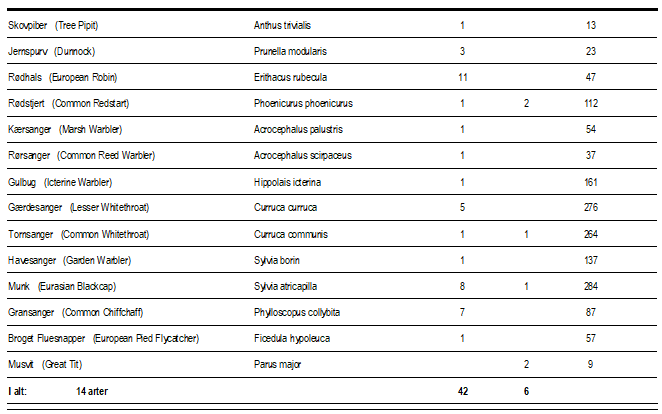
Of course, at 05:30 a.m. our hopes were high. We were able to open all nets and crossed our fingers. Whilst the first two went quite alright, several rounds brought only one, two or even zero birds at times. Overall, the day brought a mixture of European robins (Erithacus rubecula), Lesser whitethroats (Curruca curruca), Eurasian blackcaps (Sylvia atricapilla) and more. Here is a round-up of the most memorable ones! Whilst yesterday was the day for Willow warblers (Phylloscopus trochilus), today was the day for Common chiffchaffs (Phylloscopus collybita). These two species look extremely similar, but a small detail makes the differentiation easy. Willow warblers have an emargination to the 6th primary, whilst chiffchaffs have it to the 5th.
Whilst numbers are decreasing here in the garden, several Dunnocks (Prunella modularis) and Common redstarts (Phoenicurus phoenicurus) made their way into our nets.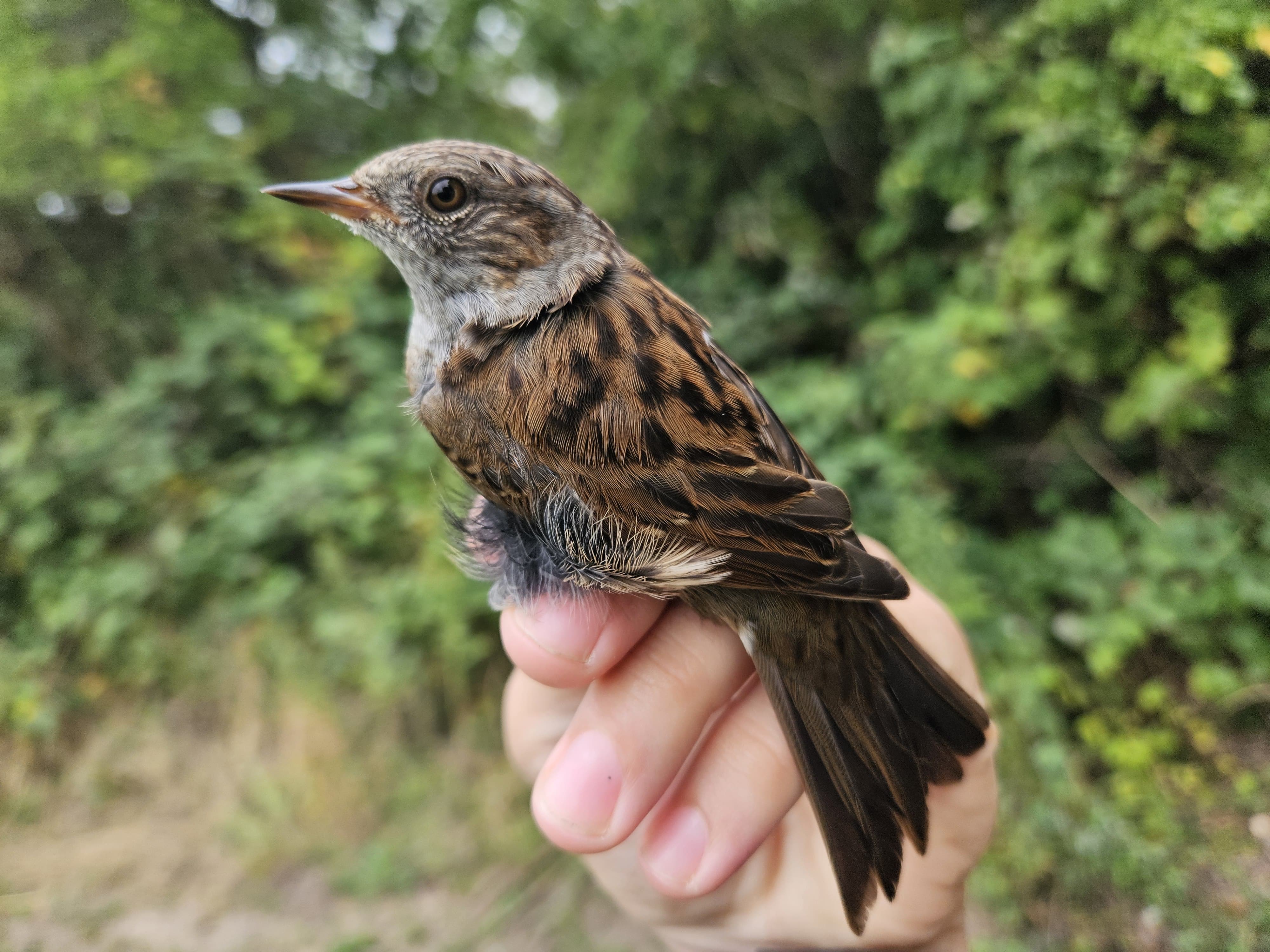 A Dunnck (Prunella modularis).
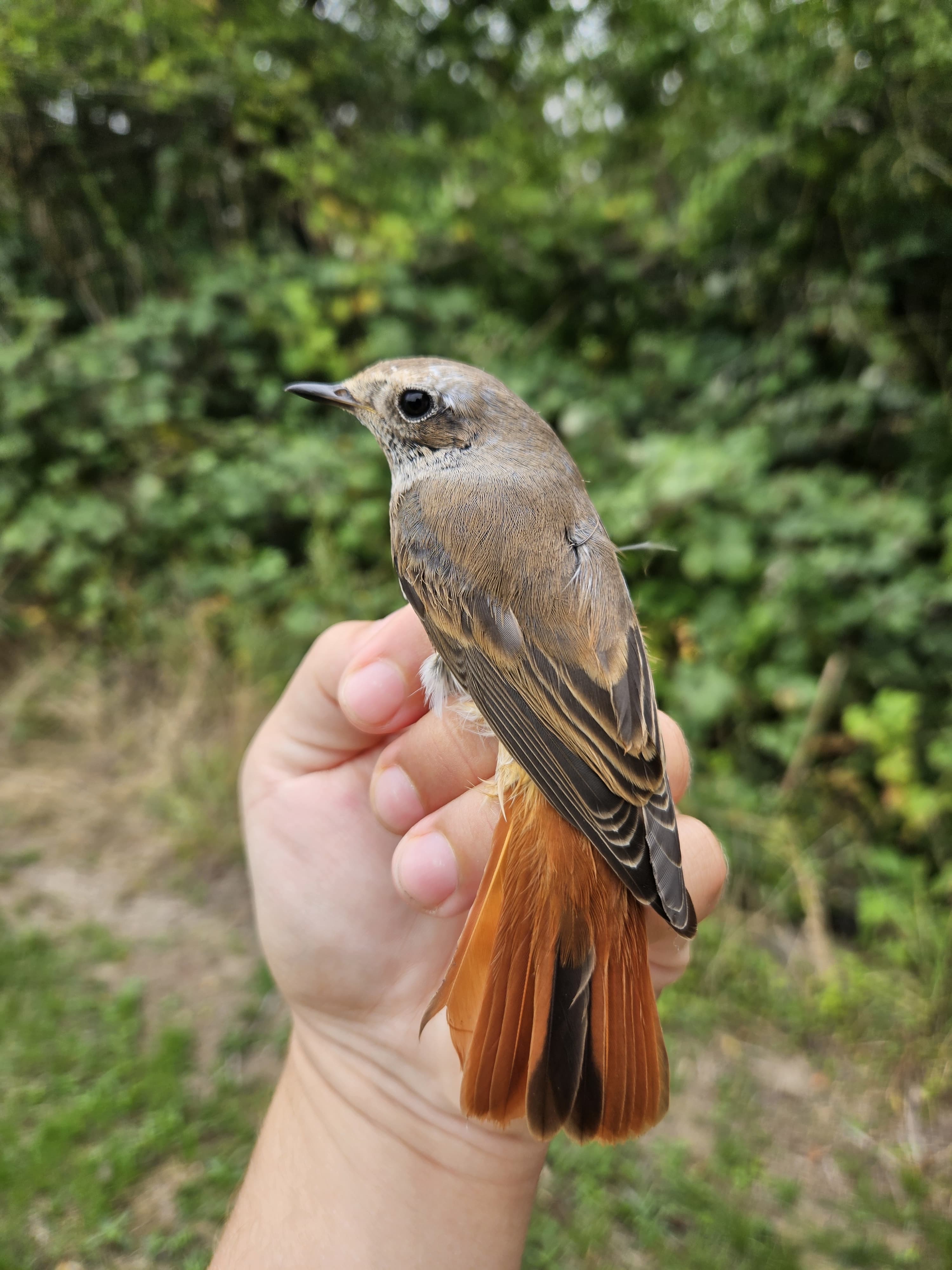 A Common redstart (Phoenicurus phoenicurus).
Although disliked by many, a personal favorite of mine are the Great tits (Parus major). Today, we recaptured two individuals. Why are they so disliked by many, you may ask. Although unexpected of such cute birds, Great and Blue tits are rather “aggressive” and like to nip at your fingers when they get the chance. So far, I’ve not had the pleasure of extracting whole flocks of these species, and my experience remains rather pleasant – if not exciting!
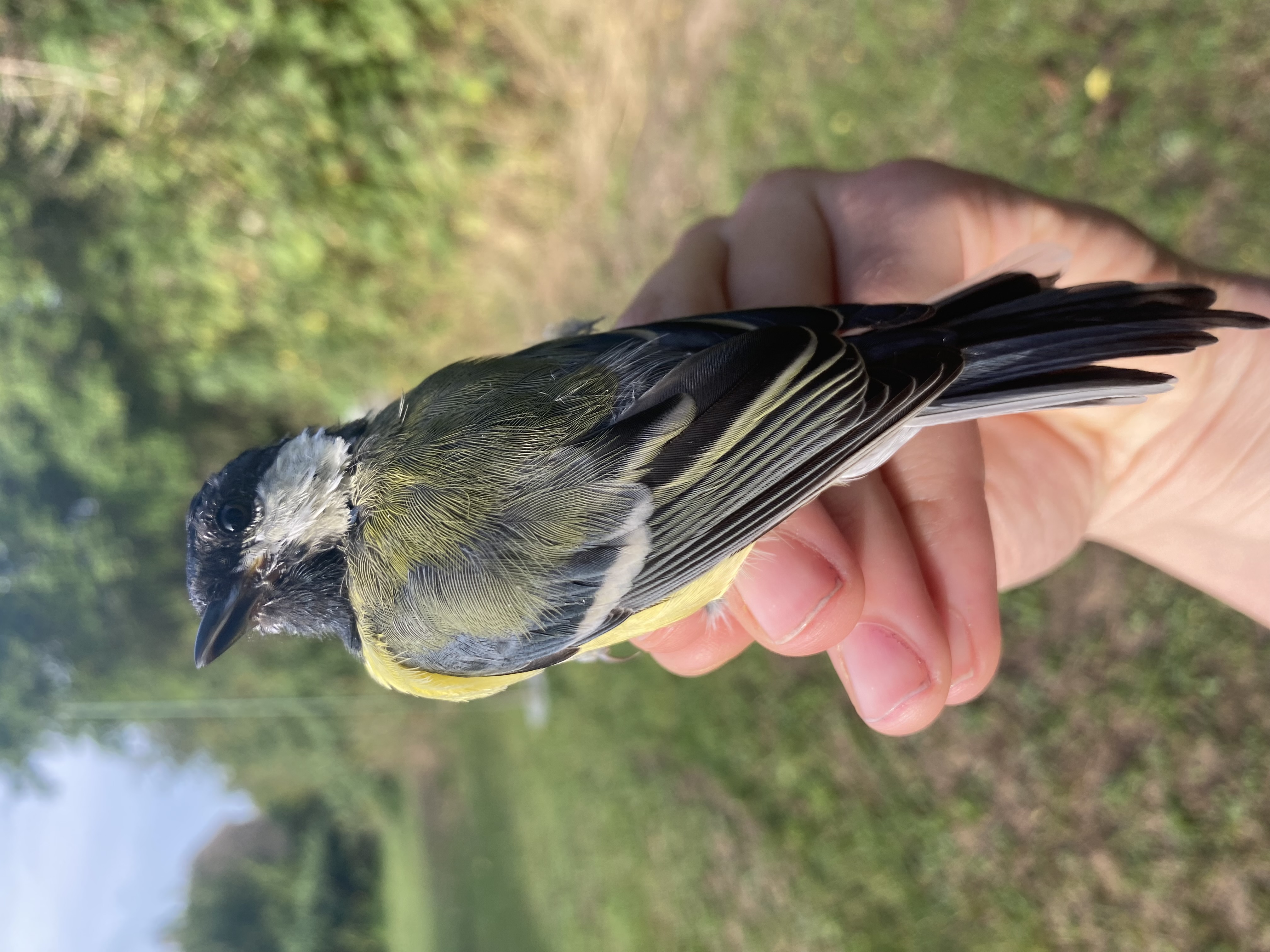 A Great tit (Parus major).
In total, we caught 48 birds of 14 species.
Trækket på Odden: This morning at the tip promised to be good, after yesterday’s incredible numbers. However, we did not expect it to become that good. The migration of Common Scoters (Melanitta nigra) continued to be good, though we did „only“ count 872 birds. A nice addition were the obligatory mixed duck flocks. It is common for ducks to travel in groups for company and protection from predators. However, they don’t seem to care whether their flocks consists of the same species as themselves. One notable group of ducks was not really big, only 19 birds. However there were several Green-winged Teals (Anas crecca), Eurasian Wigeons (Mareca penelope), Pintails (Anas acuta), Mallards (Anas platyrhynchos) and Northern Shovelers (Spatula clypeata) in this flock, which makes it five species in one small flock!
A similar problem occured in a completely different group of birds, the migrating passerines. Among the huge flocks of Barn Swallows (Hirundo rustica), the other swallow species hid in smaller numbers. It is very difficult to tell them apart only from a small glimpse and maybe a silhouette. Other migrants in the swallow flocks included some finches, Tree Pipits (Anthus trivialis), and Wagtails (Motacilla flava/alba). These occur in even smaller numbers, but are somewhat more easy to separate, because of their distictive flight styles. And, importantly, they are often heard before they are seen. Learning flight calls can be worth so much! But I have to return to the swallows quickly. We counted 5391 swallows of the three species, 5099 of them were Barn Swallows. This number is incredible and so was their migration too. It felt like a constant stream of swallows and indeed, the number equals to almost 18 swallows every minute!
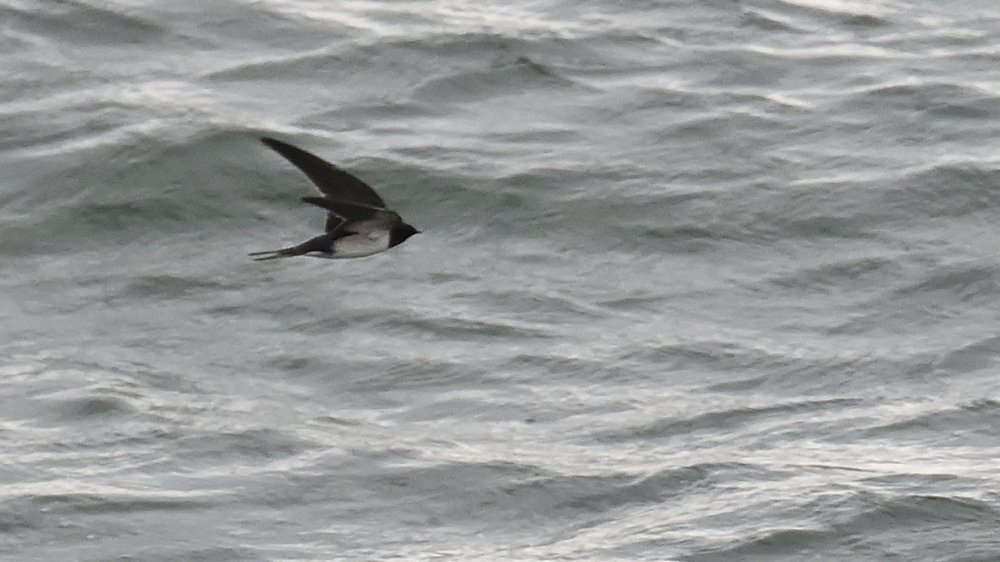 One of today’s many Barn Swallows, on its way across the Baltic Sea. Swallows migrate to southern Africa, so its journey has just started.
Not only the migration over land was good, the maritime migration was more than decent too. We recorded migration of Common Gulls (Larus canus) and Black-headed Gulls (Chroicocephalus ridibundus). These birds were interrupted by a total of four Skuas, all of which were first considered to be Arctic Skuas (Stercorarius parasiticus). However, after taking a look at the photos, two of them turned out to be Long-Tailed Skuas (Stercorarius longicaudus) instead. These birds breed in the high arctic (as do all Skuas) and we don’t see a lot of them in Gedser. It also turned out to be a lifer for me and completed the Skua trio!
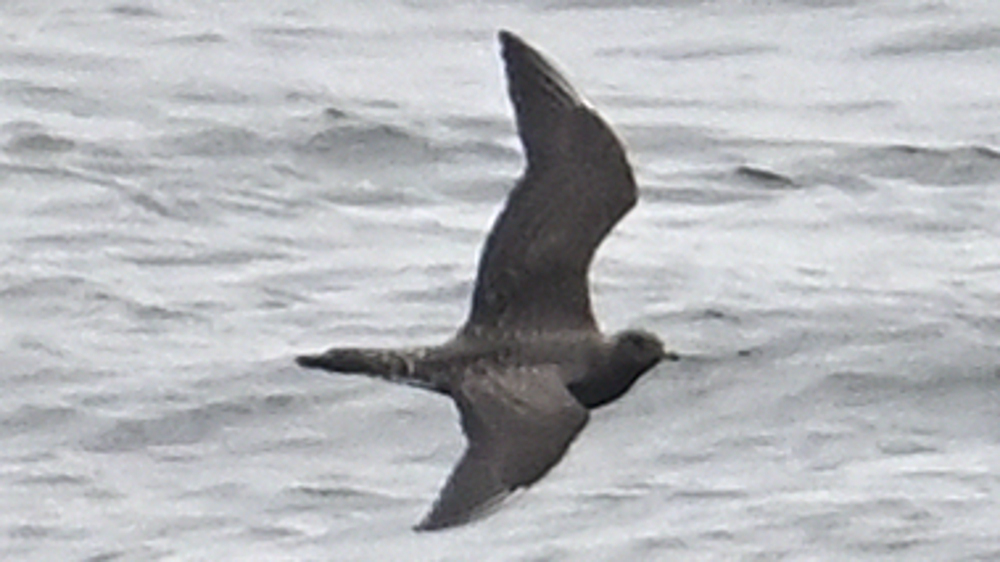 This picture allowed us to confirm the identity of one of today’s Skuas – it’s a Long-tailed Skua! The features we look out for are the amount of white in the primary feathers (very little in this bird), the shape of the tail, a very small and round head and the short bill that has a clear distinction between a paler base and a dark tip. The brown plumage of this bird also reveals its age: 1k.
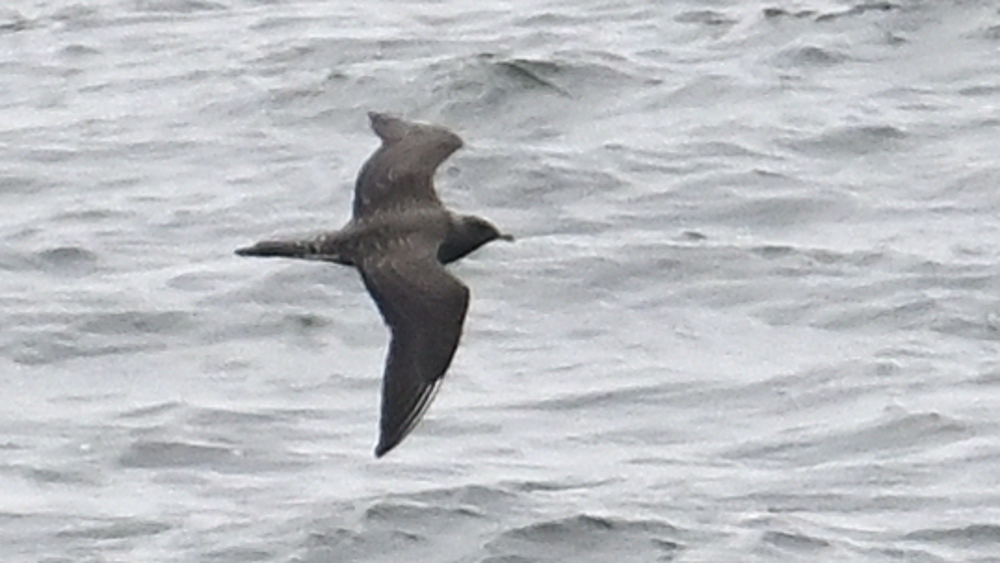
Skuas can catch their own food, but they prefer to steal it from other birds, a behaviour known a „cleptoparasitism“. Among their favorised victims are terns, that also appeared in reasonavly high numbers today. Most of them were Sandwich terns (Sterna sandwichensis), with some Common Terns (Sterna hirundo) mixed in.
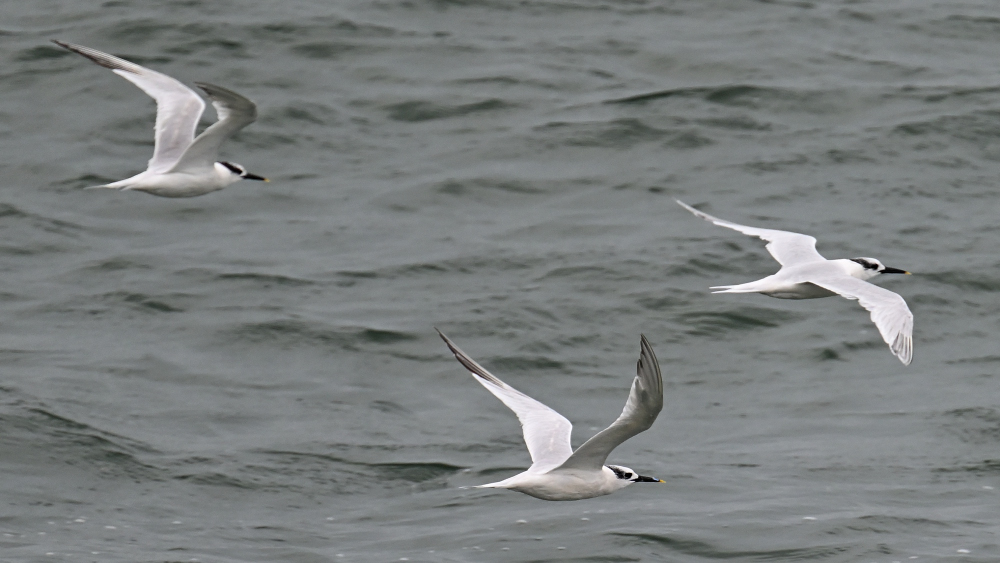 Sandwich Terns. Different from other terns, this species winters along the shores of Europe and northern Africa. It does not fly to the Antarctic, as Arctic Terns do it.
Finally, we had a surprisingly good migration of waders too. There were not many birds, however the diversity was with six species quite high. There were Golden Plovers and Grey Plovers (Pluvialis apricaria /squaterola). Though these species are always nice to see, my personal highlight was a small group of waders that first looked like another group of Dunlins (Calidris alpina). After seeing their white upper tail however, we concluded them as being Curlew Sandpipers (Calidris ferruginea), another lifer for me. This wraps up a very succesful morning at the migration count. I am looking forward to the specialties tomorrow will bring!
Fugle registreret i standardtiden: 7.658 . Arter: 44. Tællingen startet 06:01, sluttet klokken 11:01.
Se alle dagens observationer på Gedser Odde i DOFbasen.
På stationen: Hannah Schmidt, Storm Hauris Borum, Lua Koplin, Hans Lind, Ole Friis Larsen, Marek Ebert