-
FORSIDE

- Blog
Gedser Fuglestation Blog
Her på Gedser Fuglestations blog bringes korte nyheder i dagbogsformat om hændelser på fuglestationen.
Flagermus i skuret
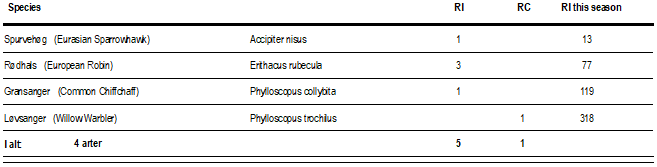
Ringmærkningen: Grundet en ordenlig omgang øv-vejr blev kun få net åbnet i morges. Vind og trusler om regn holdt fuglene i buskende og vi endte med en fangst på blot 5 fugle i standardnettene. Tre rødhals (Erithacus rubecula), en gransanger (Phylloscopus collybita) og en genfanget løvsanger (Phylloscopus trochilus).
Mens Hannah og Søren tog sig af de få net vi havde åbne, brugte Lua og jeg tiden på at reparere spurvehøg-nettene, der efter flere sæsoner er blevet møre og havde flere huller. Mens nettene var oppe og under reparation lykkedes det faktisk Lua at fange en spurvehøg - en god overraskelse på en ellers meget kedelig dag!
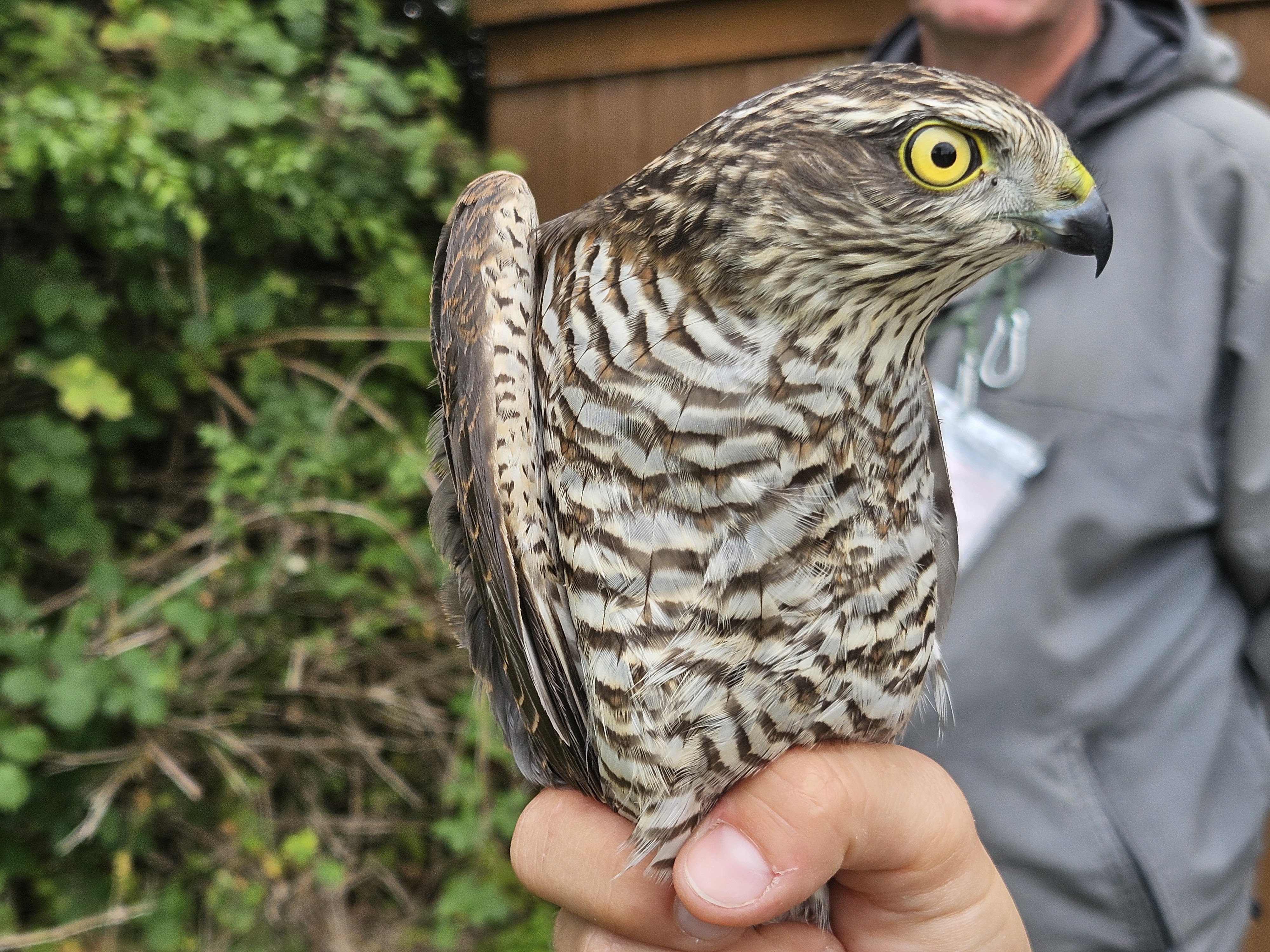
Dagens ene højdepunkt: en spurvehøg-hun. Læg mærke til de trekantede/hjerteformede tegninger på bryst og undervinge, der afslører at det er en ungfugl. Med tiden vil disse aftegninger bliver til vandrette bånd.
Vores anden overraskelse var en flagermus, der havde hængt sig til at sove i redskabsskuret, og blev vækket da vi åbnede døren. Den satte sig lige i døråbningen, så vi kunne kigge godt på den. Vi lod døren stå åben, og lidt senere havde den flyttet sig, muligvis ind under opslagstavlen hvor vi har set flere flagermus gemme sig i købet af dagen. Vi er mener at det nok er en Pippistrellus-art, men er ikke helt sikre på om det er en trold-, dværg- eller pipistrelflagermus. Vi modtager gerne bud på hvad det kan være for én!
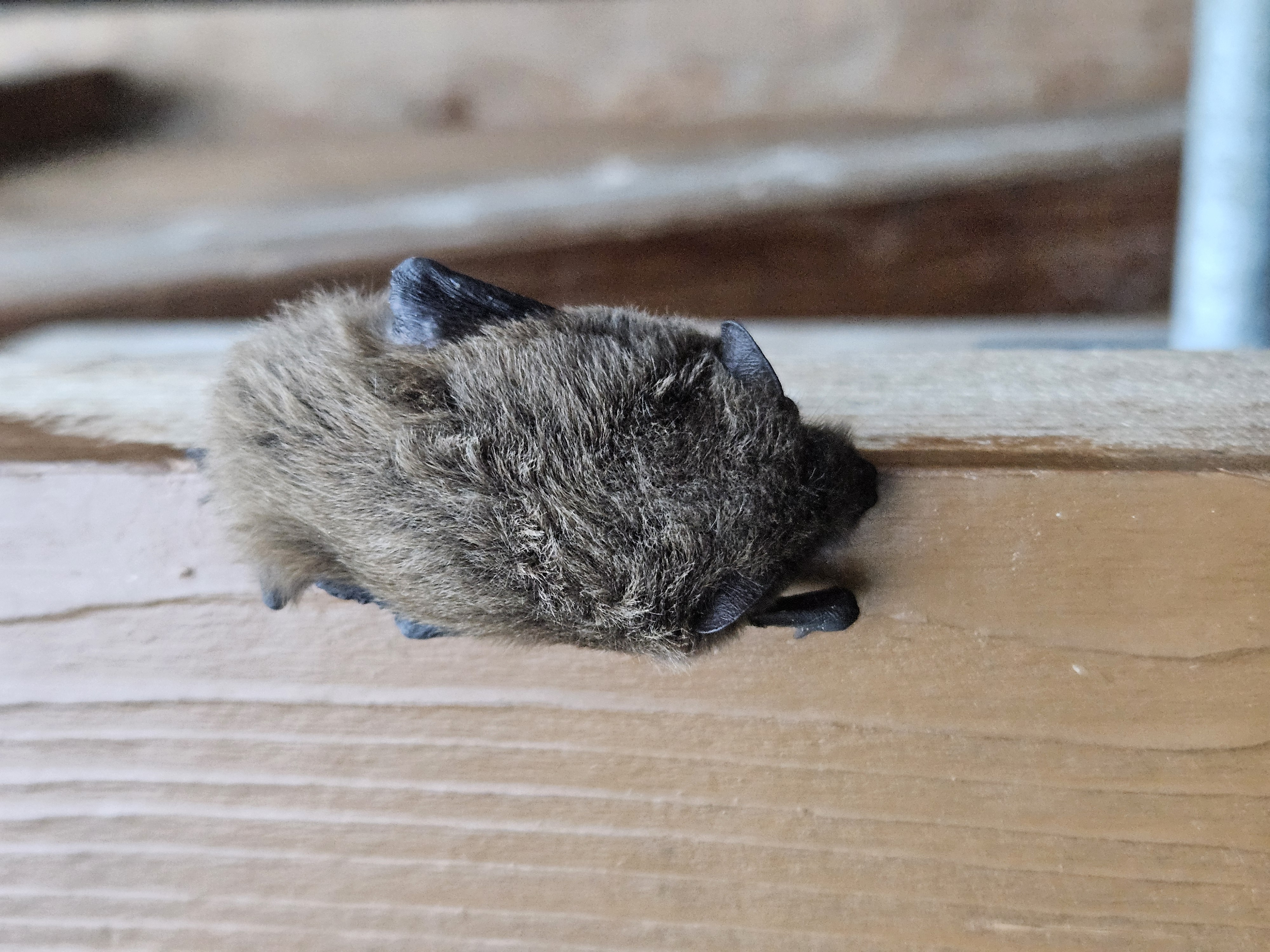
Dagens andet højdepunkt: en flagermus på døren til skuret. Vi er usikre på arten, men det var nok en Pipistrellus-art. Den var ca. 6 cm lang, ensfarvet støvet brun, relativt små afrundede ører og et ræve-agtigt trekantet hovede med en flad snude.
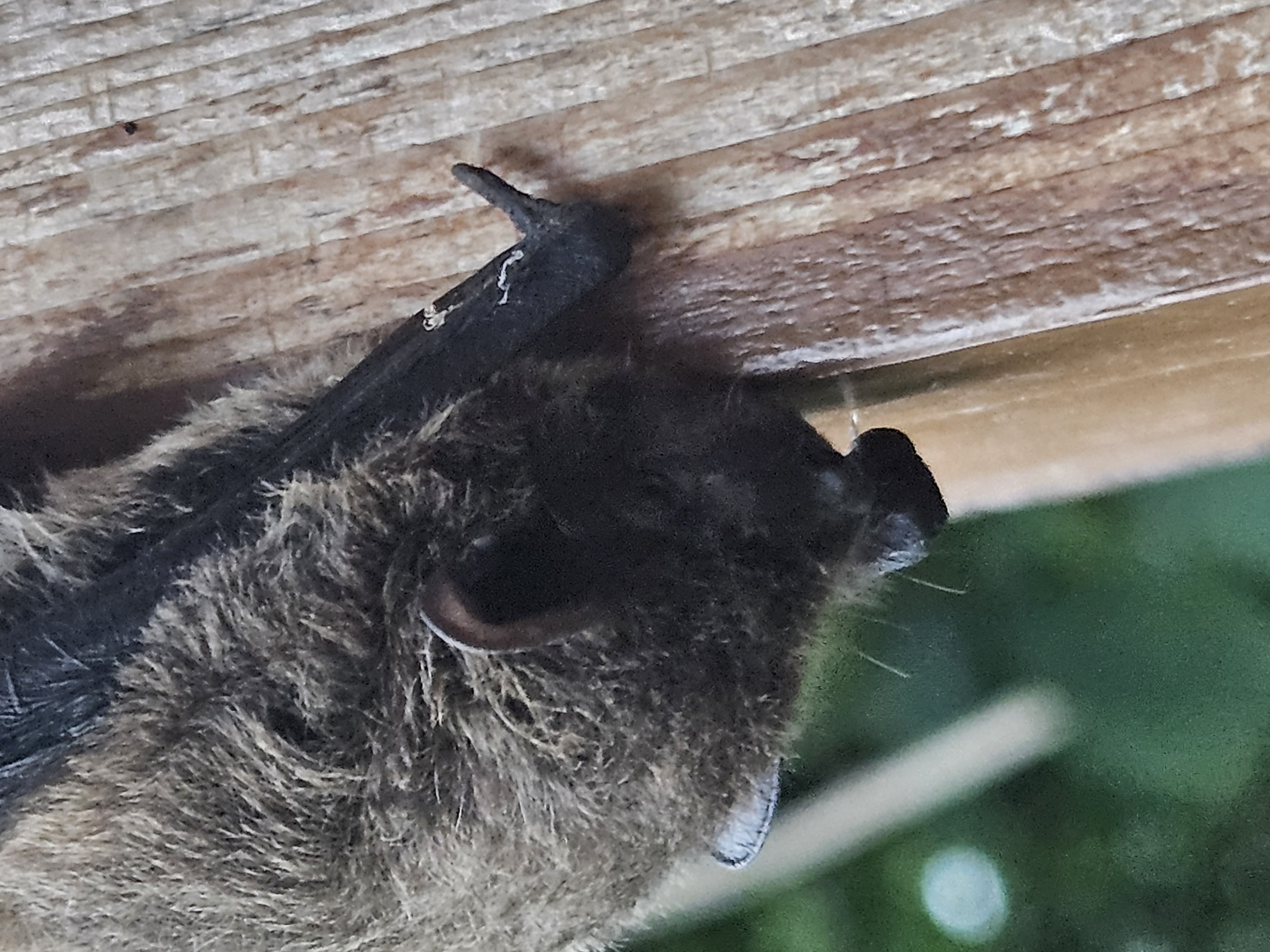
Nærbillede af flagermusens hovede. Hvilken art kunne det være?
Trækket på Odden: This morning, the sky was completely grey and it was just not getting light. Combined with quite some wind, it was not too pleasant to sit out at the tip. It must also have been unpleasant to fly as a bird, because during our first hour we only got around 50 birds. But as the wind died down and no rain fell, the birds decided to move again. As if they had to make up for the lost time, big flocks of Barn Swallows (Hirundo rustica) and House Martin (Delichon urbicum) migrated over and all around us, an amazing sight. Among the swallows was also a Common Swift (Apus apus). We always try to enjoy their sight as much as possible because you never know if there will be another one until May next year…
On the sea, the ducks woke up too. Today, mainly Common Scoters (Melanitta nigra) and Eurasian Wigeons (Mareca penelope) were seen, with a few of the others mixed in. It also was interesting to see the Common Eiders (Somateria mollissima) start moving. In a few weeks, we should get loads of them on migration. I’m looking forward to that. Joining the ducks were a few Black-throated Divers (Gavia arctica). They too should be joined soon by their smaller red-throated cousin (Gavia stellata).
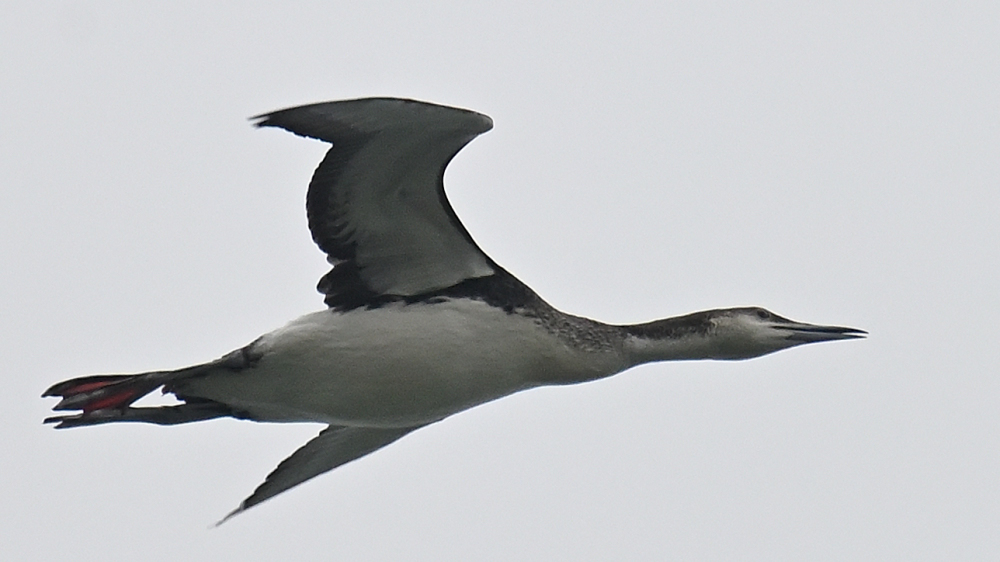
Look closely! This diver seems to be black-throated, even though there is no black throat which can only be seen in the breeding plumage. Instead, we look for the amount of white on the belly, the size and the shape of the head to separate it from the Red-throated Diver.
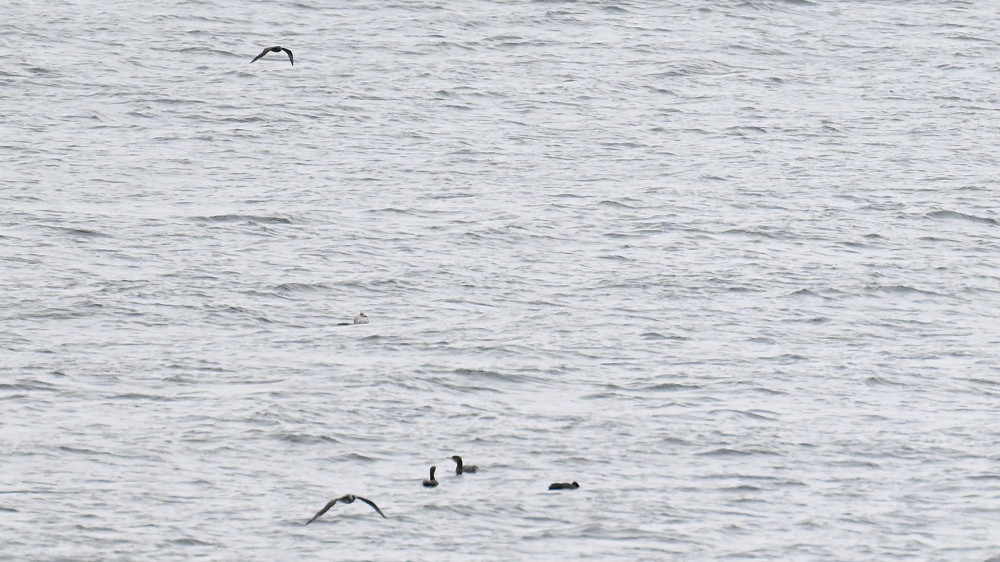
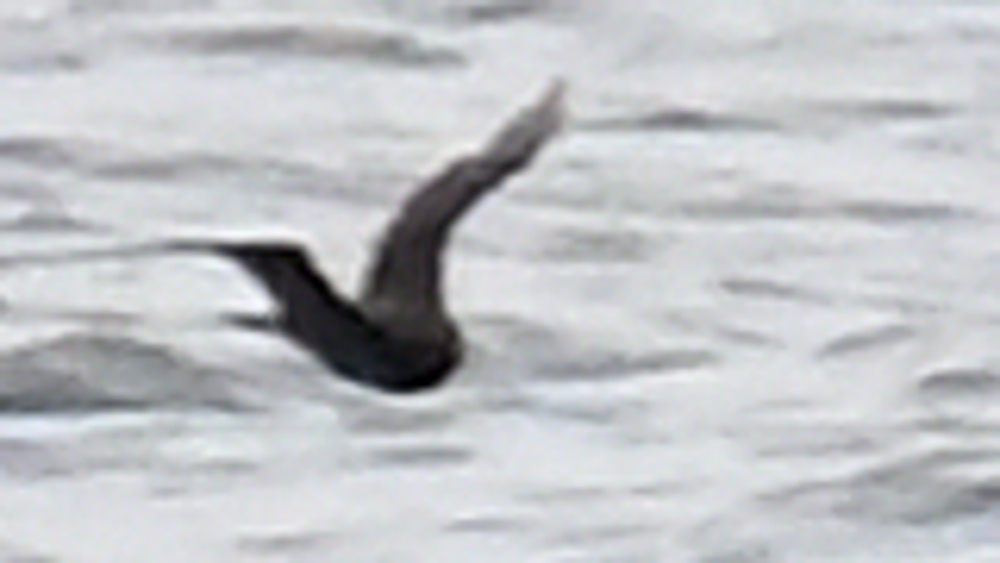
Later in the day, after the air heated up a bit, the migration of raptors increased. We had several Harriers (Circus sp.) and a few Sparrowhawks (Accipiter nisus). When on migration, these birds seem to forget everything around them and don’t care about us observers. They often come very close. One even perched on Ole’s chair for a few seconds until it flew off towards Germany. Speaking of raptorial birds, one group known for their notorious stealing behaviour made an appearance too: the Skuas. Four Arctic Skuas (Stercorarius parasiticus) flew by, one of them an 2k+ bird of the light morph. This was a pleasant change from the usually completely brown birds of this species. It was accompagnied by one of those completely brown birds which thus got very little attention. It should have, because it was a Long-tailed Skua (Stercorarius longicaudus), which we could tell afterwards based on (very bad) pictures. The „Little Skua“ (Lille Kjove) as it is called in Danish, is considerably smaller than its Arctic counterpart which can be visible in direct comparison.
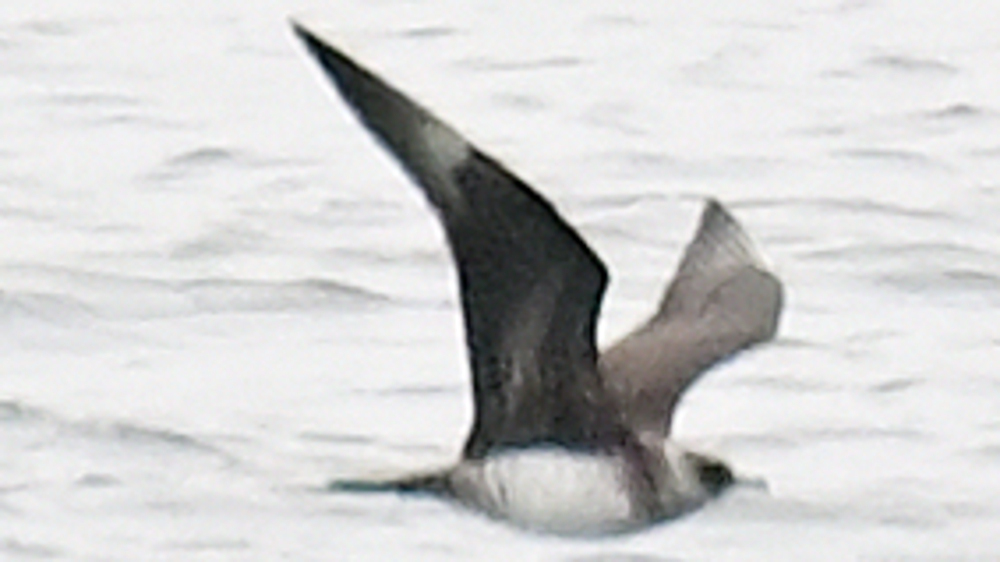
This beautiful Arctic Skua (Stercorarius parasiticus) stole all the attention from its rarer little cousin. The Long-tailed Skua was clearly smaller and more compact over the sea. It is not so easy to document, but look at the two pictures below. In one of the pictures both are visible, the smaller one in top left over the bigger Arctic Skua
Fugle registreret i standardtiden: 4.643 . Arter: 45. Tællingen startet 06:10, sluttet klokken 11:10.
Se alle dagens observationer på Gedser Odde i DOFbasen.
På stationen: Hannah Schmidt, Storm Hauris Borum, Lua Koplin, Ole Friis Larsen, Marek Ebert, Søren Mygind