-
FORSIDE

- Blog
Gedser Fuglestation Blog
Her på Gedser Fuglestations blog bringes korte nyheder i dagbogsformat om hændelser på fuglestationen.
Raptors, big and small (and the Sparrowkestrel)
Ringmærkningen:
Coming straight from Blåvand Bird Station to Gedser, I have been used to raptors (both in the nets and in the air) being relatively scarce. With only two Sparrowhawks (Accipiter nisus) being caught in the whole of the two months I just spent at Blåvand, it was quite the shock to suddenly get eight of them during standard ringing this morning here at Gedser. It was a very welcome surprise though, and as I had not handled that many Sparrowhawks before, it was also a very good learning experience, where I got to practice extracting and handling these feisty small raptors.
The other ringers and I were not the only ones who got to enjoy the Sparrowhawks, however, as Mads and Tina came at around 9 am with about 20 guests who were there to see the station. Just as they arrived, we had two Sparrowhawks, a European Robin (Erithacus rubecula), a Dunnock (Prunella modularis) and a Blue Tit (Cyanistes caeruleus) to show them, and they promtly got a brief live lesson on how to age and sex some of these birds based on size and plumage characteristics. After another round, we got an additional Sparrowhawk as well as a Common Chaffinch to showcase to the excited audience.
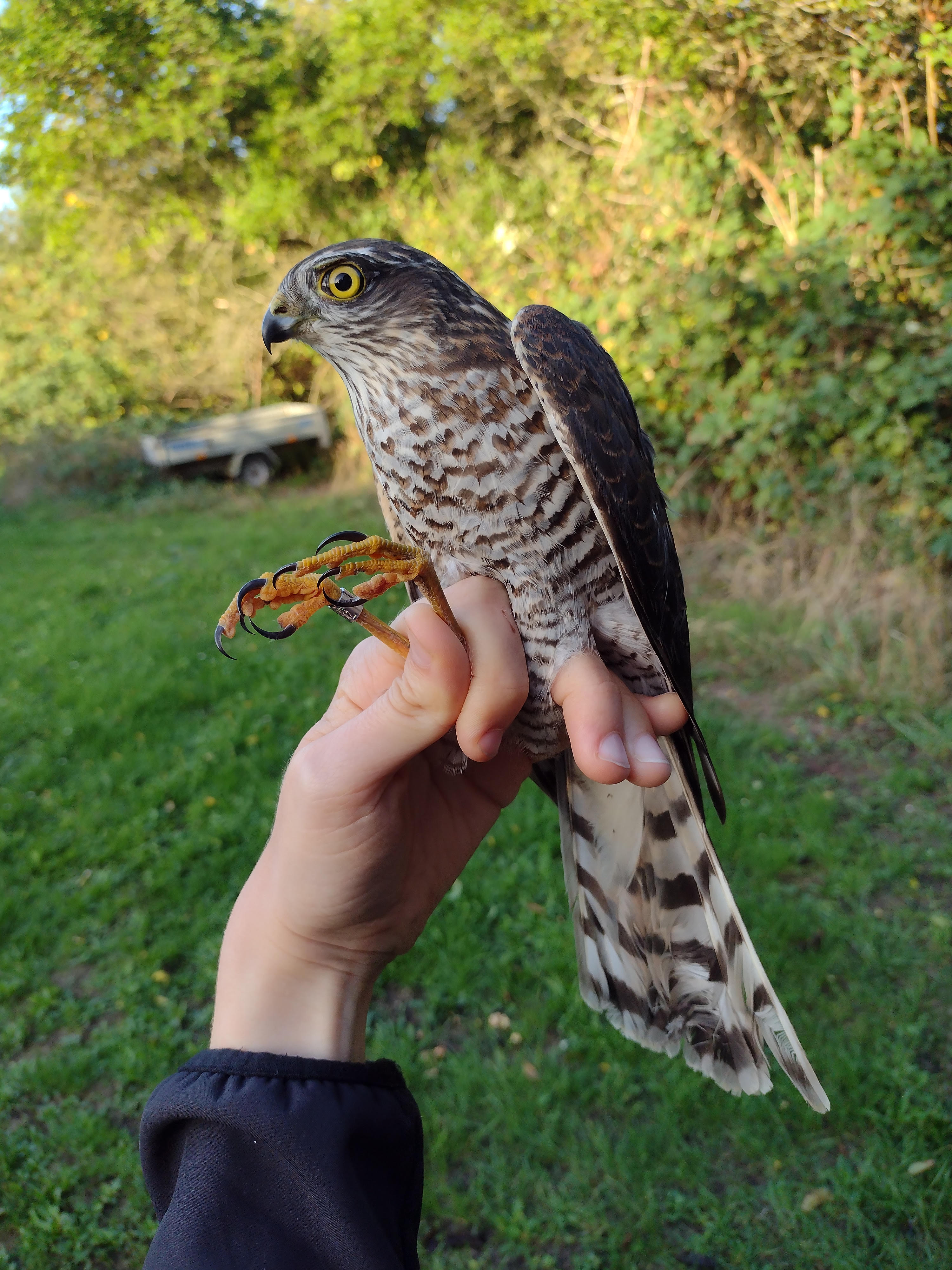
One of the many Sparrowhawks caught today. Its (relatively) small size reveals it to be a male, and the light edges to the dorsal wing coverts (the feathers on the top-side of the wing) as well as the heart-shaped bars in the chest and completely yellow eyes show that it is a young (1k) bird. In fact, all of the Sparrowhawks caught today were 1k males. Foto: Alba M. Holmberg
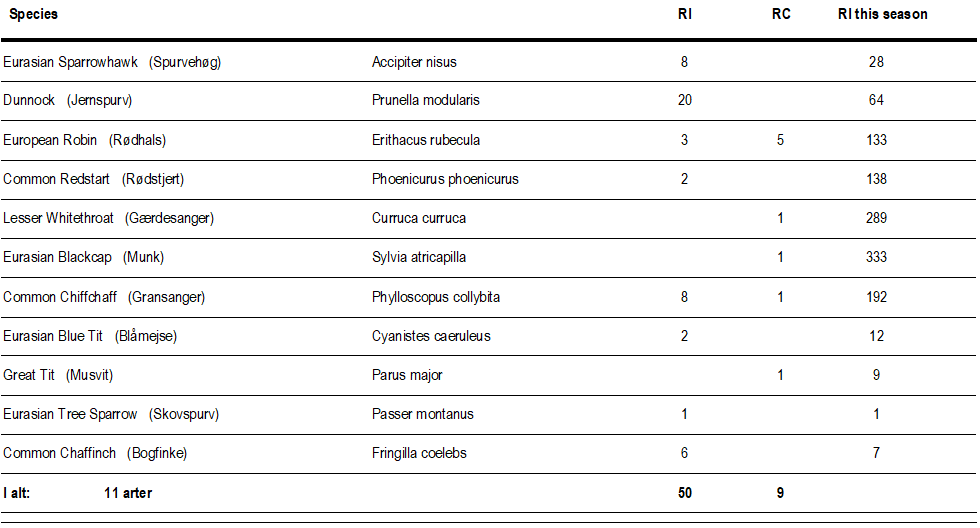
Besides the Sparrowhawks, we had a good influx of Dunnocks (relative to what we would expect with the given winds), with 20 individuals helping a lot to bring the day's totals up to the 50 ringed birds we ended up with. In addition, we got 9 recaptures, most of which were Robins, giving us 59 birds caught in total. With the winds dying down tomorrow, we're hoping to get an even more busy day :)
Today's captures:
Trækket på Odden: When Ole, Hannah and I set out to do the migration count this morning, it was still dark (of course). The darkness helped us spot a very bright speck of light in the sky - Jupiter.
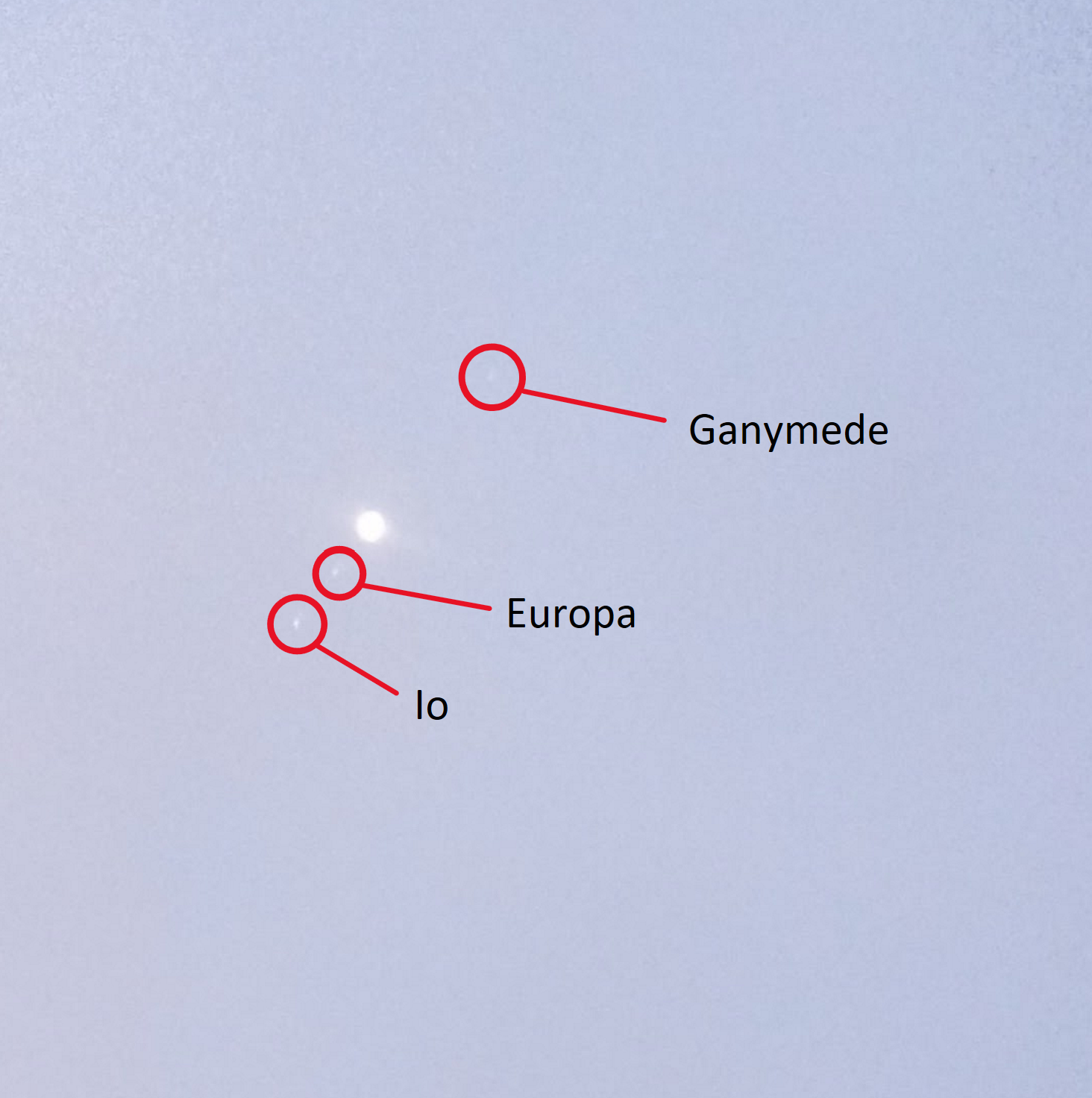
Jupiter as well as three of its four biggest moons. No guarantee on the correct naming of the white dots, but one (probably Callisto) is not visible at the moment. Currently, 115 moons of Jupiter are known, but there are likely way more.
Also the wind was very strong. So strong indeed that we had to abandon our spot from the previous days and move somewhere else. The wind also seemingly stopped the birds from migrating. Over the water, very little was moving. A pleasant surprise though were three Whooper Swans (Cygnus cygnus) that flew right over our heads, calling loudly. These amazing birds usually arrive later in the year, so this trio was quite special.
The wind also made all the passerines pile up right above our heads. This made the migration seem very strong, but we only saw the same birds over and over again. Still, one could tell a lot of different species from the cacophony of flight calls. Today was the first day with decent migration of Common Chaffinches (Fringilla coelebs) and their close relatives, the Bramblings (Fringilla montifringilla). These birds can mostly be told apart by their widely differing flight calls.
The group of birds that made our day were the raptors though. We had both good numbers and a good diversity. This allowed us to examine the wide range of shapes and sizes - from the tiny Merlin (Falco columbarius) to the biggest of all European raptors: The White-tailed Eagle (Haliaetus albicilla). Exceptionally well showed themselves a big number of Eurasian Marsh Harriers (Circus aeruginosus): 25 in total!
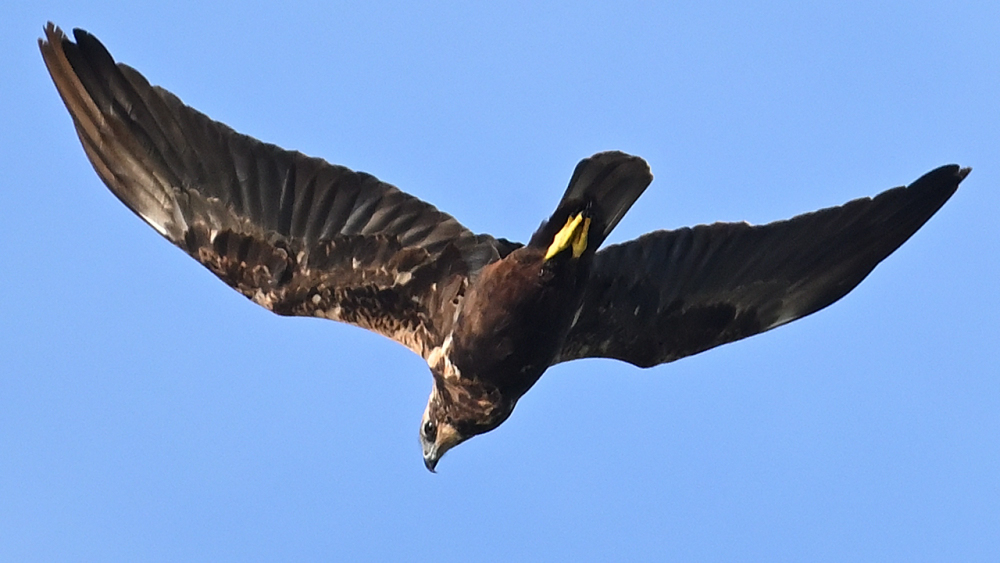
A Marsh Harrier in Monday's traffic at Gedser Odde. This bird was very similar to a young bird from this year, but could be aged as a one-year-old female on the outer feathers in the wings. The first three are faded brown feathers from the juvenile plumage, but the next are new darker brown feathers of a second generation. Photo: Ole Friis Larsen/GFU
This was not the highest number of raptors today. The top spot goes to the Eurasian Sparrowhawk (Accipiter nisus) with no less than 90 attempting the passage of the Baltic Sea. We have noted several times on this blog that this year is a very good year for Sparrowhawks and the streak seems to continue. Why it is like this, we can't tell though. Annoyingly (or maybe for even more fun), there is a very similarly sized species in the form of the Common Kestrel (Falco tinnunculus). As they also migrated in good numbers today, we introduced a new umbrella term for these two: Sparrowkestrel. If you get a better look, it is possible to separate the two species quite easily by the shape of wings and tail. The raptor day was finished by a group of young kites (likely the one we already saw yesterday) that included two of both Red and Black Kites (Milvus milvus & M. migrans). These youngsters took a quick look at the water everywhere and decided that is not yet cold enough that they have to leave.
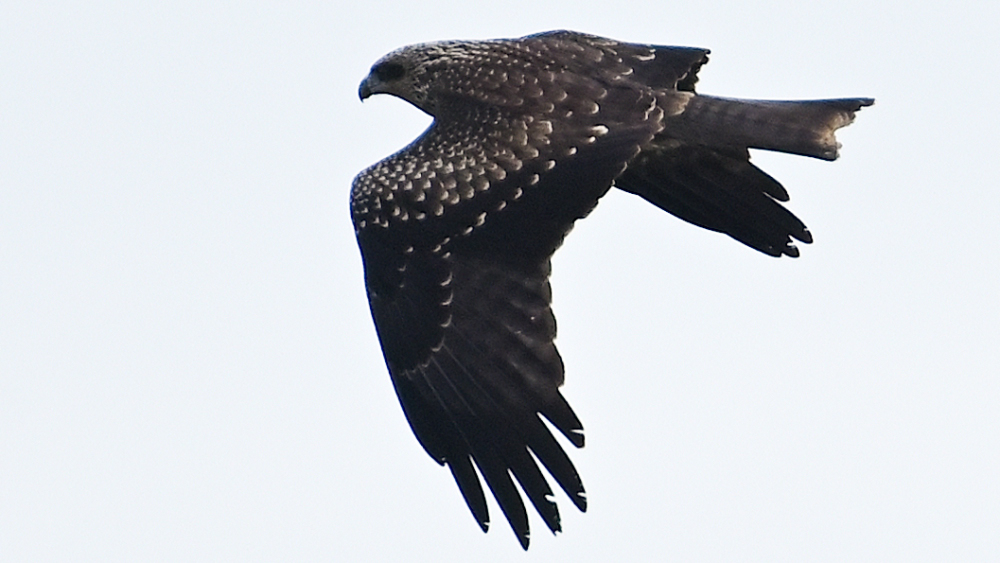
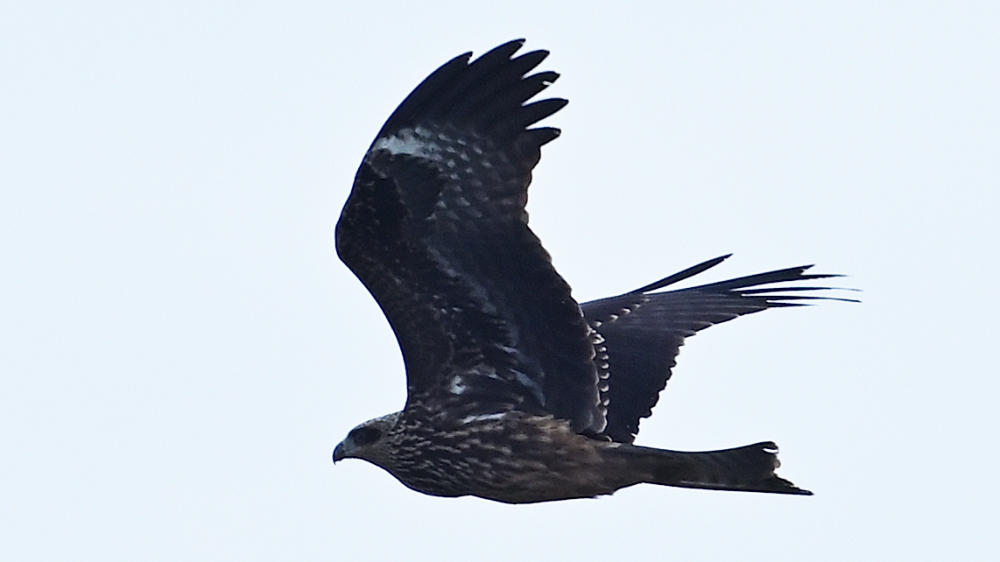
Black Kites (Milvus migrans) can be identified by the only slightly forked tail, the general blackish-brown colour and the amount of white feathers in the wing. They are still a relatively rare species in Denmark but have been increasing over the last years, likely due to climate change. The many white feather tips on the upperside of the wings and the white streaks on the body show that today's Black Kites were juveniles. Photo: Ole Friis Larsen/GFU
Fugle registreret i standardtiden: 1.698. Arter: 54. Tællingen startet 06:24, sluttet klokken 11:25.
Se alle dagens observationer på Gedser Odde i DOFbasen.
På stationen: Hannah Schmidt, Marek Ebert, Ole Friis Larsen, Børge Langkilde, Alba Maria Holmberg, Jens Friis Walsted, Tina Elley, Mads Elley, Frederikke Dufke