
-
FORSIDE

- Blog
Gedser Fuglestation Blog
Her på Gedser Fuglestations blog bringes korte nyheder i dagbogsformat om hændelser på fuglestationen.
Sjælden amerikansk gæst - ikke færdig
Ringmærkningen: xx
Trækket på Odden: Like most days at the Gedser tip, our day started with a wonderful sunrise. In just a few moments, seconds even, colors changed from pinks and purples to oranges. It was a wonderful day overall with little wind and some clouds here and there. As a complete newbie to migration counting, it was my turn to write down all counts and familiarize myself with the most (un)common species.
 What a fantastic view we have at the Gedser Odde every morning! Today, we were greated by one of the best sunrises.
A few moments later, the first birds started to arrive. Today, most birds were Common eiders (Somateria mollissima). From my time living on Svalbard, this is a species I most absolutely feel confident with identifying. Up north, there were big groups of breeding pairs close to the major settlement, Longyearbyen. At the beginning of the breeding season both males and females were equally found there, but the males quickly left and made their way to molting grounds and then head southwards. Whilst the Svalbard population winters around Iceland and in northern Norway and are therefore most likely not the birds we see here, it still explains why the majority of individuals here in Gedser are male eiders. Female and juvenile individuals will increase in numbers throughout the next weeks.
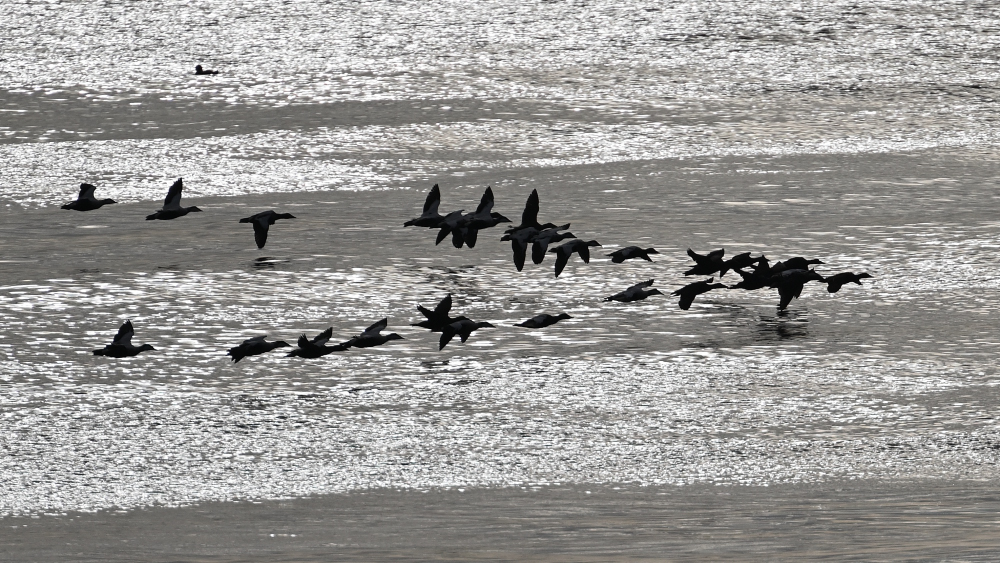 A flock of Common eiders (Somateria mollissima) passing us at the point. With almost 1.500 individuals today, this was the most numerous species migrating past Gedser Odde.
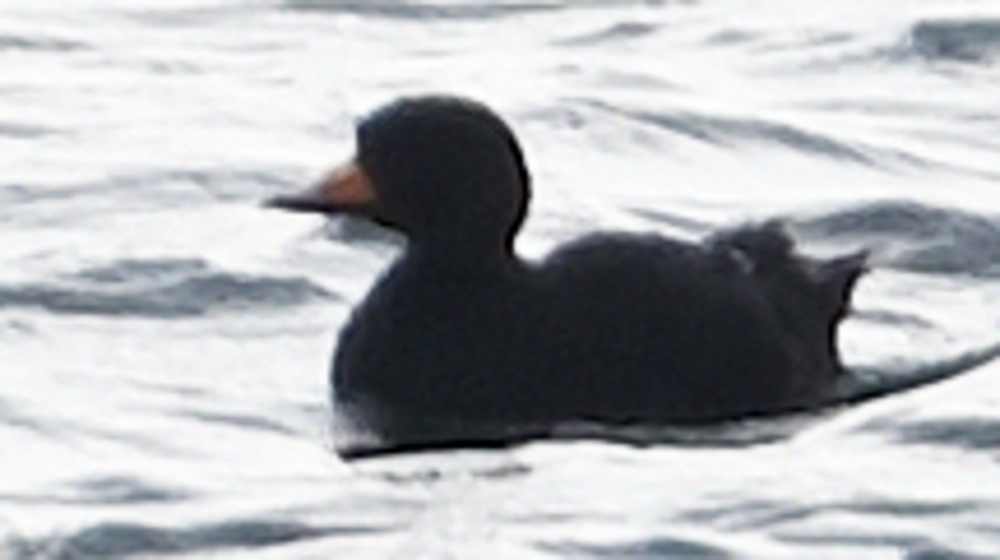
Other individuals migrating over the sea were Eurasian wigeons (Anas penelope), Eurasian teals (Anas crecca), Common scoters (Melanitta nigra), and Red-breasted mergansers (Mergus serrator). Whilst not migrating, a Black scoter (Melanitta americana) caught our eye swimming close to the shore. With a Common scoter close by, we were able to see the differences clearly.
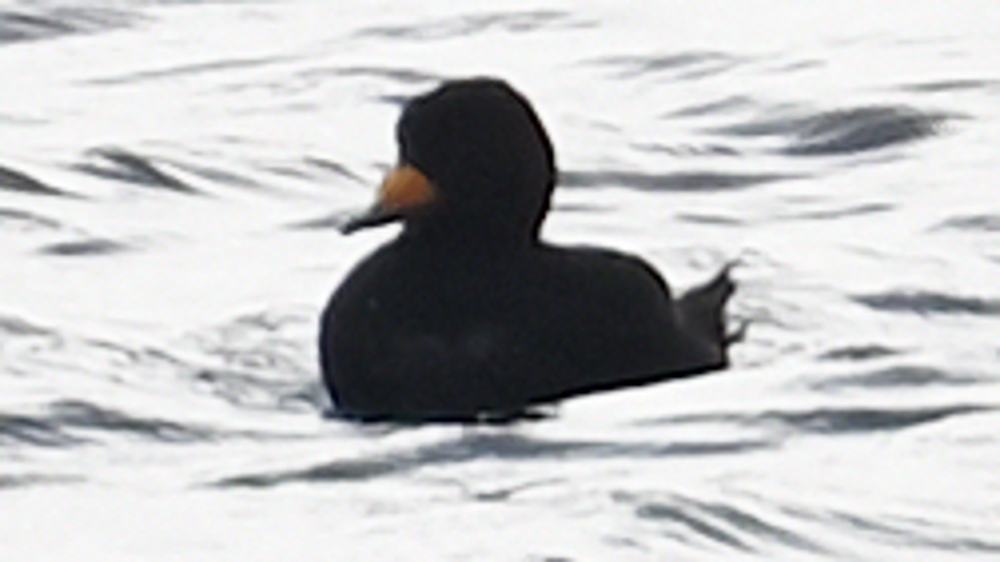 A Black scoter (Melanitta americana) swimming close by to our counting site. Its yellow knob at the base of the bill separated it from the nearby Common scoter.
Overwise, today was not the greatest day for rapture migration. A group of Red kites (Milvus milvus) circled the nearby field for some time, before heading out to sea. It seemed as if they could not decide and later reappeared over our heads. We’ll cross our fingers that tomorrow brings better winds for them to continue.
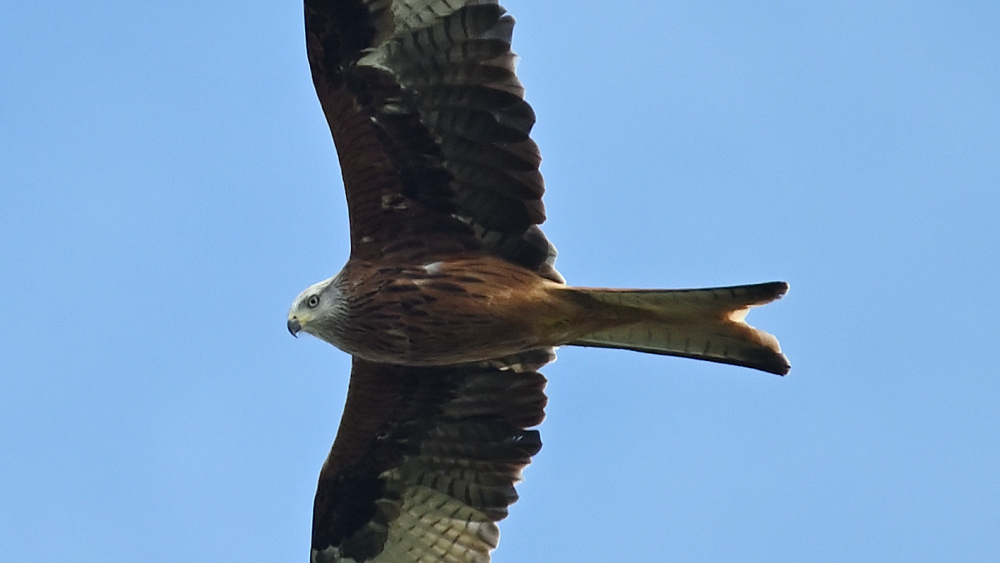 A Red kite (Milvus milvus) passing by overhead. With its pale eyes and signs of moulting in the wing, it was clear that this was and adult individual.
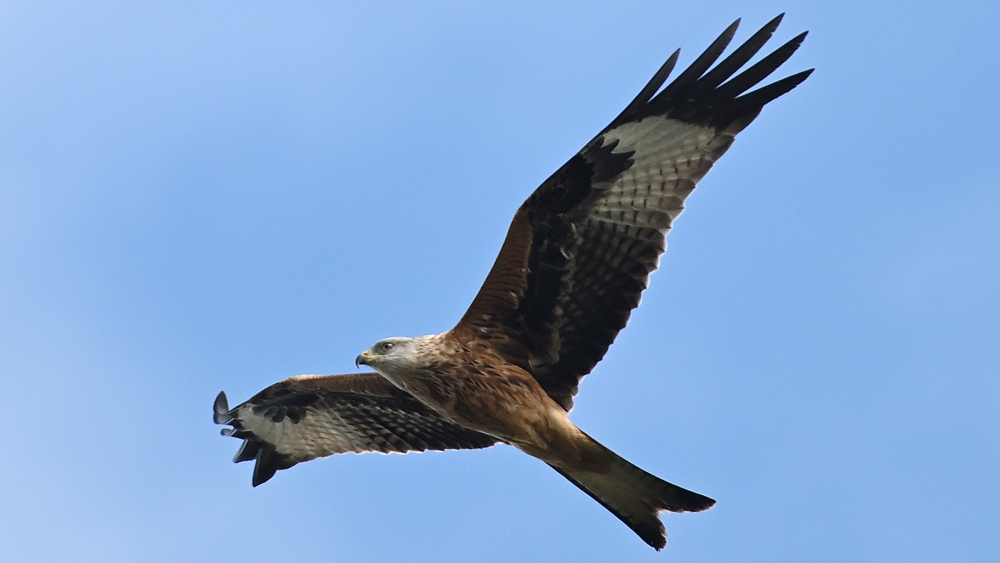 In contrast, a jouvenile Red kite. This individual shows clear light spots in the breast and no moulting in the wing.
As always, Marek was on passerine duty. Almost 1.000 Swallows (Hirundo rustica), followed by many Common starlings (Sturnus vulgaris), Meadow pipits (Anthus pratensis), White wagtails (Motacilla alba), Eurasian siskins (Spinus spinus), and European goldfinches (Carduelis carduelis) kept him occupied.
Thanks to Gert Juul Jeppesen for joining us later on and assisting in the counts!
Fugle registreret i standardtiden: 5.556. Arter: 50. Tællingen startet 06:28, sluttet klokken 11:28.
Se alle dagens observationer på Gedser Odde i DOFbasen - af Dansk Ornitologisk Forening.
På stationen: Hannah Schmidt, Alba M. Holmberg, Frederikke Dufke, Jens Friis Walsted, Børge Langkilde, Ole Friis Larsen, Marek Ebert