-
FORSIDE

- Blog
Gedser Fuglestation Blog
Her på Gedser Fuglestations blog bringes korte nyheder i dagbogsformat om hændelser på fuglestationen.
All the passerines you could imagine
Ringmærkning:
Trækket på Odden: After a very dreary couple of days it was very nice to actually see the sun rise today. This also made the count much warmer and way more enjoyable, seemingly also for the birds.
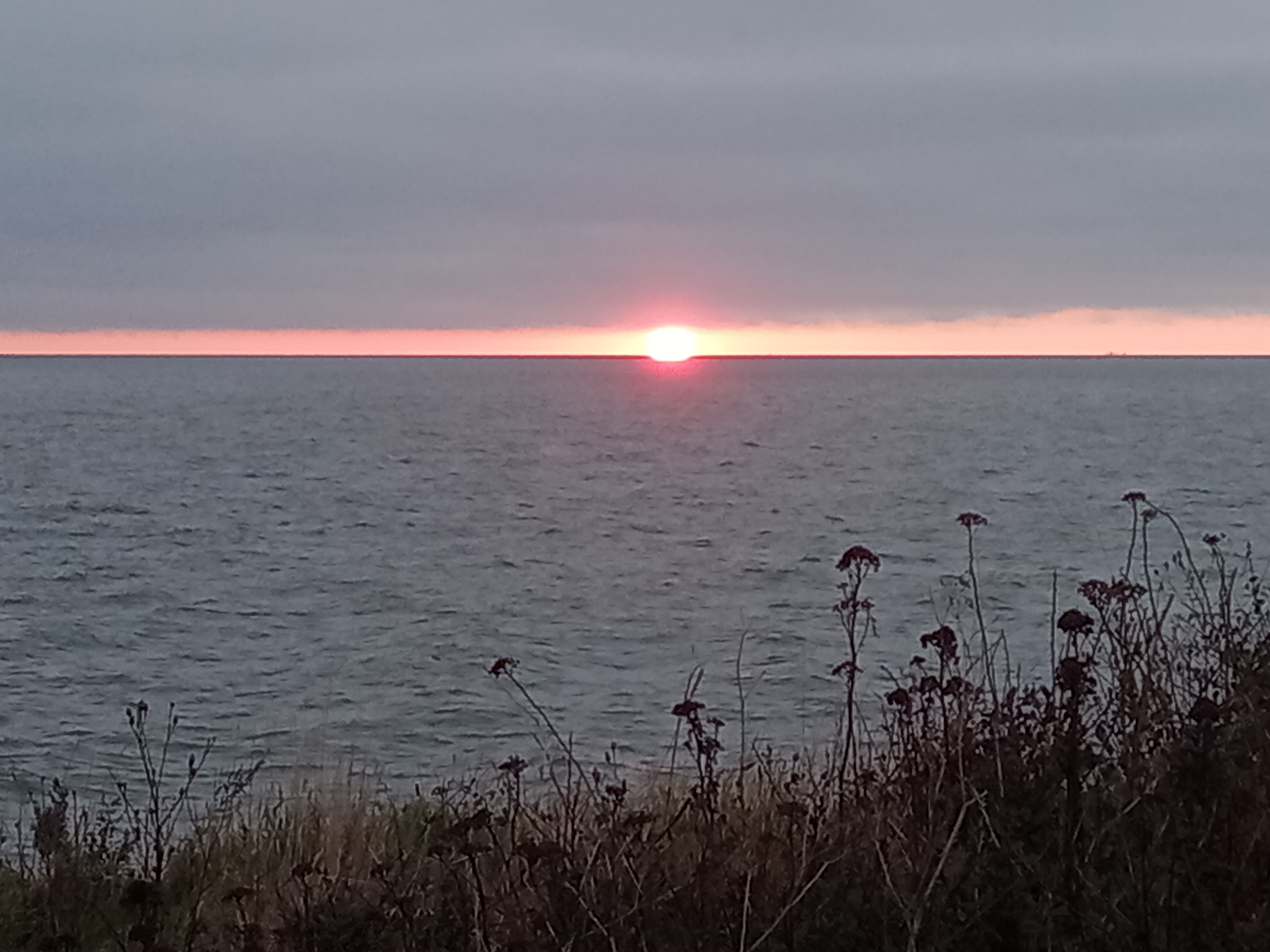
Here comes the sun! After many dark and grey days, today a sunrise was actually visible.
Already within the first half hour, usually the most quiet time, I had close to 500 birds. Most active were the finches, especially Eurasian Siskins (Spinus spinus, "siskin") and European Goldfinches (Carduelis carduelis, "goldfinch"). Both species reached a new record for the season today (2300 and 1091, respectively). Another surprisingly active species were the Redpolls (Acanthis flammea, "flame-coloured redpoll"). I only recently learned their flight calls, so today was a great opportunity for practice. Apart from finches, also corvids had a great day. There were several big flocks of Western Jackdaws (Coloeus monedula, "small money-jackdaw"), with their characteristic calls, and Rooks (Corvus frugilegius, "fruit-gathering raven"). In fact, we saw a lot of corvid species, including three Northern Nutcrackers (Nucifraga caryocatactes macrorhynchos, "big-billed, core-destroying nutcracker").
What’s that? It is etymology time! After hearing its warbling call, we could quickly also see a Wood Lark (Lullula arborea, "»lulu«-sounding bird from the trees"). In German, this bird is known as "Heidelerche" ("heath lark") or "Baumlerche" ("tree lark"). The latter name is so nice that the Danish language adopted it and put it to use on a totally different and completely unrelated bird: Bomlærke - the Corn Bunting (Emberiza calandra, "calandra-lark bunting"). Two of these huge buntings also showed up today and let their machine gun calls sound before turning back. To summarise: There is a bunting that got its Danish name from a lark and its scientific name from a different lark. What is this? As there are more passerines that deserve mentioning and I am out of ideas, here just the names in no particular order: a late Barn Swallow (Hirundo rustica, "countryside swallow"), a Great Grey Shrike (Lanius excubitor, "watchman butcher"), several Grey Wagtails (Motacilla cinerea, "ashy-grey moving-tail") and Twites (Linaria flavirostris, "yellow-billed linen-weaver").
Attentive readers might have noticed that I did not speak at all about the migration at sea. That is because there was almost none. A few ducks came past, but often just one flock per species. Neither numbers nor species were particulaly interesting. One specific individual deserves mention though: today is the one-month-anniversary of our favourite Black Scoter (Melanitta americana, "american black duck"). Happy rarity-versary! It seems to be doing well and also showed itself today particularly well.
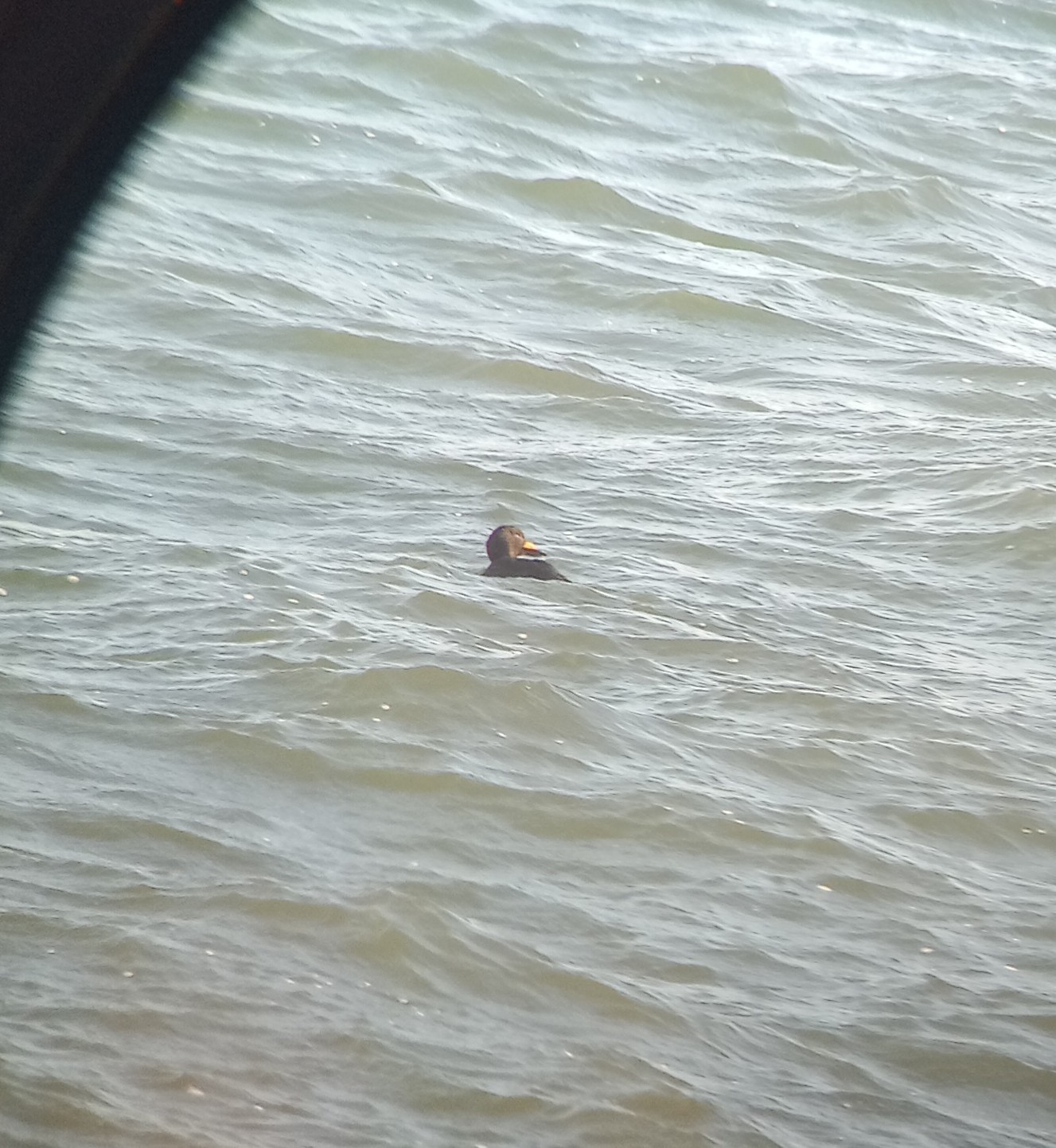
It’s time to celebrate! Exactly one month ago, this bird's bright orange knob was first spotted.
Fugle registreret i standardtiden: 6.197 . Arter: 48. Tællingen startet 07:26, sluttet klokken 12:26.
Se alle dagens observationer på Gedser Odde i DOFbasen.
På stationen: Alba M. Holmberg, Philip Elbek, Børge Langkilde, Ole Friis Larsen, Marek Ebert