
-
FORSIDE

- Blog
Gedser Fuglestation Blog
Her på Gedser Fuglestations blog bringes korte nyheder i dagbogsformat om hændelser på fuglestationen.
Arctic or Antarctic?
Ringmærkningen: Xxxx
Trækket på Odden: „It seems like spring migration has started early this time!“ Or at least it seemed like that. Within the first hour, several big flocks of Black-headed Gulls (Chroicocephalus ridibundus, „laughing painted head“) flew by, but heading North. This caused Ole to make the statement I used as the first sentence. He might be right though: more Black-headed Gulls were seen flying North than South today. They were joined by ducks doing the same but to a lesser extent.
Of course, spring migration is still a few months from starting. But a lot of birds flying in multiple directions is a good sign for stationary birds that just change their spot on a small scale. This in turn can be interpreted as autumn migration slowing down noticeably, making Ole’s statement at least not completely false.
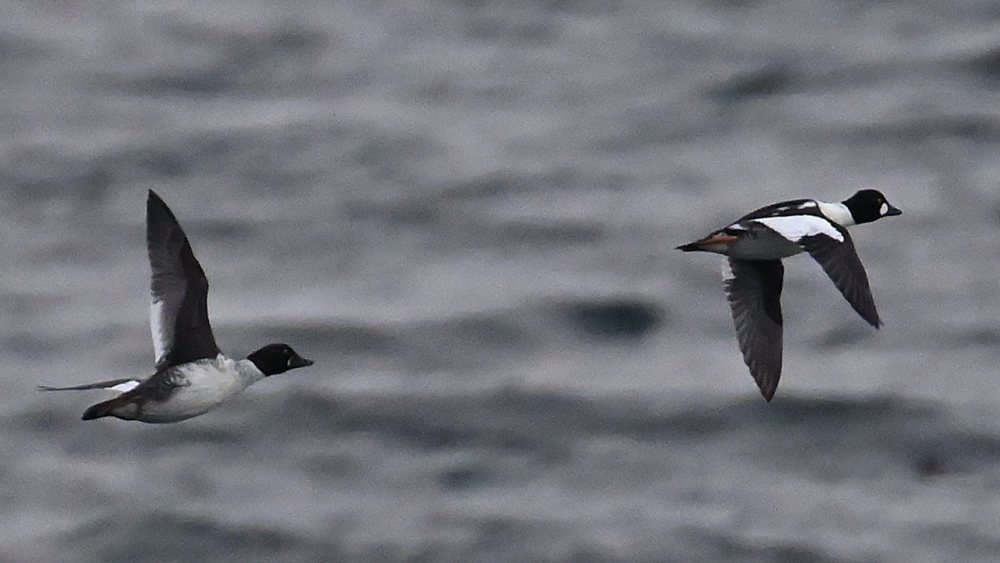
These two Common Goldeneyes (Bucephala clangula, „clanging bull-head“) are flying in the right direction right now. A good amount of their species was seen today, surprisingly many flying North though. Goldeneyes breed in wooded areas near water all over Northern Europe and can be seen even in the middle of winter. They belong to the clade of marine ducks which is apparent outside of the breeding season when they gather in big flocks on big lakes or on the sea.
Speaking of stationary birds, yesterday’s Arctic Tern (Sterna paradisaea, „paradise tern“) could also be seen foraging today. Arctic Terns undertake some of the most breathtaking migrations od all birds. They breed all over the Arctic and Subarctic and winter in the Southern Ocean and along the shores of Antarctica. Over the course of their lifetime, Arctic Terns are estimated to cover a distance of 2.400.000 km, that is more than three times to the moon and back!
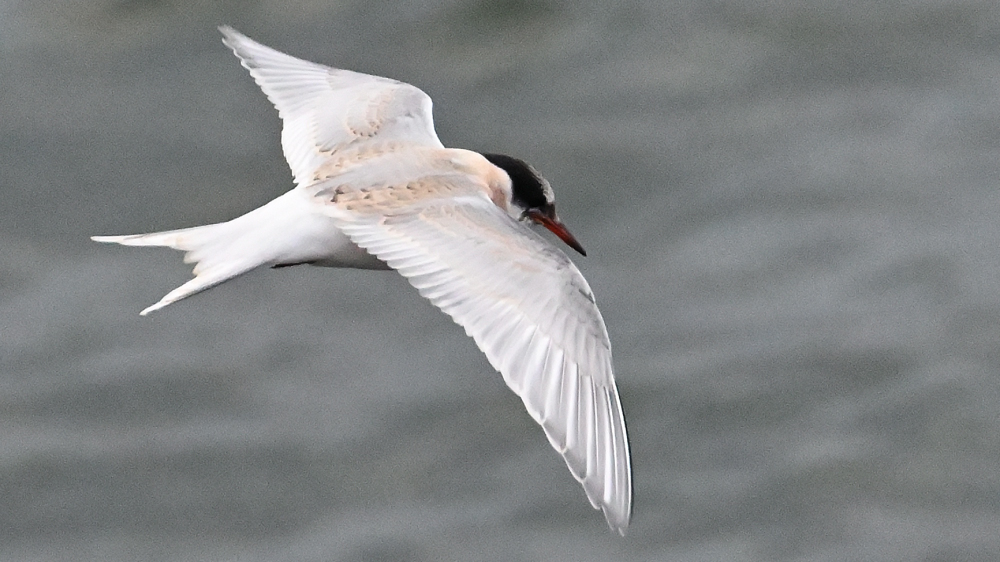
This Arctic Tern seemingly is not very willing to leave Danish waters. Understandable, it finds a lot of food here. We have been wondering whether it might become too cold for it her, until we realised that the South Polar Sea is not particularly warm either, not even in the southern summer. This bird can be aged as a 1K based on the remaining brown feathers on the back. Young birds often have difficulties on their first big migration which leads to the abnormal journeys we call „rarities“.
Fugle registreret i standardtiden: 2.198. Arter: 38. Tællingen startet 06:53, sluttet klokken 11:53.
Se alle dagens observationer på Gedser Odde i DOFbasen.
På stationen: Alba Maria Holmberg, Henrik Jørgensen, Ole Friis Larsen, Marek Ebert