-
FORSIDE

- Blog
Gedser Fuglestation Blog
Her på Gedser Fuglestations blog bringes korte nyheder i dagbogsformat om hændelser på fuglestationen.
Bombet net
Ringmærkning:
Der var stadig lidt for meget vind, men 121 meter kunne sættes op.
Første runde gav 15 gråsiskner i et net og en solsort, så det var jeg faktisk godt tilfreds med da vinden jo var så hård.
Et par runder senere kommer jeg så til et net og det var fuldstændigt fyldt med gråsiskner. Da jeg havde en aftale lidt senere måtte jeg tilkalde Alba og vi fik hurtigt pillet dem ud, og hun hjalp også med at skrive så jeg blev kun en halv time forsinket til min aftale. En senere optælling viste at der havde været 105 gråsiskner idet ene net.
Efter alle sammen blev ringmærket tog Alba over, og hun fik også fanget en hel del. Hun fortsatte til 16:15.
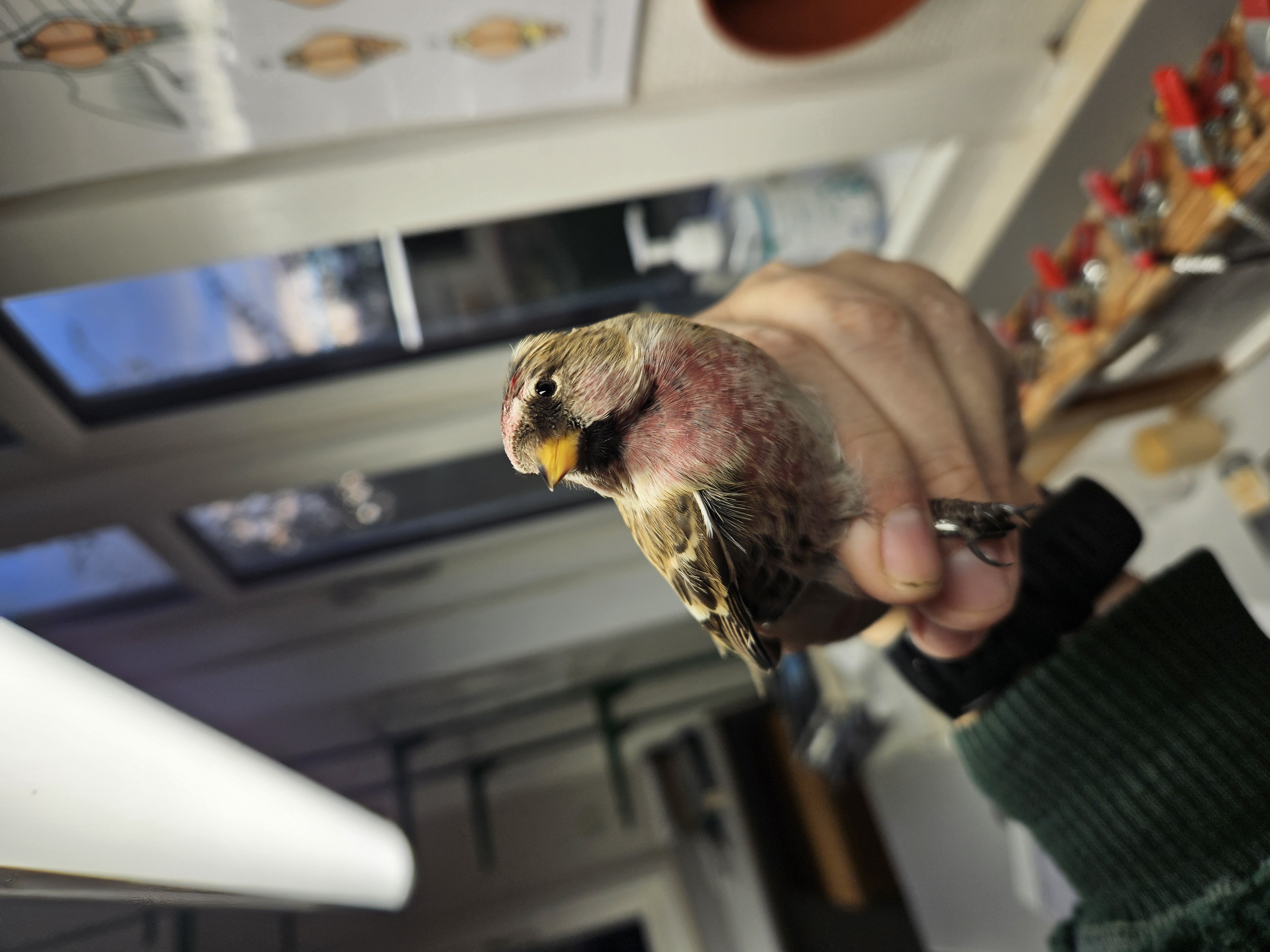
Her under er en af de gråsiskner af racen nordlig/stor gråsisken som blev fanget på første runde.
Dagens ringmærkning/Todays ringing:
Solsort/Blackbird 1
Grønsisken/Siskin 1
Dompap/Bullfinch 1
Gråsisken/Redpoll 181
Total 184
Trækket på Odden: The weather forecast predicted clouds and rain, luckily, it was wrong. That meant that Alba and me could sit outside the old building, with a great view over the sea, sheltered from the wind and with some nice sun in the face. The sea migration was again not particularly exciting, at least compared to October. Considering the last few days, it was actually quite good. We counted over a hundred Common Eiders (Somateria mollissima, „very soft wool-body“), some other ducks came by too. Surprisingly high was the count of Common Goldeneyes (Bucephala clangula, „clanging bull-head“) – 43. Normally, we count a few single birds or maybe pairs, not particularly high numbers. Today however, groups of up to 6 birds flew together. These small ducks are especially beautiful and my favourite ducks. Their special shape, the white patterns and the males’ iridescent green heads make them very handsome birds. Over the sea, we could also see four Black-throated Divers (Gavia arctica, „arctic seagull“) and, after Alba had left for the ringing, a lot of Northern Gannets (Morus bassanus, „idiot from bass rock“). A total of 8 of these elegant birds migrated past, setting a new yearly record for the station. Gannets can be hard to count because they combine their migration with feeding. Interrupted by quick plunge-dives, they will slowly fly to the south. This can take up to half an hour, so making sure to keep an eye on the birds to not confuse them with newer arrivals is quite challenging.
However, the big numbers today came again over land. Redpolls (Acanthis flammea, „flame-coloured redpoll“) flew past in big flocks. They were, as yesterday, joined by other finches, especially Eurasian Siskins (Spinus spinus, „siskin“) and European Goldfinches (Carduelis carduelis, „goldfinch“). Just minutes after Alba had left, a small raptor with very pointy wings and a short tail flew straight out – a Merlin (Falco columbarius, „dove-falcon“)! This small falcon was one of my top species I wanted to see here in Gedser and I still get excited every time I see one. The biggest surprise came in the form of a small grey bird (well, I didn’t see it…). Flight calls of a pipit sounded quite suspicious to me; I suspect a Water Pipit (Anthus spinoletta, „pipit pipit“). The recording is still getting checked, it is looking promising though! See DOFbasen for updates.
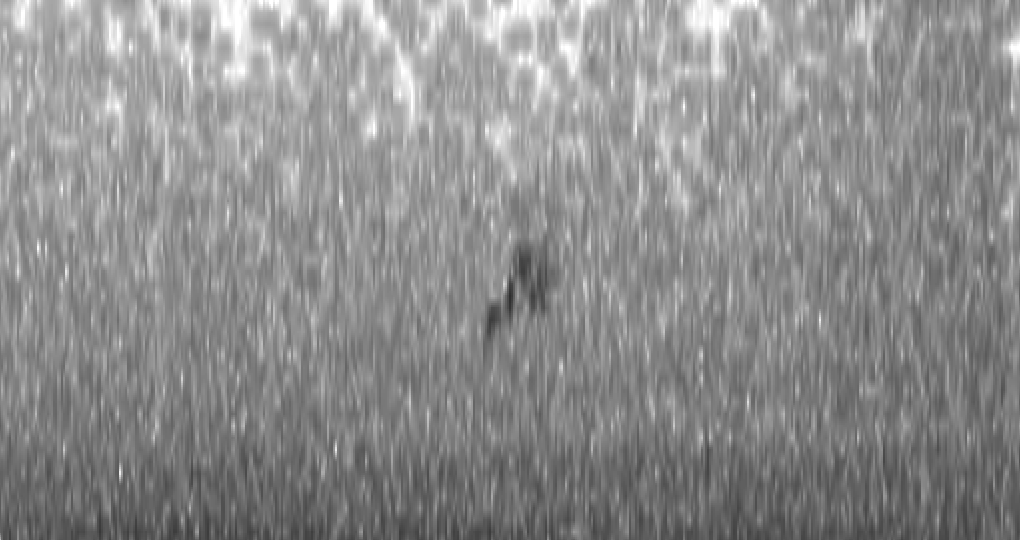
For the first time in weeks it was actually worth it to bring my recorder out to the tip. This visualisation is called a sonagramm. It can be very useful to visually analyse sounds, however strange that may sound. The general shape of this call do speak more for a Water Pipit as opposed to a Meadow Pipit (Anthus pratensis, „small meadow pipit“).
Fugle registreret i standardtiden: 2.336. Arter: 46. Tællingen startet 07:11, sluttet klokken 12:11.
Se alle dagens observationer på Gedser Odde i DOFbasen.
På stationen: Alba M. Holmberg, Henrik Jørgensen, Marek Ebert