-
FORSIDE

- Blog
Gedser Fuglestation Blog
Her på Gedser Fuglestations blog bringes korte nyheder i dagbogsformat om hændelser på fuglestationen.
The pipit parade continues!
Ringmærkning:
Trækket på Odden: Before Ole left this morning, he wished us a good count with especially good weather and a lot of sun. Well, we had a great count and decent weather, but sadly almost no sun. Over night the temperature had dropped quite substantially, so both Alba and me were very happy about migrating birds to keep us distracted. It wasn’t big numbers that made the count good but instead a high diversitiy and great quality of birds. To start off, Black-throated Loons (Gavia arctica, „arctic seagull“) had a good day. A total of 8 of these high Arctic birds came through. They were joined by several species of ducks, most notably a high number of Green-winged Teals (Anas crecca, „»crec«-sounding duck“) at this time of the year.
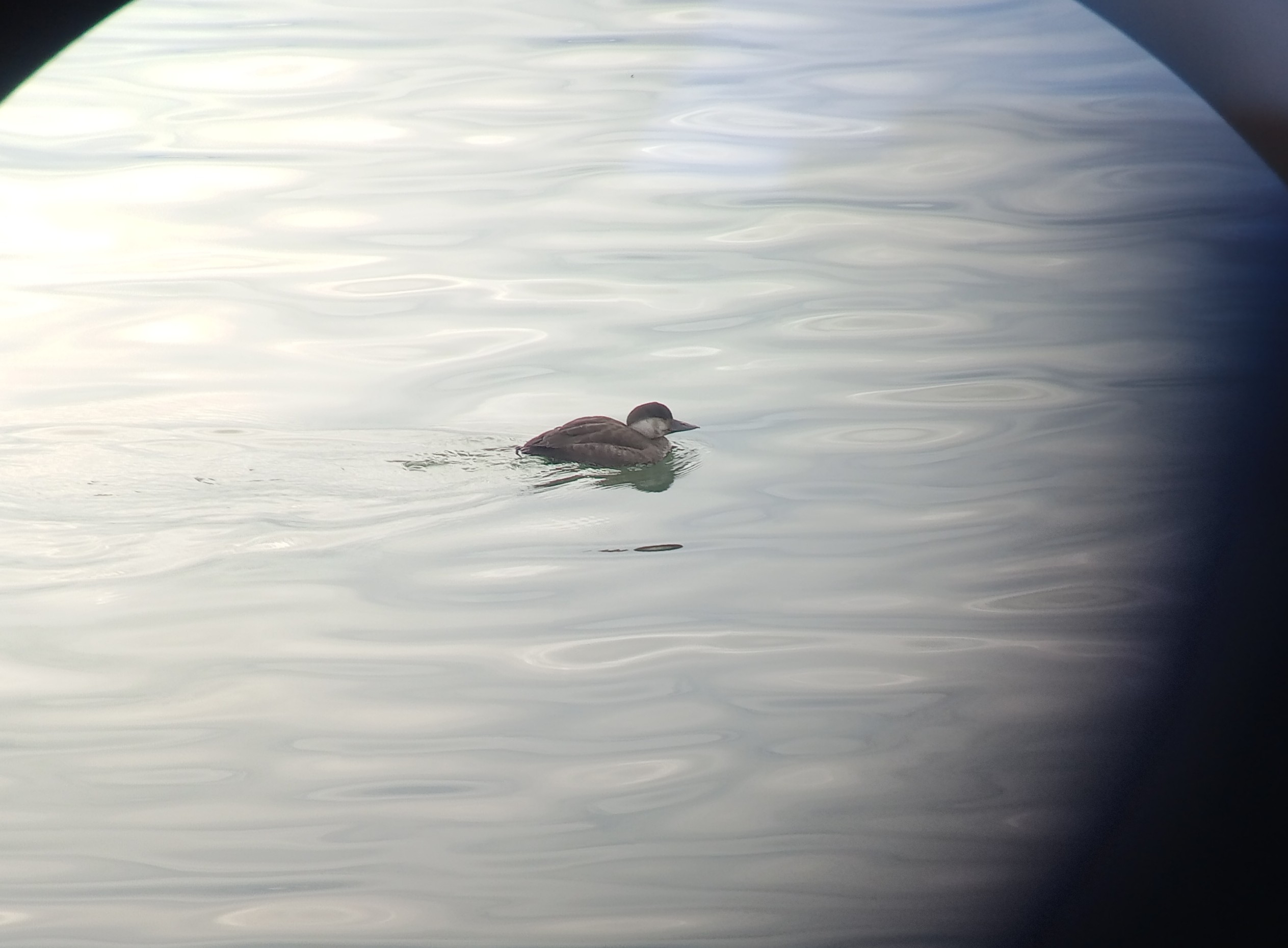
This female-type Common Scoter (Melanitta nigra, „black black duck“) came nice and close to the shore while foraging. Picture: Marek Ebert
After it had quieted down and the boredom slowly started creeping in, Henrik suddenly called, announcing that he had a special bird for Alba. So she left, ringed her first Hoary Redpoll (Acanthis flammea hornemanni, „Hornemann’s flame-coloured redpoll“) and came back out without missing a lot of birds. Congratulations! Later, she also had another great moment, when she suddenly exclaimed: „What the hell, what is this bird?“ It looked like an alcid but was very pale with big white circles on the wings. Of course, this leaves only one possibility: a Black Guillemot (Cepphus grylle, „guillemot waterbird“). We don’t see a lot of these slightly confusing birds down here so it is a special sight and just a wonderfully cute bird. Over the wonderfully calm waters, we also saw a Northern Gannet (Morus bassanus, „idiot from bass rock“) fishing far out as well as both the Red-necked Grebe (Podiceps grisegena, „grey-cheeked behind-foot“) and a Great Crested Grebe (Podiceps cristatus, „crested behind-foot“).
Over land, 4 Red Kites (Milvus milvus, „kite“) migrated south, followed of course by a mob of angry crows. A Snow Bunting (Plectrophenax nivalis, „snow-white impostor-spur“) also flew around our observation spot and let us admire its white wings. But maybe, you have noticed that I have been holding back (maybe not, I don’t know how my writing sounds to others); the best birds of course come last. Seemingly out of nowhere, suddenly three surprisingly big birds appeared. They had long tails and were vaguely wagtail-shaped, otherwise though more similar to pipits. This already set off all alarm bells in my head. Then they called , a harsh sound similar to that of Sparrows (listen yourself). You see, I have been practicing flight calls over the last months and I knew this call from one recording but I never expected to hear it from a real bird. This could only be one bird: Richard’s Pipit (Anthus richardi, „Charles Richard’s pipit“)!!!
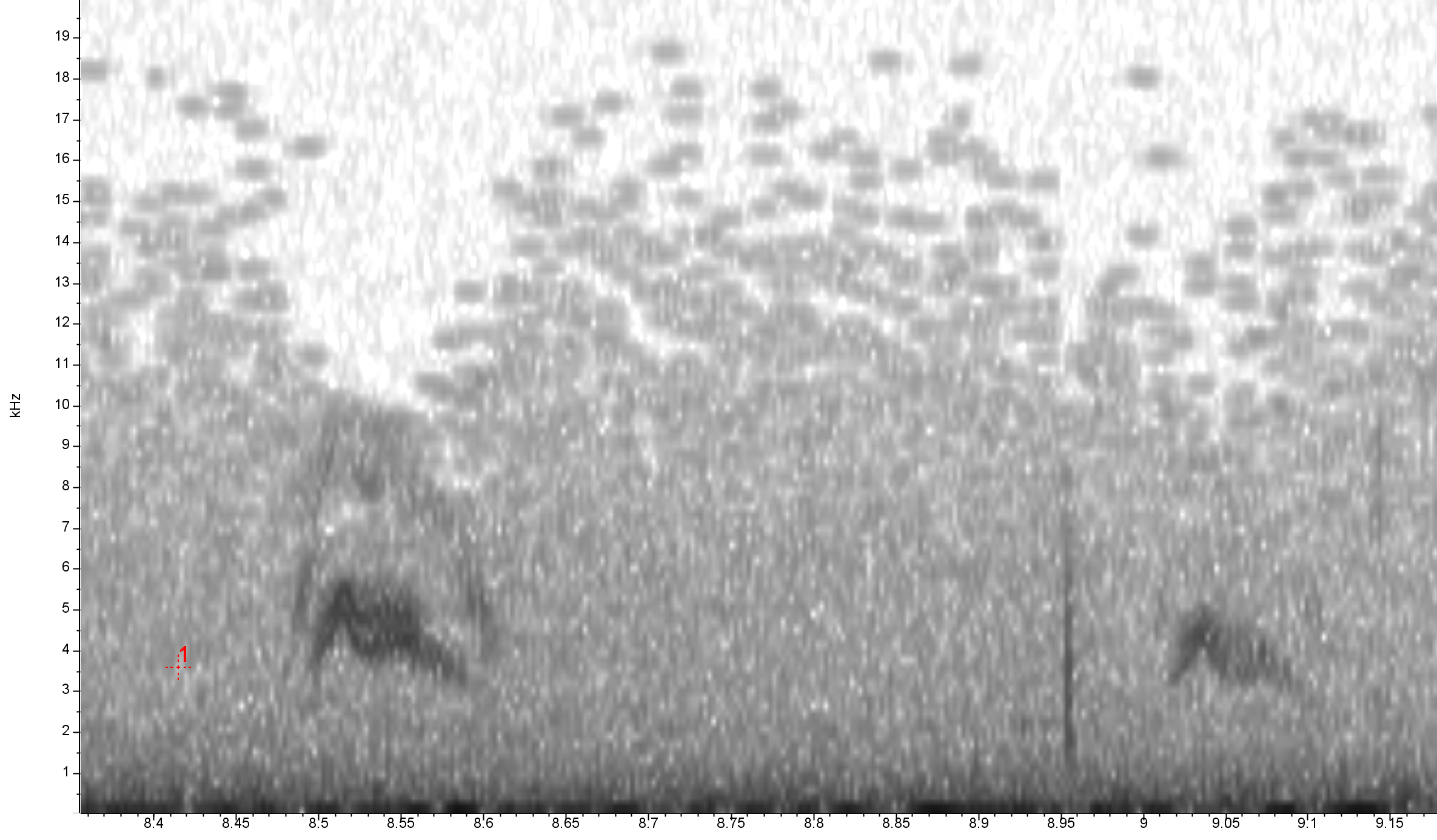
It can be difficult to identify a bird from just the sound. But when you also have visual clues, it is much easier. When looking at a sonagramm, several criteria can be looked at: the lenght of the call, the frequency of the sound and the shape of the lines. Here, it all checks out. This has to be the calls of at least two Richard’s Pipits. Just for reference, the first call is just 120 milliseconds long.
I am extremely excited about this bird. First of all, it was a lifer for me and Alba. Secondly, it is just an amazing bird, there are very few pipits of this size. Richard’s Pipits breed in central Siberia and Mongolia, at least 4.000 km from Gedser! Then, these birds are the first recorded on migration for the station ever and we started standardised migration counts ten years ago. Lastly, it is a big personal success. Both in Skagen and in Blåvand has this bird been seen during the last months, only here we still missed it. For some reason, I felt responsible for finding it and now, finally, I have succeeded!
Fugle registreret i standardtiden: 1.568. Arter: 44. Tællingen startet 07:20, sluttet klokken 12:20.
Se alle dagens observationer på Gedser Odde i DOFbasen.
På stationen: Alba Maria Holmberg, Henrik Jørgensen, Ole Friis Larsen, Marek Ebert