-
FORSIDE

- Blog
Gedser Fuglestation Blog
Her på Gedser Fuglestations blog bringes korte nyheder i dagbogsformat om hændelser på fuglestationen.
Great sightings in Gedser and in Bøtø !
Ringmærkningen: Based on the number of birds yesterday, we expected a similar morning today. However, we quickly realised during the first round that it would be a little calmer today. Nevertheless, the last net of the first round gave us a little surprise: the first Willow warbler (Løvsanger) of the season! This net has been very productive this week, giving us the Bluethroat (Blåhals), the Wryneck (Vendehals) and the Willow warbler. Will we catch the Lesser whitethroat (Gærdesanger) in it tomorrow ?
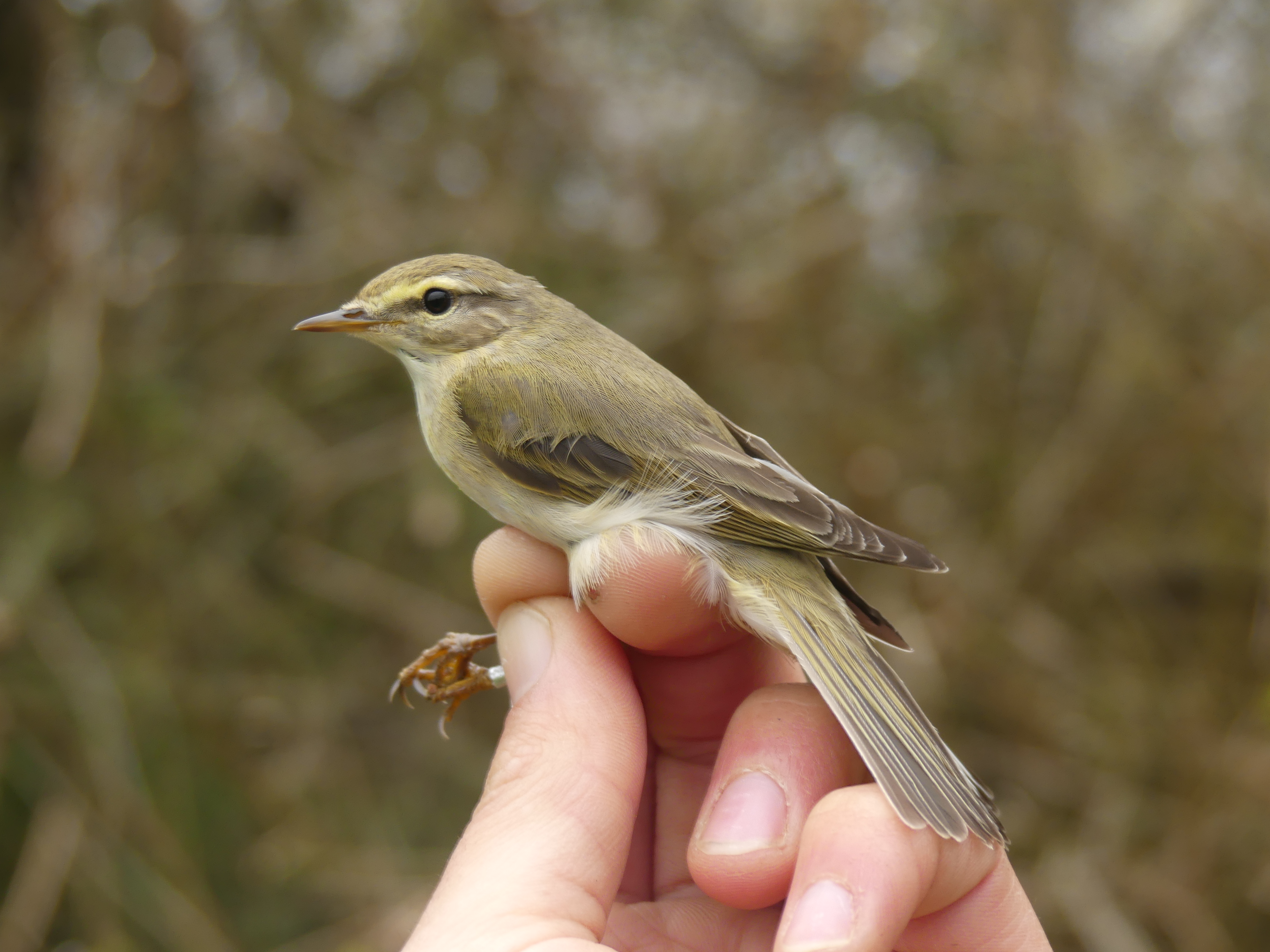
The long-awaited first Willow warbler of the season ! Foto : Théophile Fontaine
Among all the beautiful birds we had in the nets, two Reed buntings (Rørspurv) were trapped at the same time, which gave Mathilde and Alba the chance to practise the ageing criteria for this species, which can sometimes be a bit difficult. See below for an explanation.
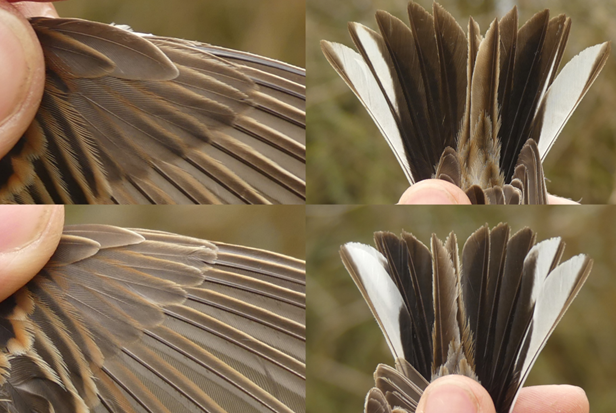
In the top left picture, we can see that the primary coverts (PC) have a looser structure and that the centre is a paler shade of brown. The shape also tends to be narrower and more pointed (not very obvious in this picture). In the top right picture, the rectrices (RR) are worn, narrow and pointed. These two pictures show the main criteria that lead to a second calendar bird. In the bottom left picture, the PC are denser and more contrasting, with a dark centre, a brown edge and greyish tips, and they look well rounded. Regarding the tail, even though the feathers are slightly worn, they are broad and rounded, which is perfect for an adult bird. Foto : Théophile Fontaine
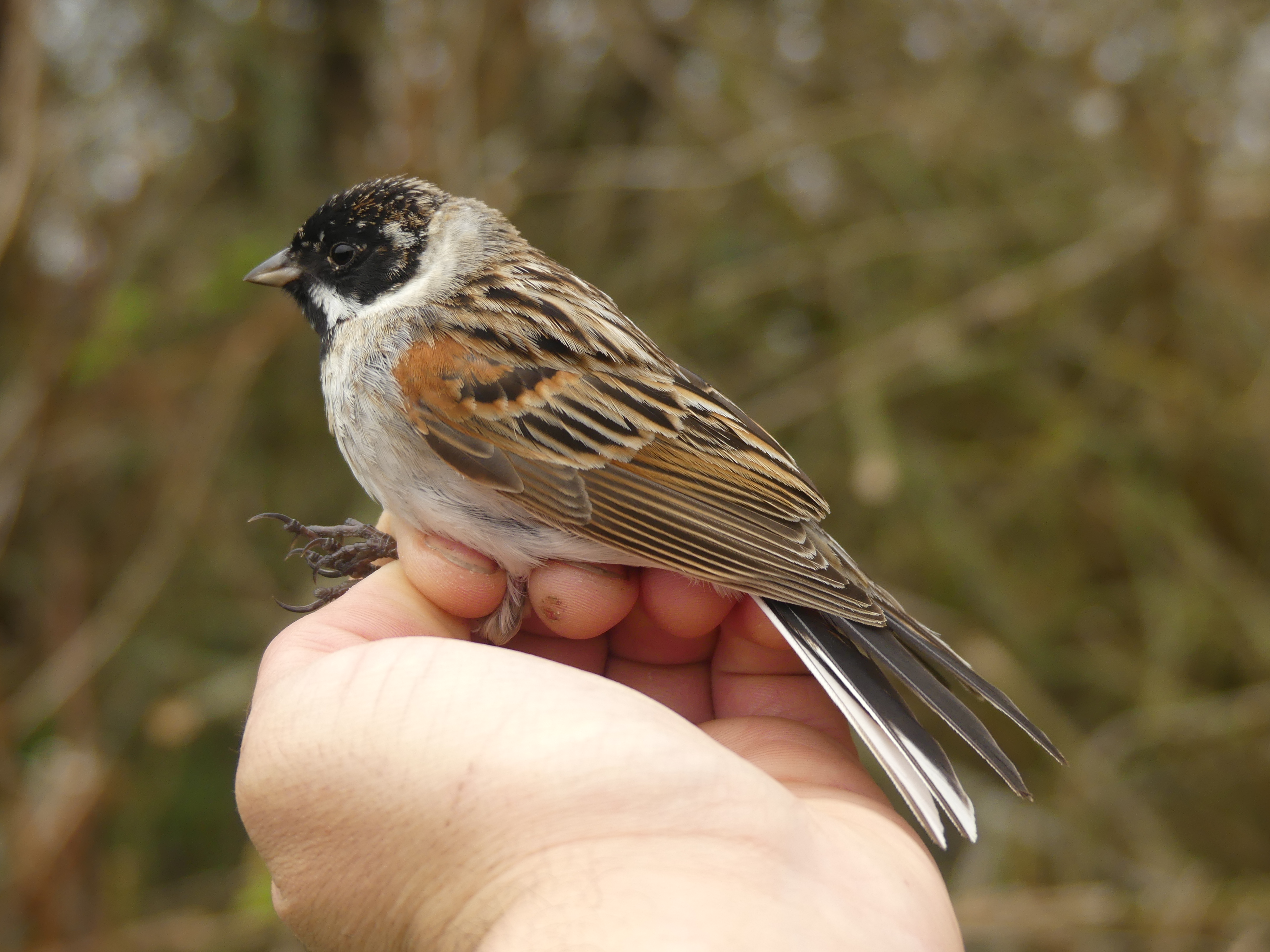
The adult Reed bunting, note the shape of the PC ! Foto : Théophile Fontaine
We ended up with 79 rings and 27 recaptures, which is not bad at all. Two Tree pipits (Skovepiber) and the first Yellow wagtail (Gul vipstjert) of the season were flitting around the garden, maybe they'll end up in the nets tomorrow ?
Trækket på Odden: As Mathilde stayed at the station to help for the few first rounds of the ringing, I headed alone to the tip. It was cold and cloudy, but the first hours flew by in a flash even though there were not so many birds. I had to keep thinking about turning back to the field to look after some raptors or other birds sneaking behind me, like those sudden 150 Woodpigeon (Ringdue) coming out of nowhere low over my head for example.
The arrival of Mathilde at the tip didn’t motivate the birds to come in bigger numbers, but this morning was actually full of surprises, and only good ones ! I was first surprised by the arrival of a Collared Dove (Tyrkerdue) from the sea, seemingly really pleased to finally reach land and being able to rest on the closest tree it found. Mathilde then arrived at the same time as a nice flock of Curlews (Storspurve), soon followed by two Black-throated divers (Sortstrubet lom) flying really close to the shore, allowing us to admire every detail of their beautiful breeding plumage. Honestly, I don’t think I will ever get tired of this sight. Later in the morning, a weird goose appeared in front of us from behind the bushes. A reddish/creamy belly, a little brown tail and a highly contrasted pattern on the wing: that was everything we could see, as it was flying really fast in the direction of Gedser, but that was all we needed to tell it was an Egyptian Goose (Nilgås). An unusual observation, but one that does happen sometimes!
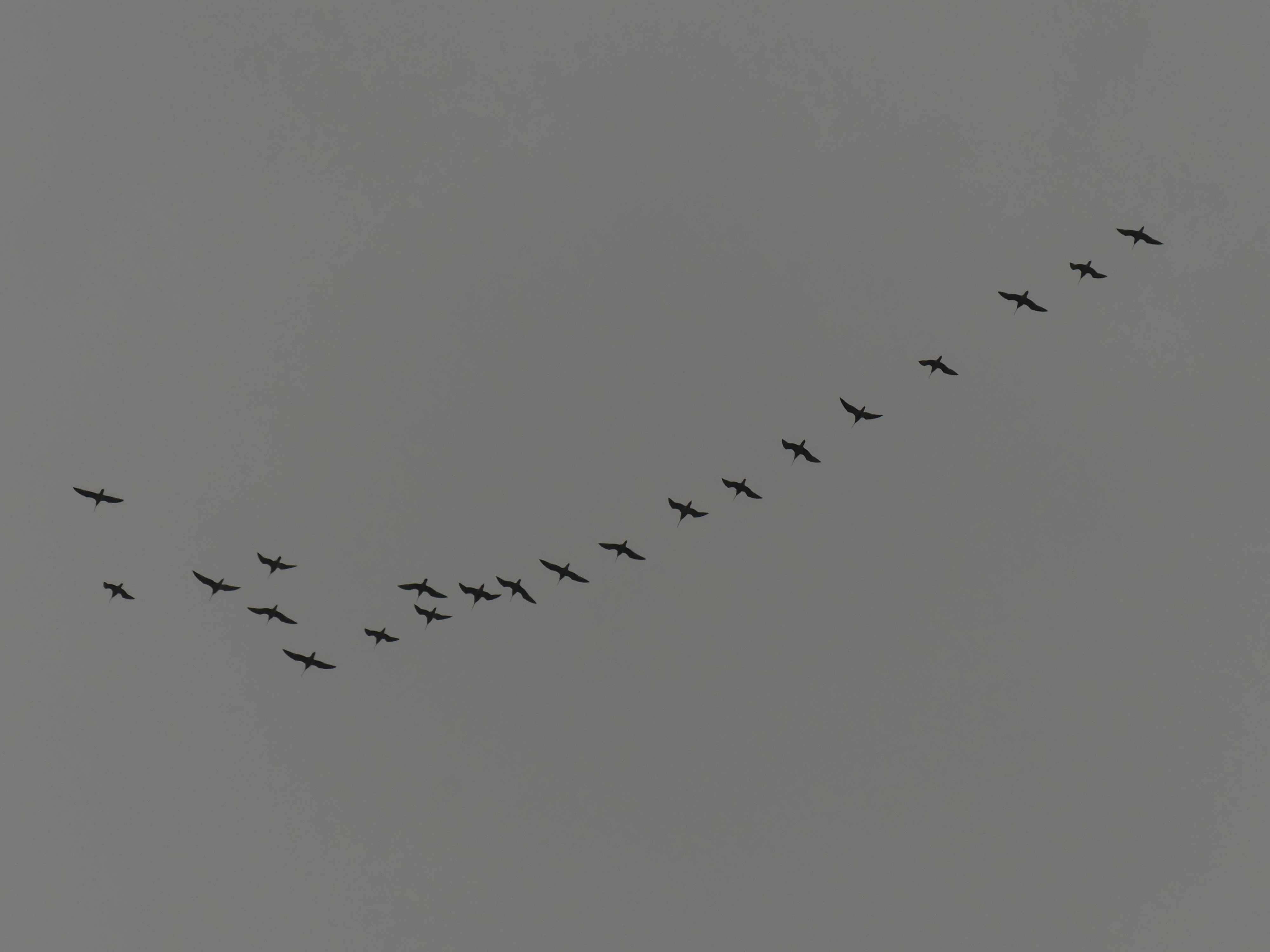
Big flock of Curlew flying over the tip. Foto : Théophile Fontaine
As the count was getting to its end, I was looking out at the sea when I heard Mathilde’s voice talking about a bird behind me : “Is that a kite? Not it is not a Kite… Wait, it is a Kite!!”. When I turned to have a look on this unusual kite, I had the surprise to lay my eyes on my first Black Kite (Sort glente) of the year ! Also first of this season for Gedser ! It was flying really low, really close, and slowly headed south before disappearing over the sea. So in the end, if I had to summarize today’s migration and the observations we made, I would say it was indeed slow, but highly pedagogical!
Afternoon Side quest: This afternoon, Mads suggested that we go to Bøtø, which is a good place to find the first Garganeys (Atlingand) of the season and some migrating waders. An Hoopoe (Hærfugl) had also been seen there that morning, which is quite rare here. The car was full with Cyann, Mads, Mathilde, Alba and me (Théophile). There was a good duck diversity, but we needed a bit of time to find one male Garganey, a beautiful bird ! There was also a flock of 18 Ruffs (Brushane) foraging, with some males with their striking summer plumage. After spending 30 minutes on the tower, Mads suggested that we try to find the hoopoe, which had been seen not so far that morning. When we arrived at the car park, Mathilde immediately started looking for it. When we suggested moving to the beach, she turned away and the hoopoe flew over the car park... Hopefully, we saw it much better 15 minutes later ! We saw many other nice species through our binoculars, including the three mentioned above, as well as two Ring ouzels (Ringdrossel), one Yellow wagtail (much better than this morning's observation), and possibly the last Redpolls (Gråsisken) of spring.
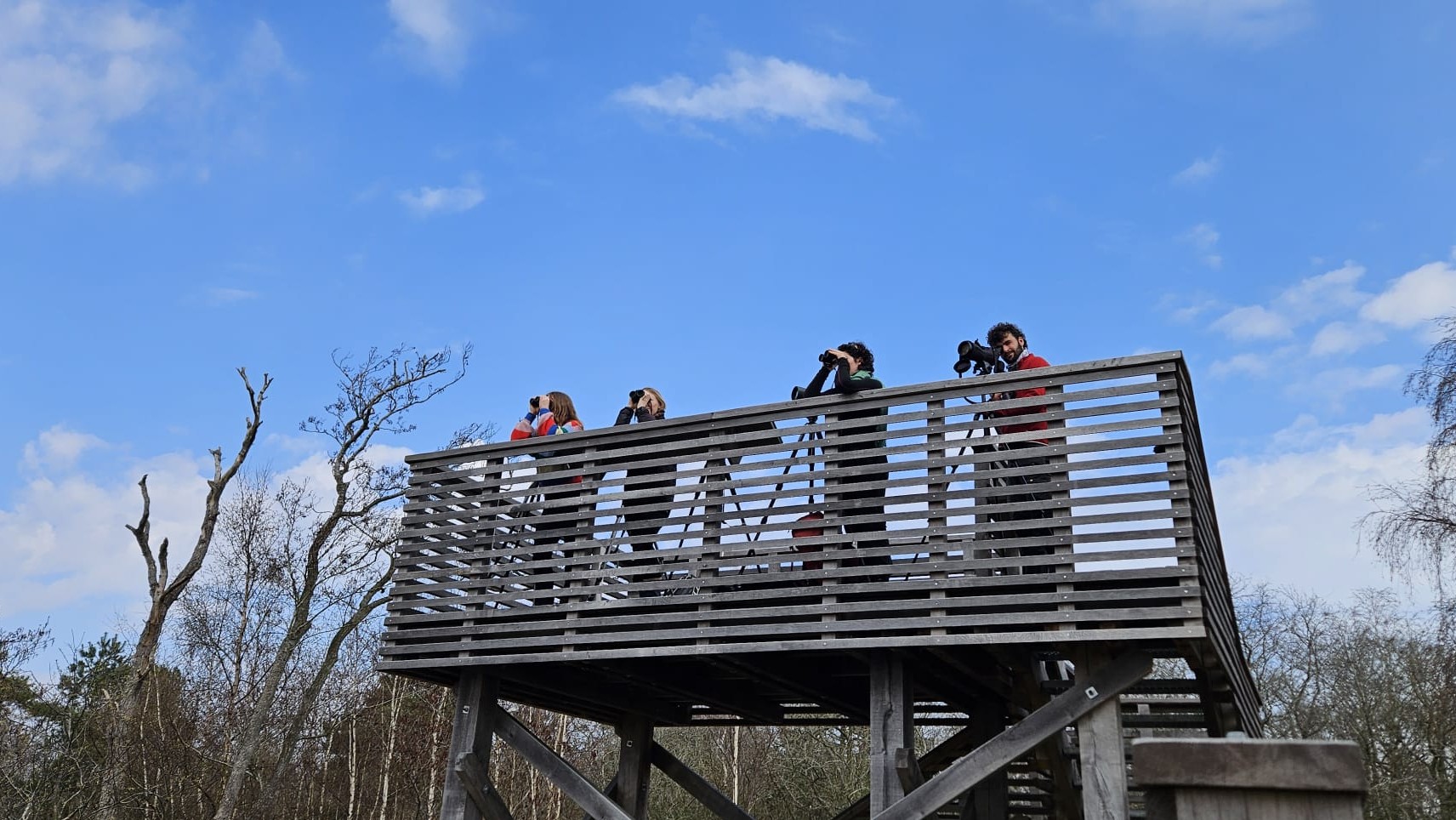 Looking out for the Garganey from the observation tower. Picture by Mads Elley
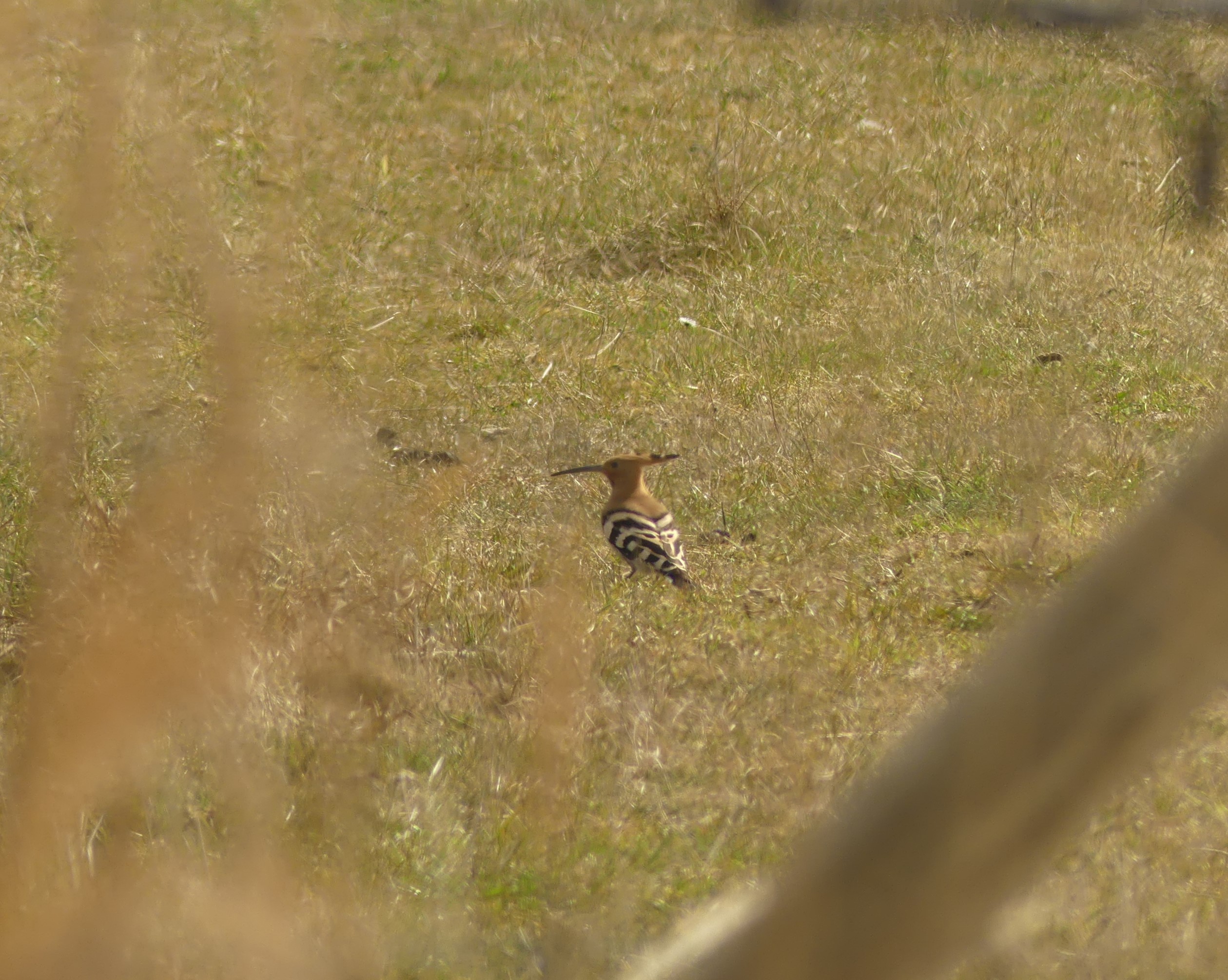
The bird of the day ! Foto : Théophile Fontaine
Se alle dagens observationer ved Gedser Odde i DOFbasen.
Folk på stationen: Cyann Ménard, Mathilde Sif Eiby, Sjoerd van Baal, Théophile Fontaine, Alba Maria Holmberg, Anne Ramskov Hermanns