-
FORSIDE

- Blog
Gedser Fuglestation Blog
Her på Gedser Fuglestations blog bringes korte nyheder i dagbogsformat om hændelser på fuglestationen.
Who's making that sound? A bird.
Ringmærkningen: A windier day than we would like for ringing, so not a big surprise when the first round didn't bring a lot. The first bird I extracted was a recapture of a Great Tit (Musvit) though, that Théo later exitedly told us, was one he ringed himself October 13th, first time he was here this past autumn. On top of that I also got my Lesser Whitethroat (Gærdesanger), as promised, and then the most adorable Goldcrest (Fuglekonge) couple, that were ready to make it official and put a ring on it.
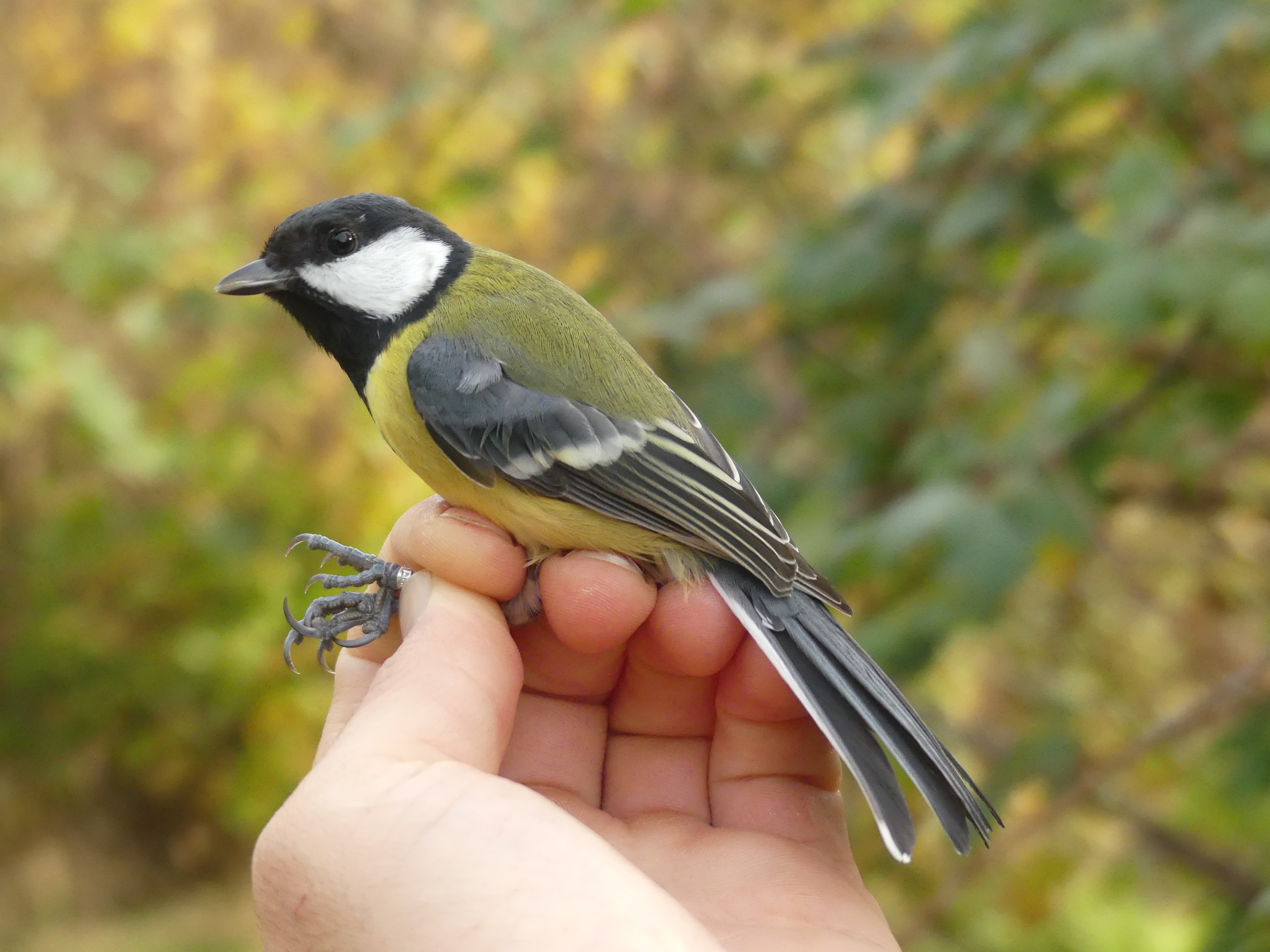
Bird (Fugle). Foto: Théophile Fontaine
With the slower day, there was time to practice and optimize my handling, and with Théo continuing to be a great teacher, I've now unlocked a safer and more effective way of the whole process, that I'm actually super excited about.
The singing birds around the house have been dominated by Chiffchaffs (Gransanger), Dunnocks (Jernspurv) and Skylarks (Sanglærke) for a while, but now the Blackcaps (Munk) are really making themselves heard, while also being our most caught species today. However with all the different calls and variations, I'm still nagging Théo the whole day like: "Is this *insert bird name*?" and "Who's making that sound?". I'm definitely improving, even though he still REALLY doesn't like my imitations.
Today's numbers: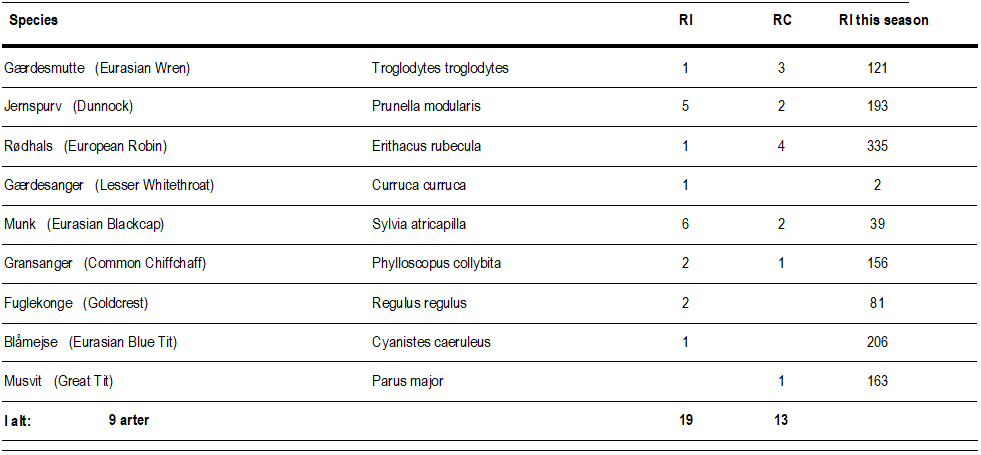
Trækket på Odden: The day started cloudy, but it became brighter and brighter as the time went on. The first hours were pretty actives for migration, as we could see big flocks of Barnacle Geese (Bramgås), as well as Eiders (Ederfugl) and Pigeons (Ringdue). Other species that we could see flying over the sea were some Divers (Lom), Mergansers (Toppet Skallesluger), Terns (Dværgterne & Fjordterne), Shelducks (Gravand), Common Scoter (Sortand), Gadwall (Knarand), Grey Herons (Fiskehejre), Cormorants (Skarv) and Gulls. We could also hear and then see a pair of Curlews (Storspove) flying over the seashore.
On the other hand, today the bushes on the cape were full of activity. Blue tits (Blåmejse), Goldcrest (Fuglekongen), Skylarks (Sanglærke), a Lesser whitethroat (Gærdesanger) and a Black cap (Munk) tried to find some food on the big amount of mosquitoes that woke up at the same time, filling the air and surfaces like a cloud. A Kestrel (Tårnfalk) spent some time over the bushes, searching for an interesting prey. The mosquitoes are not the only insects that are appearing on the grass: beetles from the family Meloidae, bumblebees and a butterfly (Aglais io) were easy to see.
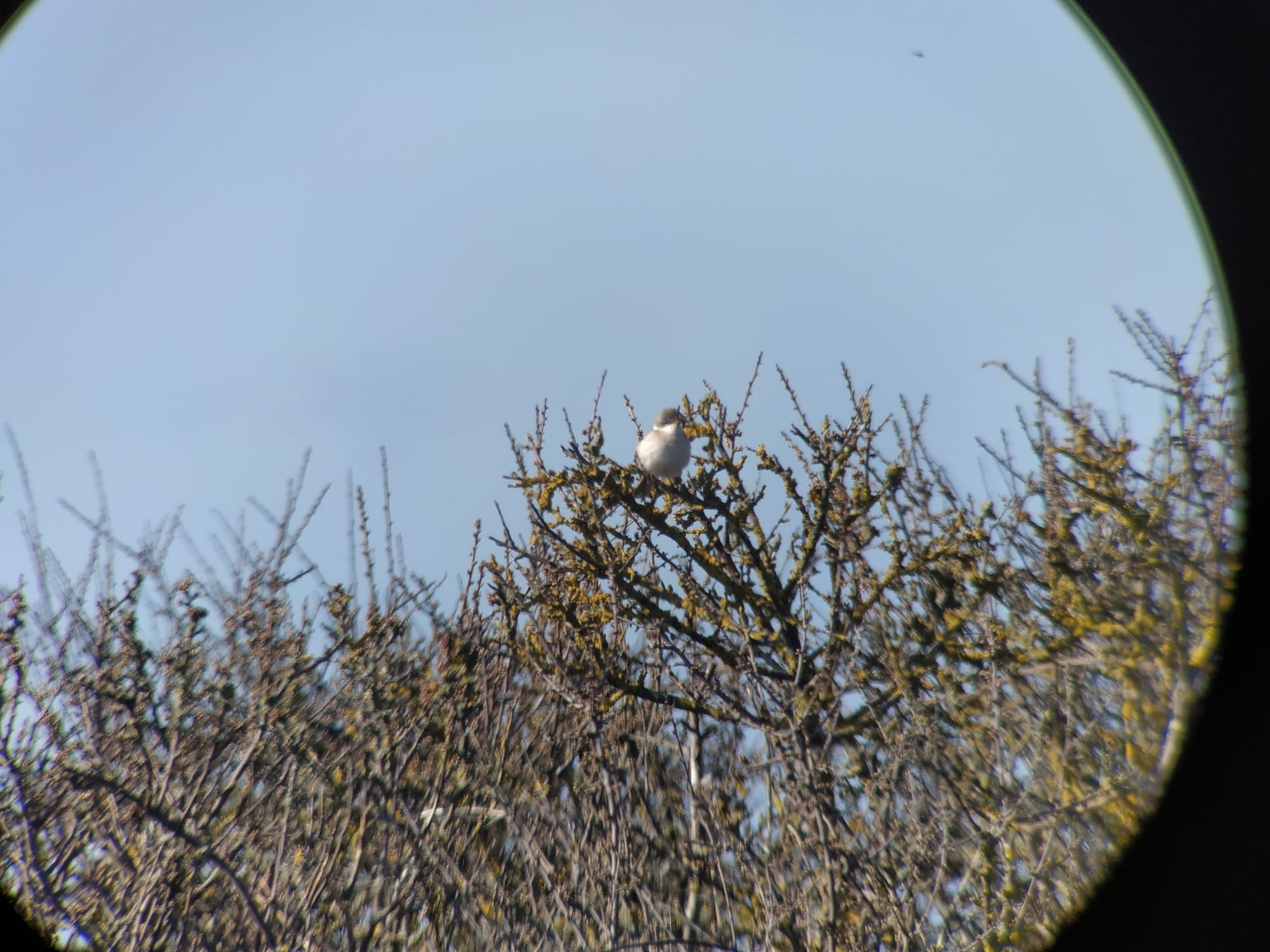 After spending some time in the garden, the Lesser whitethroat finally came to say hi at the tip! Picture by Cyann Ménard/GFU
Despite this activity, the last hours we spent at Gedser Odde were very slow for migration, the birds seemed have chosen other migration ways or were less ready to move under the shining sun.
Se alle dagens observationer ved Gedser Odde i DOFbasen.
The rest of the day: We've had some surprisingly warm afternoons in our garden these past days, since we're pretty sheltered from the wind. After today's sunny lunches and naps, the french (Cyann and Théo) and I (Mathilde, now sunburned) were hanging out on the terrace, when Mads sent Théo a message about a Black-Winged Kite (Blå Glente) approaching us, and shortly after we spotted it, as it flew close over the station! It was a first for me, and Théo hasn't seen one since he was a little kid back in 2016!
Now it's also the third day in a row we have dinner outside, so let's see how long we can keep that streak going!
Folk på stationen: Cyann Ménard, Mathilde Sif Eiby, Sjoerd van Baal, Théophile Fontaine, Olga Fernandez Enriquez