-
FORSIDE

- Blog
Gedser Fuglestation Blog
Her på Gedser Fuglestations blog bringes korte nyheder i dagbogsformat om hændelser på fuglestationen.
New species on both sides
Ringmærkningen: Imagine it’s your last day at Gedser and you don’t know whether to help with the ringing or the counting. There is a really nice team on both sides. What should you do?
It was impossible for me to miss the first rounds of ringing, and rightly so: we realised that it might be a good day for Willow warblers (Løvsange) and Common redstarts (Rødstjert), and the day numbers for these species were the best this season. I hope it will continue like this. While I was doing the second round with Olga, I saw a warbler getting into the net that looked strange. Indeed, the first Common whitethroat (Tornsanger) of the season ! After ringing it and taking a few pictures, we released the bird and saw another one in the bushes. I asked Cyann to confirm that it was a different bird, and it was !
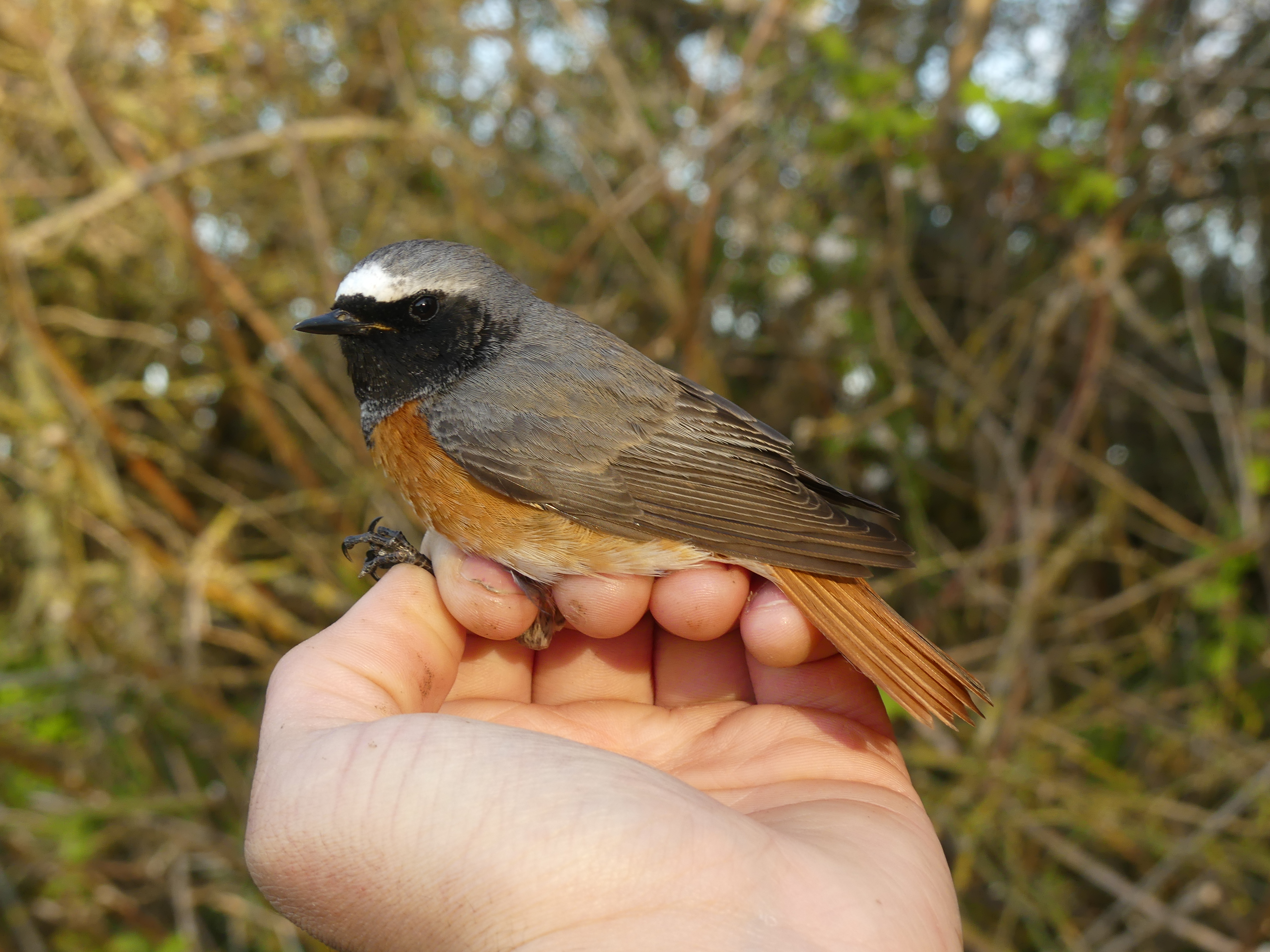
First adult male Common redstarts (Rødstjert) Foto Théophile Fontaine
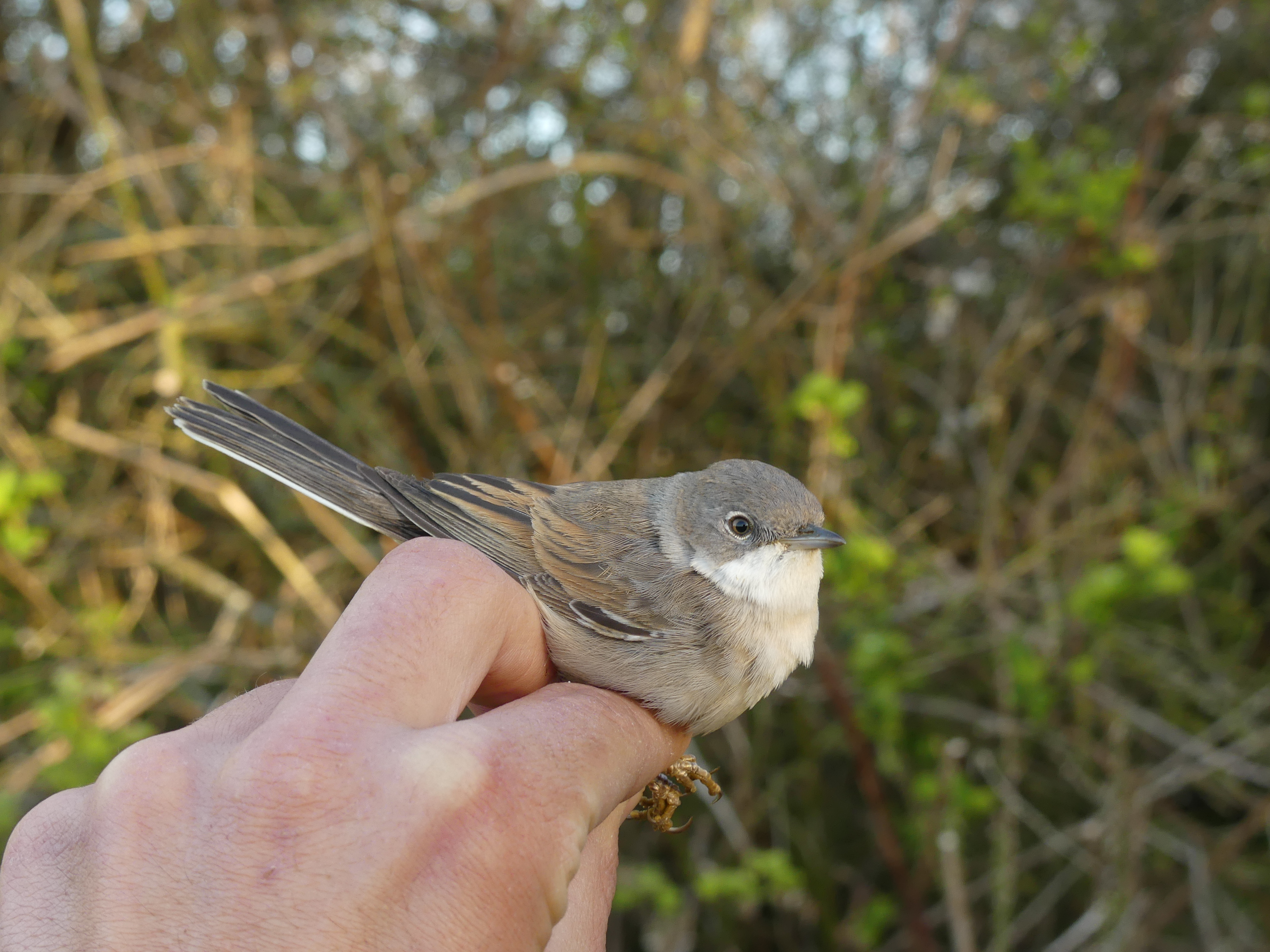
First Common whitethroat (Tornsanger) of the season Foto : Théophile Fontaine
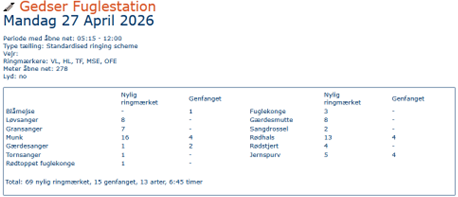
They ended up ringing 69 birds and recapturing 15, which is a very good number. I hope it continues like this for them !
Today's numbers :
Trækket på Odden: I met Louis at the tip at 9 am, when the air was getting warmer. I was hoping to see some raptors or the first common swift, even though the beginning of the day had been really calm. As I crossed the field next to the pond, I heard a Common whitethroat singing at the top of a bush. It was unringed, so it might have been the same one that Cyann and I saw earlier. The last hour was rather calm, with just a few Barn Swallows (Landsvale and House Martins (Bysvale) and Sand Martins (Digesvale) moving around. But the birds of the day were definitely the raptors! Looking east, I waited for a raptor to fly over the sea and saw a pale grey raptor with some black on the primaries. At first glance, I thought it was a Black-winged kite (Blå glente) returning, but no no no no, it was clearly the first Pallid harrier (Steppehøg) of the season: a beautiful adult male ! Louis remained really calm, but it was obvious that I was very happy to see this bird ! But the surprises didn't stop there. Ten minutes later, I spotted a female type Harrier arriving from the sea, pallid ! It took a while, but Louis finally expressed his joy. Seeing two Pallid Harriers in ten minutes is not that common here.
Now it's time for me to get a good night's sleep before travelling to Ottenby tomorrow for a new ringing adventure. I will leave with the same feeling I had in November — I will come back ! I am grateful to the people I met here over the past two weeks for making my stay so enjoyable with good food (very important!), lots of laughter, and some really interesting discussions about ringing. As a ringer, I found it very interesting and rewarding to teach ringing to trainees. I will finish with these words: always remember, whether you are a ringer or a ringer assistant, that learning is an ongoing process and that every bird is an opportunity to learn more !
Tak for alt, og på gensyn
Theo
Folk på stationen: Cyann Ménard, Mathilde Sif Eiby, Sjoerd van Baal, Théophile Fontaine, Olga Fernandez Enriquez, Louis A Hansen, Hans Lind, Vagn Lind