-
FORSIDE

- Blog
Gedser Fuglestation Blog
Her på Gedser Fuglestations blog bringes korte nyheder i dagbogsformat om hændelser på fuglestationen.
Slow in the morning, but with two new species for the season!
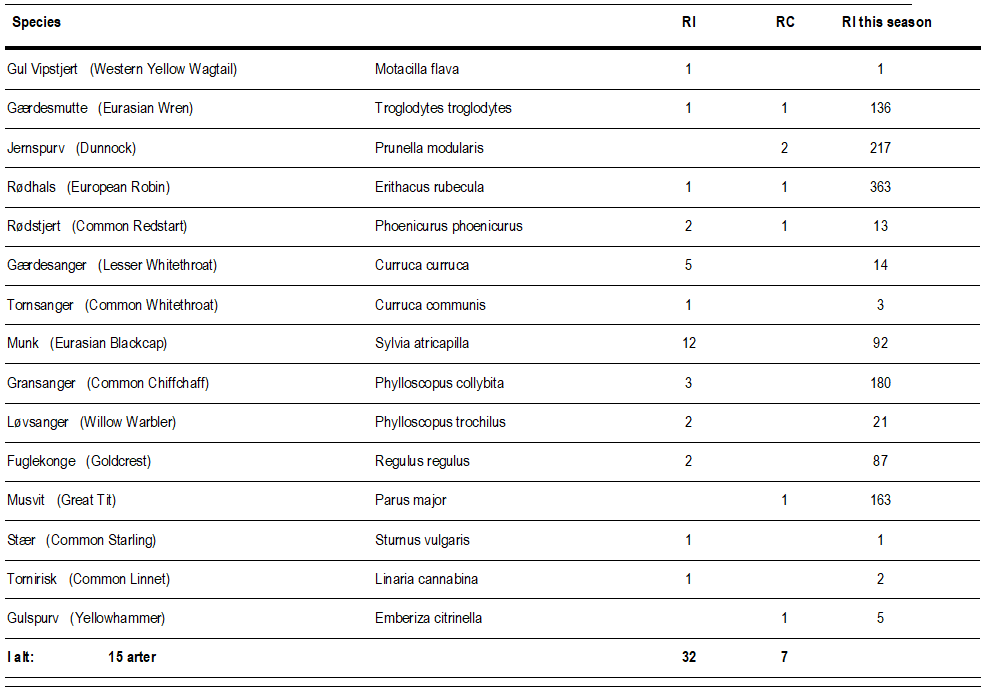
Ringmærkningen: The ringing day has been calmer than the previous days, with a total of 32 rung birds. The most common species in the nets is the black cap (munk) without any doubt. It is followed by the lesser white throat (Gæardesmutte), the chiffchaff (gransanger), the willow warbler (løvsanger), the goldcrest (fuglekonge) and the common redstart (rødstjert). We also caught a yellowhammer (gulspurv) that was a recapture from two years ago. As we were not too busy on the rounds, we decided to open the nets by the pond expecting to catch some new species. And we succeeded! First, it was a beautiful female starling (stær) that got trapped on the net, then a linnet (tornirisk), and finally a yellow wagtail (gul vipstjert)! That made me very happy because wagtails are my favorite birds and this is the first time that I have had the chance to see a yellow wagtail that close and hold it on my hands. This starling and yellow wagtail are the first ones of their species for the season.
Today's numbers:
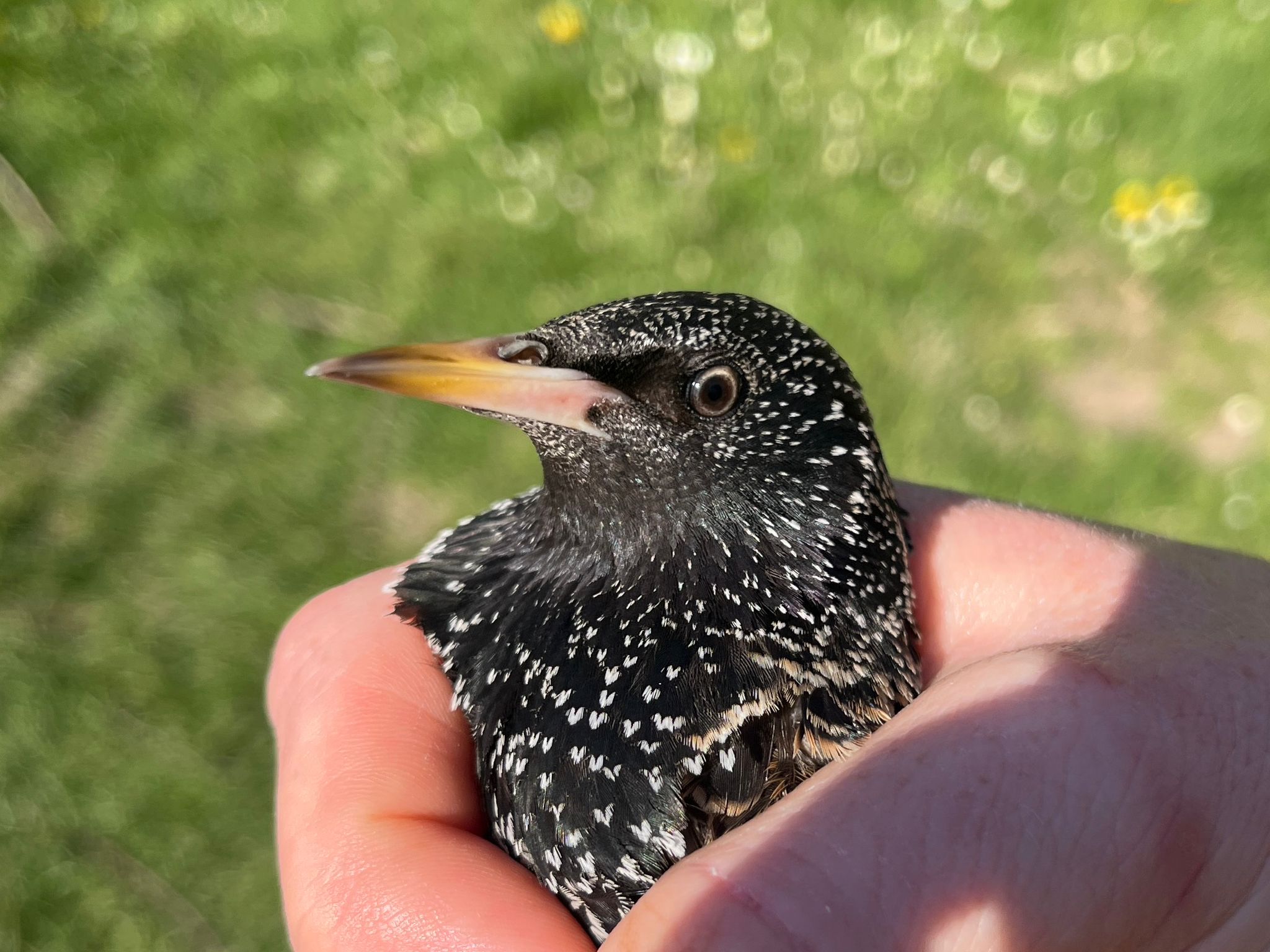 Starling (Stær). We can notice it is a female because of the pinkish colour of the beak and the golden eyes. Picture: Mathilde Sif Eiby/GFU.
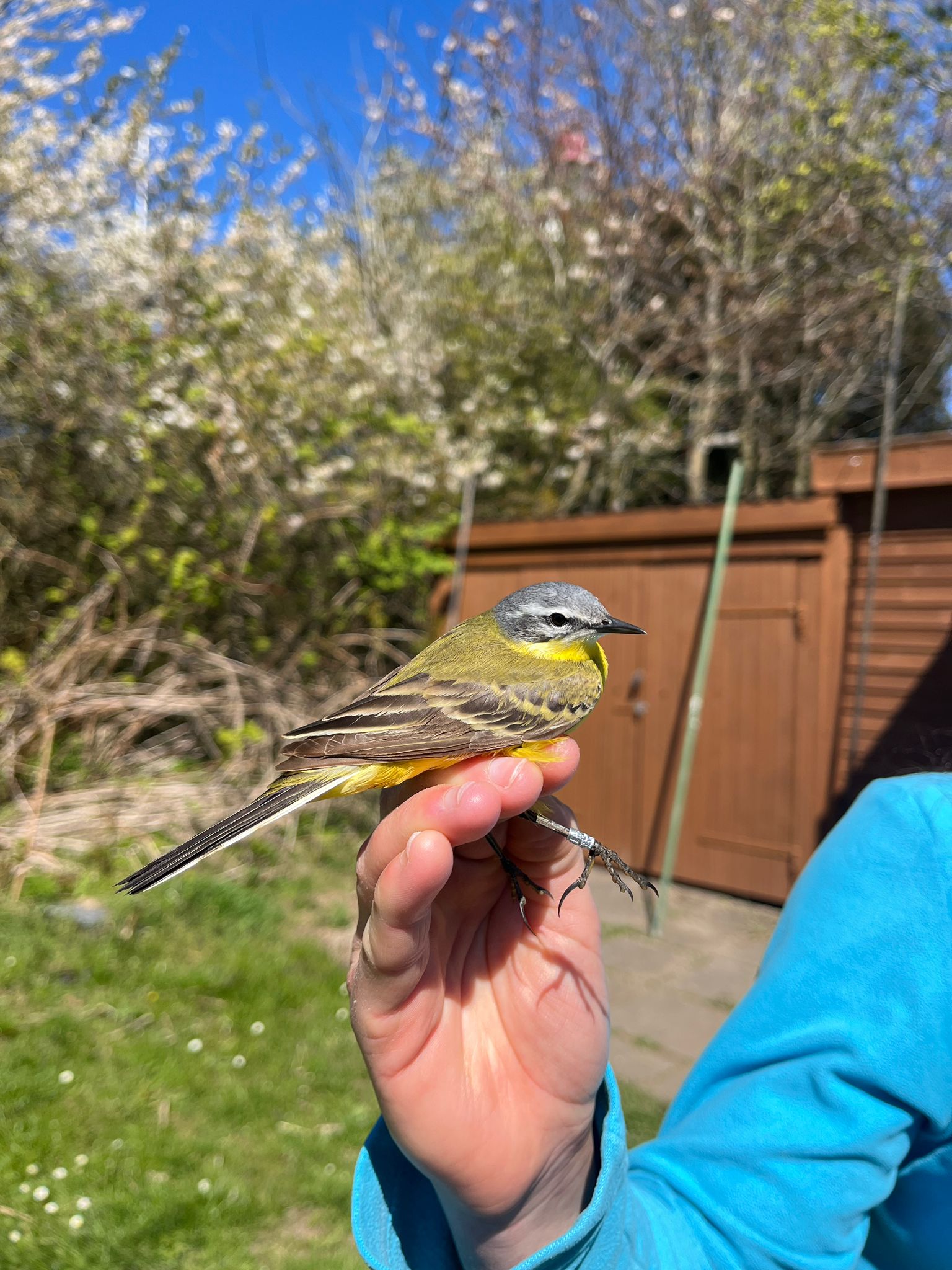 Beautiful yellow wagtail (gul vipstjert). Picture: Mathilde Sif Eiby/GFU.
Trækket på Odden: No migration count for me today, since I really wanted to focus on my master’s thesis and spend the day working on it; so I’m very grateful that Louis has been able to take over for me lately. Since the sun was already shining early this morning, I decided to sit outside and enjoy the fresh air, even without doing any active fieldwork. I can now say that was a brilliant idea because, as I was settling in, I looked up and spotted my first Osprey (Fiskeørn) of the season, flying low right over the station!! First to stunned and amazed to process the information, I then obviously had to run to the edge of the garden to try to follow it, but that got me nothing but a bit of cardio and shortness of breath… It seems raptors have that kind of effect on me. Louis also told me about a female type Merlin (Dværgfalk) which seemed to come hunting in the garden, but it has been avoiding the nets all morning long.
Apart from these few movements close to the station, I didn’t get much news from the tip as it was once again a slow day. Such days are great to reflect on what we see, to think deeper on the behaviours we can observe, and wander about the reasons behind them. For example, why does many raptors seem to have a certain flyway while smaller birds like passerines follows another? We still have so much to understand… According to Louis, the oddest observation for today was of Barn Swallow (Landsvale) in juvenile plumage with short or almost not any long outer rectrices. The colours of the throat and frame were also very weakly set for this bird, seen flying with other individuals of its kind.
Se alle dagens observationer ved Gedser Odde i DOFbasen.
Folk på stationen: Cyann Ménard, Mathilde Sif Eiby, Sjoerd van Baal, Olga Fernandez Enriquez, Louis A Hansen, Hans Lind, Vagn Lind