-
FORSIDE

- Blog
Gedser Fuglestation Blog
Her på Gedser Fuglestations blog bringes korte nyheder i dagbogsformat om hændelser på fuglestationen.
Morgenfrisk nattergal og lidt om børstehår
Endnu en skøn dag i Gedser med perfekt ringmærkningsvejr. Nettene kom op kl. 5 og allerede på første runde fik vi dagens fugl, en nattergal (Luscina luscina). På afstand ser den måske ikke ud af så meget, men i hånden kan vi se de mindre farvevariationer og små detaljer i mønstre omkring hovede og bryst.
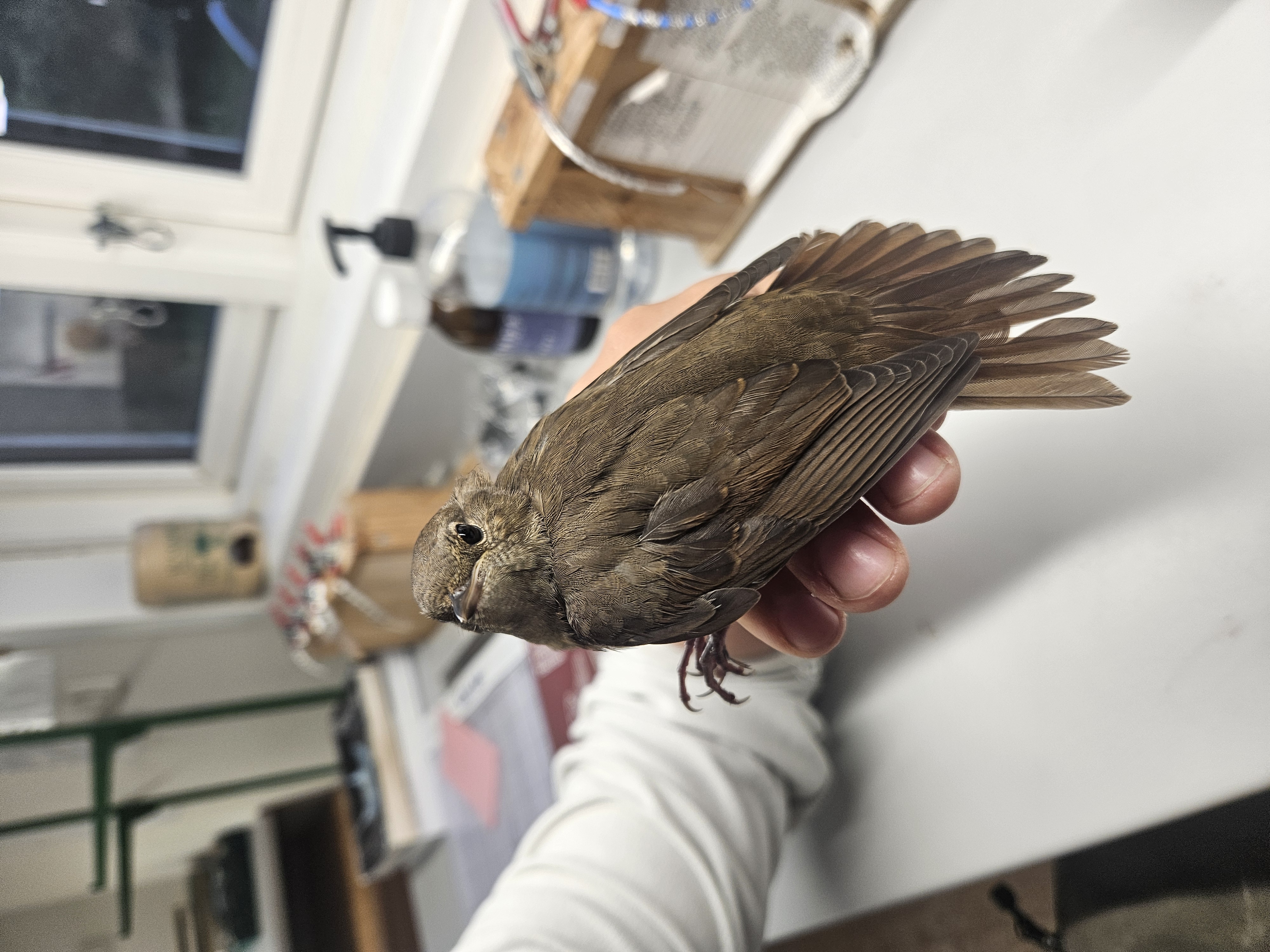
En morgenfrisk nattergal, 1k
Ellers fangede vi klassikerne, igen med størst representation af gærde- og tornsanger. Også lidt kærsangere fik vi i dag og jeg noterede mig de flotte børstefjer, de har om næbbet. Børstefjer består af et nøgent fjerskaft og sidder rettet fremad fra fuglens næb og øjne. De findes blandt en lang række arter, men mest hos nataktive fugle, samt insektædere såsom svaler. Det er ikke helt sikkert hvad deres funktion er, men de kan muligvis fungere som øjenvipper og/eller knurhår hos pattedyr. Altså at de beskytter øjnene for støv og partikler, og at de kan sanse miljøet omkring fuglen, f.eks. forandringer i vindforhold mens de flyver. Det er også teoretiseret at de hjælper insektædere med at fange bytte, specielt blandt nataktive fugle såsom natravne. Det virker som et hidtil meget uudforsket emne.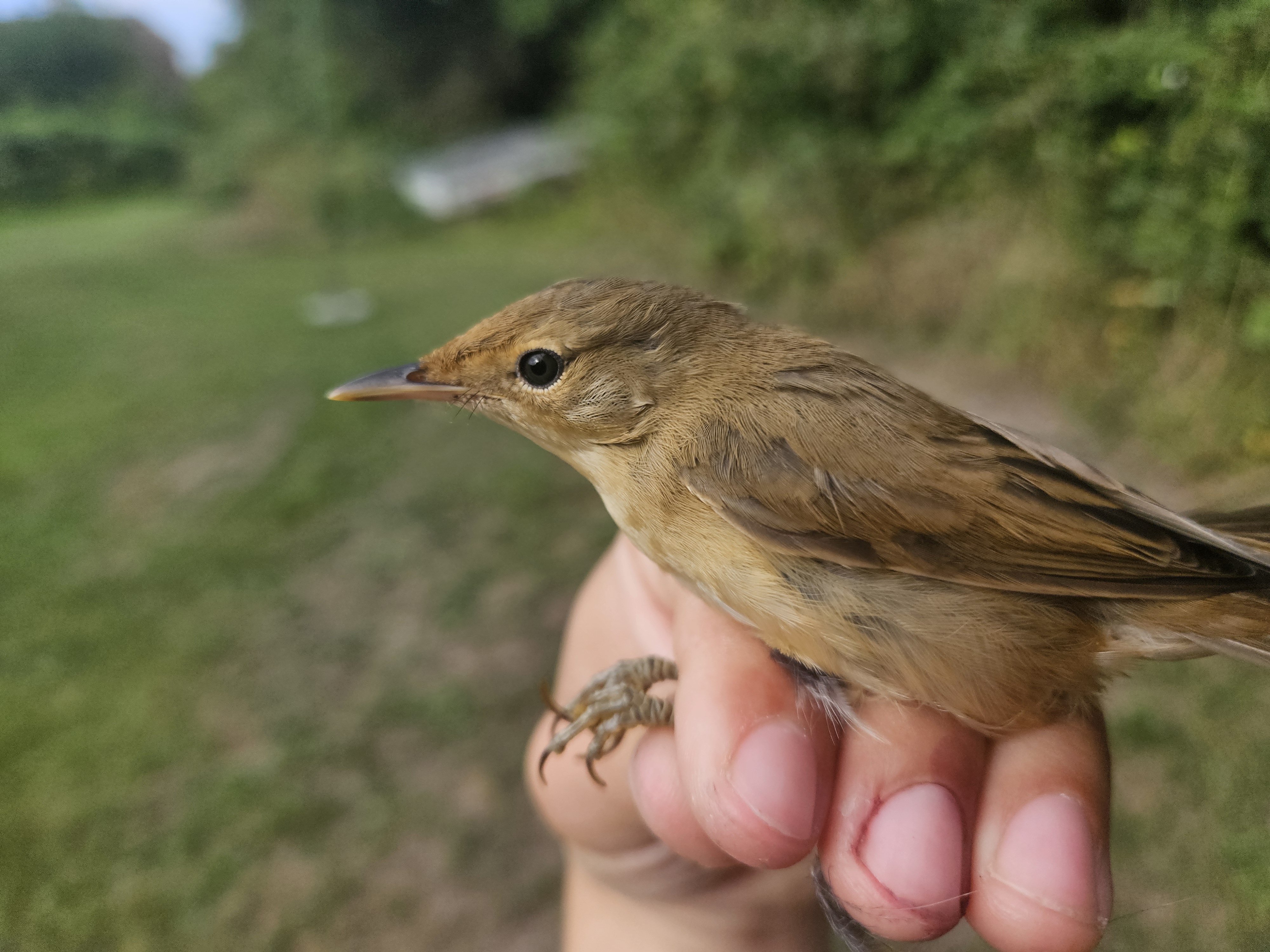 Kærsanger, 1k, med små børstehår om næbbet
Det ser ud til at vi får flere dage med solskin og varme de næste par dage. Efter en lang, og meget varm dag i går tog vi en aftentur på stranden og køle ned sammen med ederfuglene, ternerne, og et par fløjlsænder.
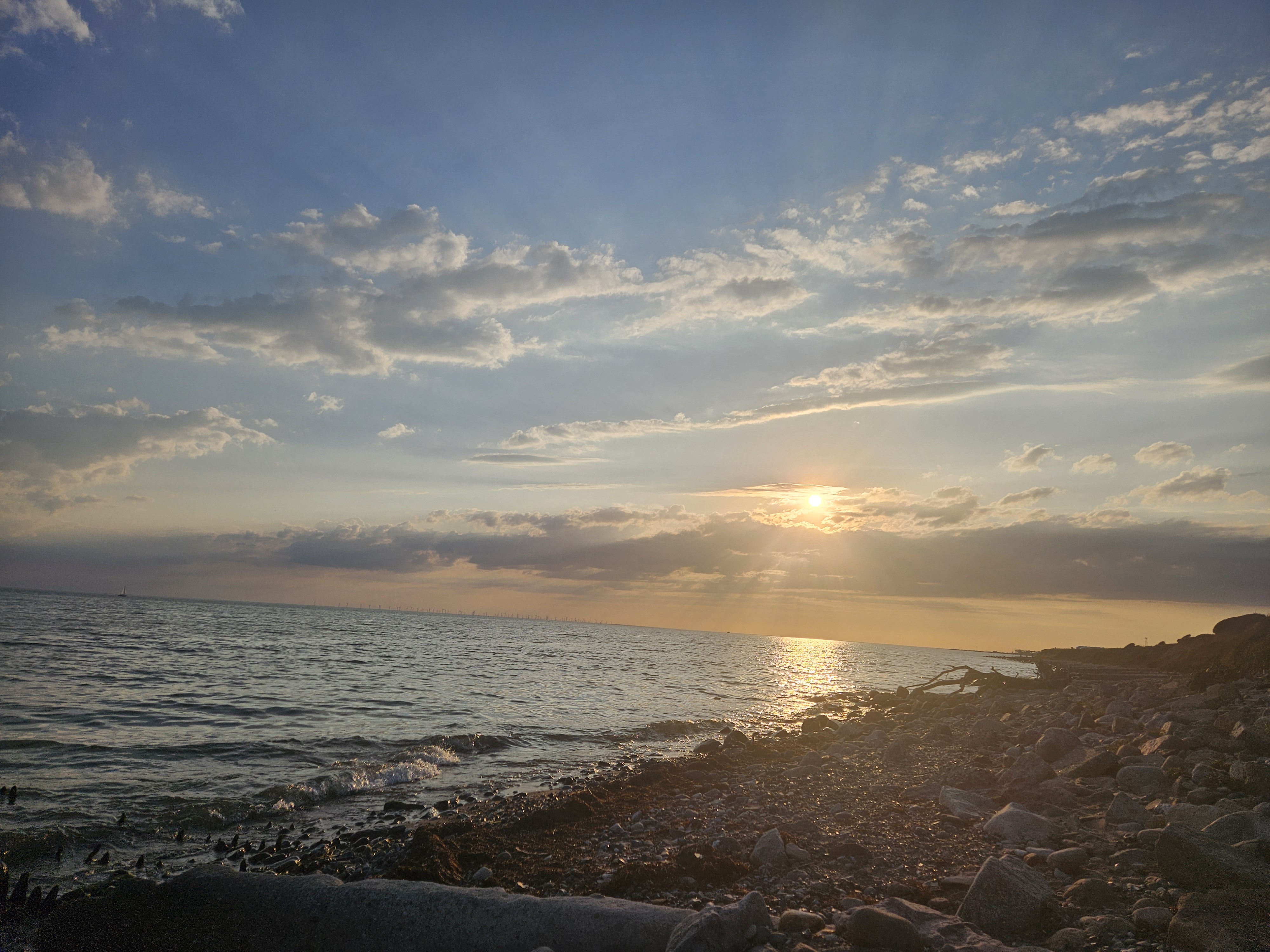 Solnedgang ved Gedser Odde
Dagens fangst
Net op: 05:00, Net ned: 10:00, Netmeter: 278
Jernspurv / Dunnock / Prunella modularis (1)
Nattergal / Thrush Nightingale / Luscinia luscinia 1
Rødstjert / Common redstart / Phoenicurus phoenicurus: 1
Kærsanger / Marsh Warbler / Acrocephalus palustris: 3
Gulbug / Icterine Warbler / Hippolais icterina: 3 (2)
Gærdesanger / Lesser Whitethroat / Curruca curruca: 7 (1)
Tornsanger / Common Whitethroat / Curruca communis: 7 (1)
Havesanger / Garden Warbler / Sylvia borin: 3
Munk / Eurasian Blackcap / Sylvia atricapilla 1
Musvit / Great tit / Parus major (1)
I alt: 26 mærkninger, 6 genfangster, 32 fugle, 10 arter
På stationen: Storm Hauris Borum, Mathilde Lundt Larsen, Cyann Ménard
Første skovsanger og svale-bingo!
Dagen startede ud med en forventning om ustadigt vejr ud på morgenen. Det blev lyst og gråt og lidt fugtigt, men regnen kom ikke som andet end et par dryp over nærmest blot to minutter. Morgenen klarede op, og vi kunne gennemføre standardringmærkningen.
Det blev til et par enkelte fugle per runde og en del af de velkendte arter for denne tid - igen mødte tornsangere og gærdesangere op, og også gulbugen vendte tilbage. Også en ung rødstjert han fandt vej til nettet.
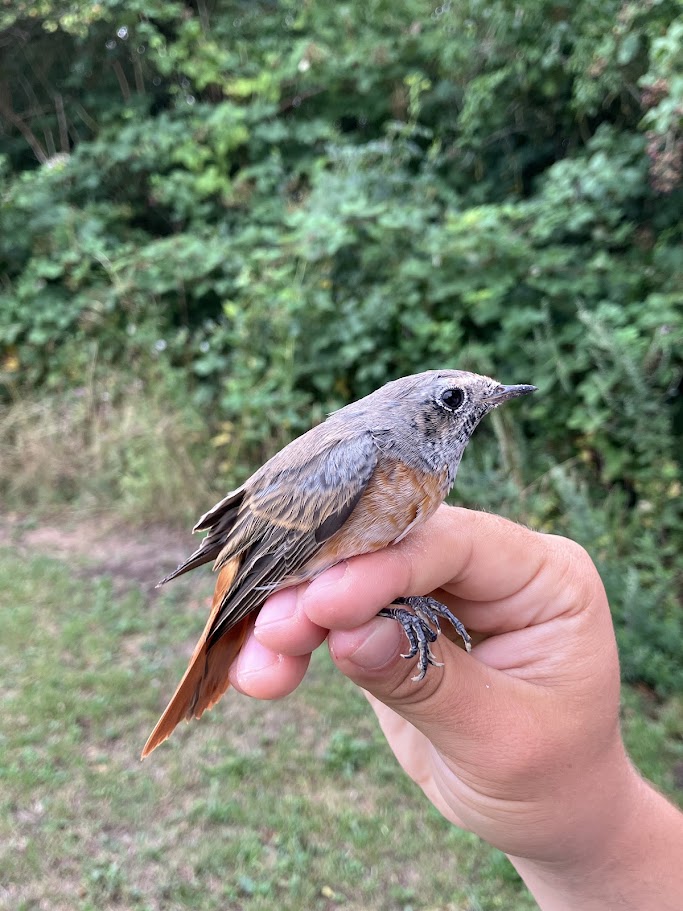
1k rødstjert han.
I én runde kom dagens fugle - da Storm og jeg mødtes halvvejs på runden kom vi begge med spændende fugle i poserne. Han bragte en broget fluesnapper, som jeg håber at se ankomme mere talrigt den næste tid. Jeg bragte en skovsanger, som blev vi udnævnte til dagens fugl - det er den første skovsanger for denne efterårssæson. Den klare grøn-gule farve, øjenbrynsstribe og hvide bug skaber flotte kontraster, som man straks genkender i et net.
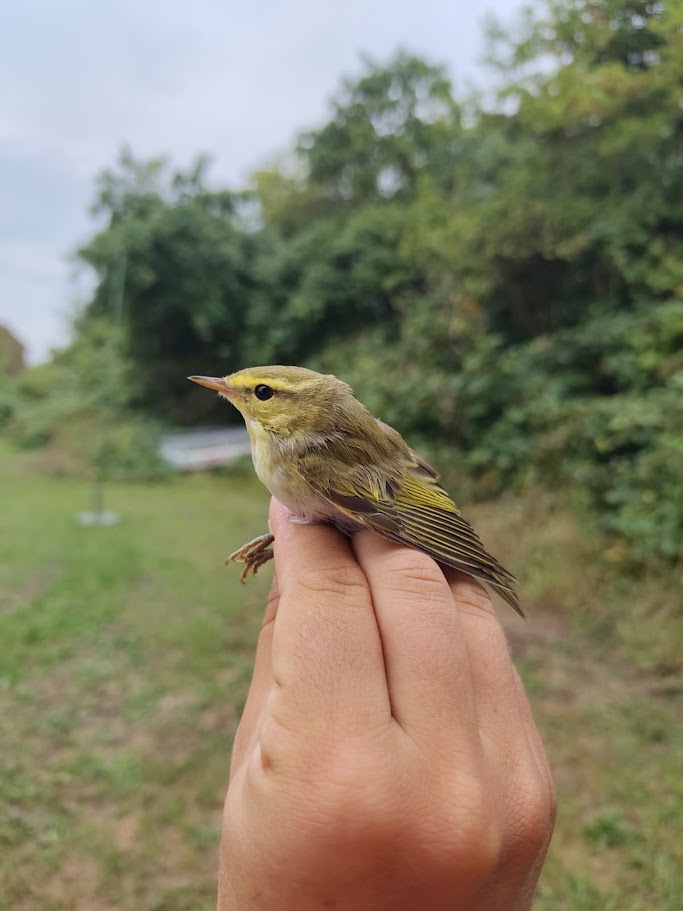
1k skovsanger.
Om eftermiddagen forsøgte vi igen med fangst på engen ved afspilning af lyd. Til at begynde med stod det lidt tamt til med svalerne, men lige pludselig ankom der en større flok af både landsvaler og bysvaler, som fangede insekter ved søen. De blev ved med at flyve lavt over og netop undgå nettene - samt sætte sig på toppen af netlinerne, ligesom forleden dag. På et tidspunkt satte ni svaler sig på toppen af et net, så linjen bøjede ned - og dette fik således en bysvale til at dumpe ned i nettet under ved den fælles vægt af fuglene! Vi blev begejstrede for denne succes - og lige efter faldt også en hvid vipstjert i et andet net, efter den havde trippet rundt under nettet i lidt tid. Vi fik dem bragt til laboratoriet og ringmærket. Her kunne det tydeligt ses, at det var en ung hvid vipstjert med en tydelig fældningsgrænse og en ung bysvale, som fremstod brunlig og ikke endnu har opnået de blanke, blålige fjer som de voksne.
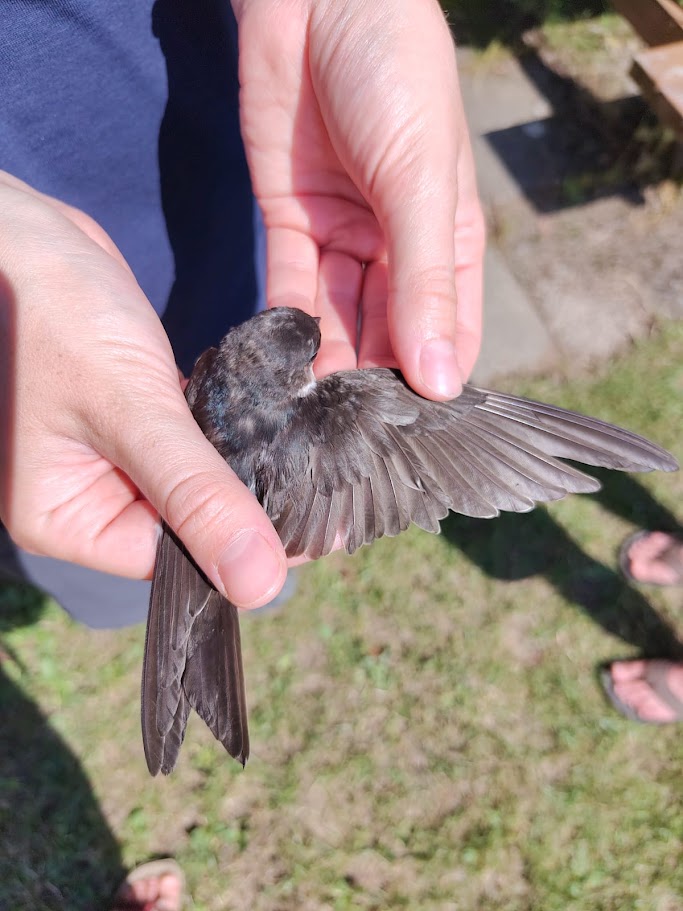
1k bysvale.
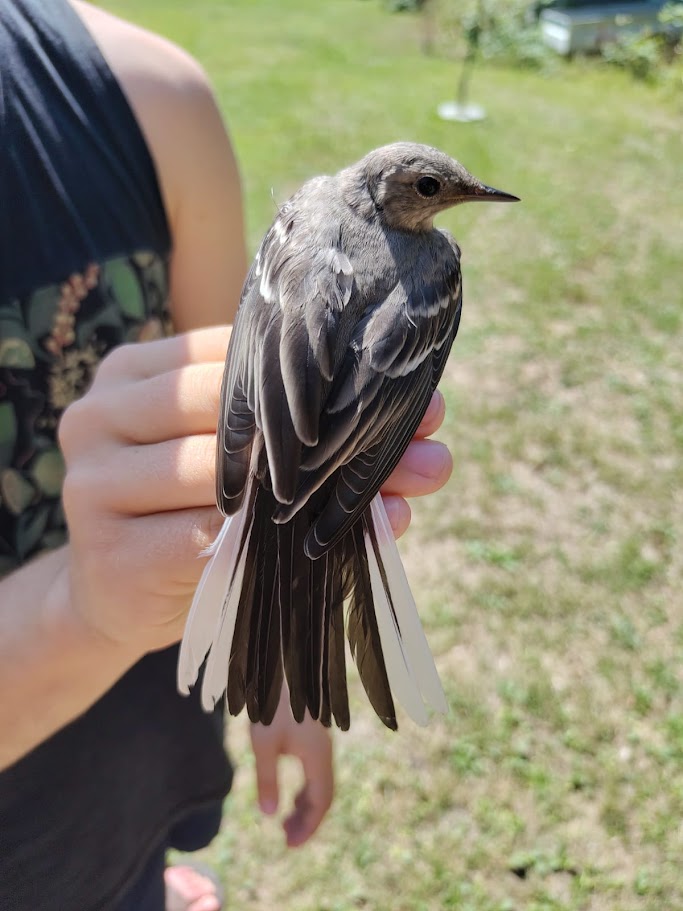
1k hvid vipstjert.
Vi fortsatte og fik yderligere gevinst - hvad vi kaldte svale-bingo! En digesvale og en landsvale, begge unge 1k. Herved fik vi netop bingo ved at kunne sammenligne de tre svalearter, vi ser regelmæssigt her og studere dem i hånden. Digesvalen var betydeligt mindre og har som ung brogede brune fjer samt en halsring. Landsvalen kan på en voksen bestemmes til køn ud fra længden af yderste halefjer, der er længere hos hannen - men da dette var en ung (bestemt ud fra fældning og manglende glans på vingen og hovedet).
Således fik Storm tre nye ringmærkningsarter i dag (skovsanger, bysvale og hvid vipstjert). Også jeg fik en ny ringmærkningsart - digesvalen.
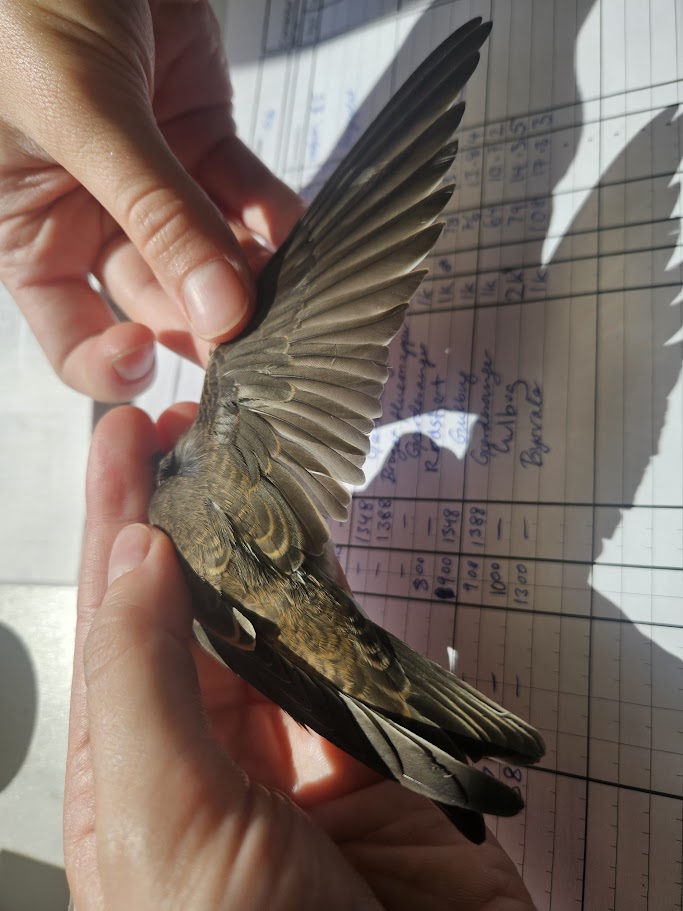
1k digesvale.
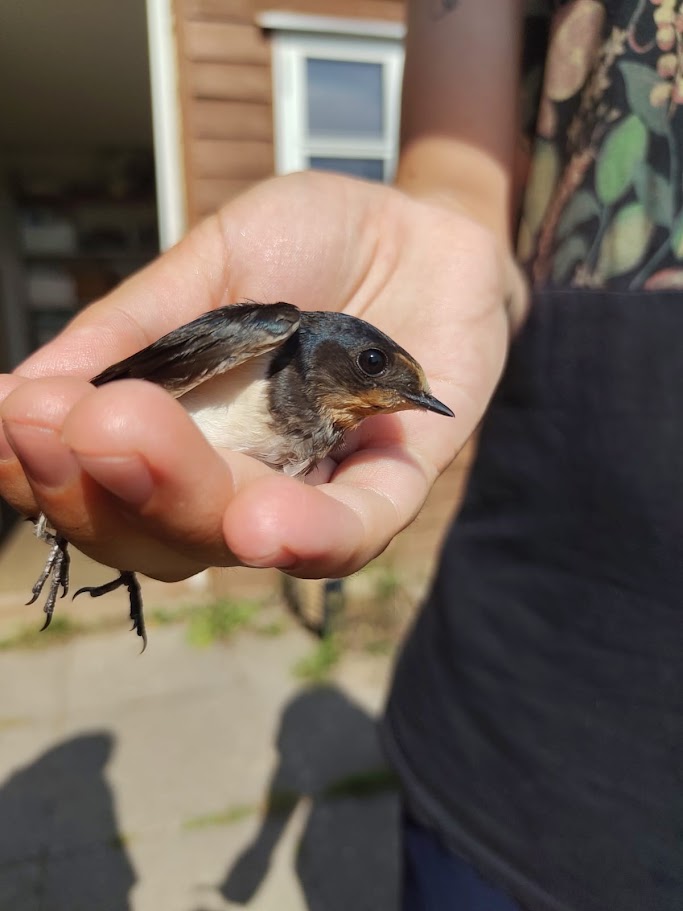
1k landsvale.
Dagens fangst (standardringmærkning)
Net op: 05:00, Net ned: 10:00, Netmeter: 278
Rødstjert / Common redstart / Phoenicurus phoenicurus: 1 (1)
Kærsanger / Marsh Warbler / Acrocephalus palustris: 1 (1)
Gulbug / Icterine Warbler / Hippolais icterina: 7 (1)
Gærdesanger / Lesser Whitethroat / Curruca curruca: 6 (1)
Tornsanger / Common Whitethroat / Curruca communis: 6 (2)
Havesanger / Garden Warbler / Sylvia borin: 1
Skovsanger / Wood Warbler / Phylloscopus sibilatrix: 1
Broget Fluesnapper / Pied Flycatcher / Fidecula hypoleuca 1
I alt: 24 mærkninger, 6 genfangster, 30 fugle, 8 arter
Dagens eftermiddagsfangst (engen)
Hvid vipstjert / White Wagtail / Motacilla alba: 3
Bysvale / House Martin / Delichon urbicum: 1
Digesvale / Sand Martin / Riparia riparia: 1
Landsvale / Barn Swallow / Hirundo rustica: 1
I alt: 6 mærkninger, 4 arter
På stationen: Storm Hauris Borum, Mathilde Lundt Larsen, Cyann Ménard
Så kom regnen
Morgenen startede ud meget sløvt med 0-3 fugle i nettene per runde. Til gengæld fik vi også en rødrygget tornskade, denne gang en ungfugl. Mathilde ringmærkede den og det blev en ny mærkningsart for hende. Selvom ungfuglen ikke har helt så ikoniske farver som den voksne hanfugl, er den utrolig smuk med sine flotte rød- og mørkebrune bånd på vinger og ryg.
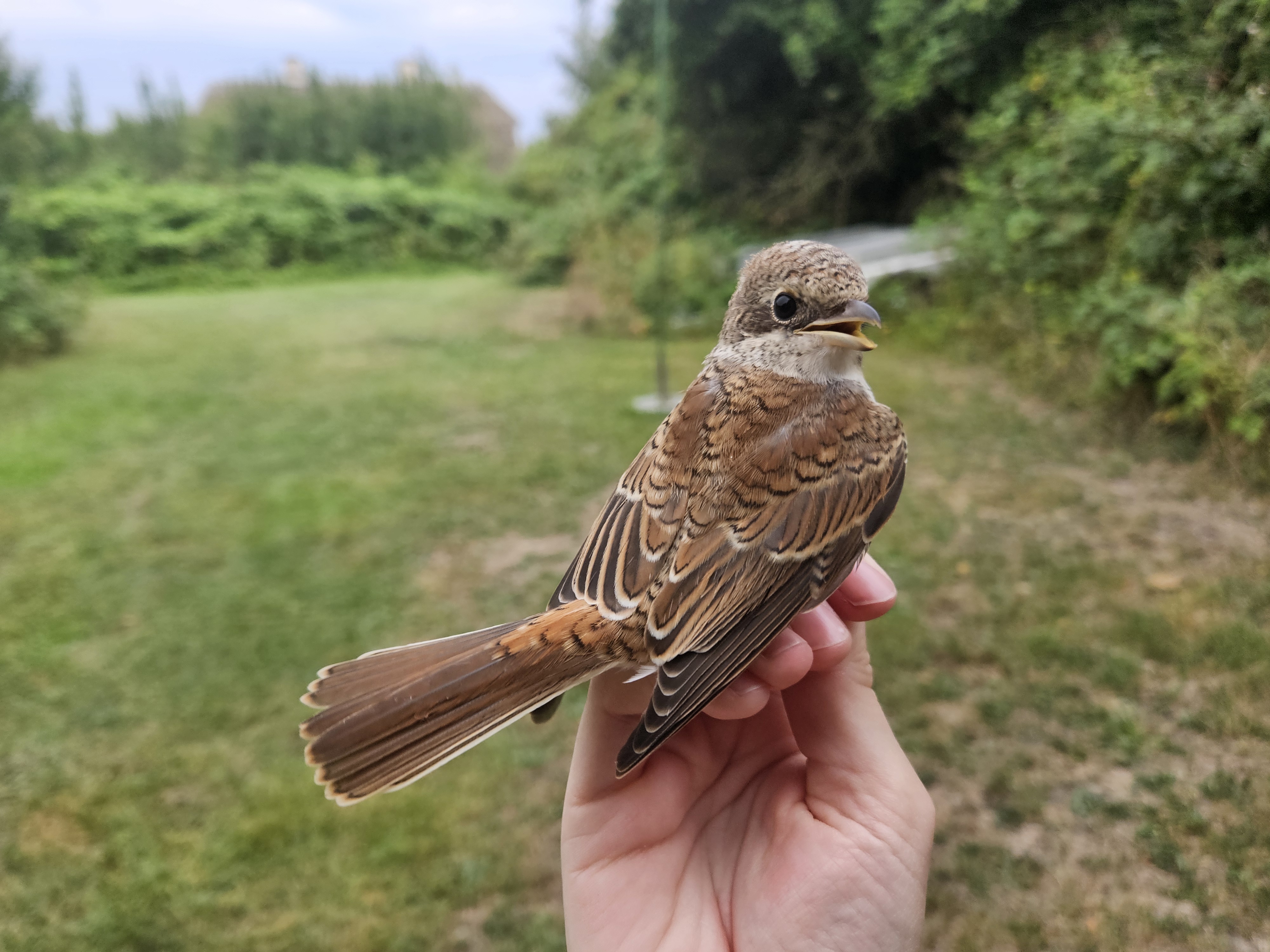
Rødrygget tornskade, 1k. Det er næsten umuligt at adskille han og hun som ungfugl. En adult han er nem at kende, blandt anden på den karakteristiske sorte 'banditmaske', mens en adult hun har grå nakke og ensfarvet ryg.
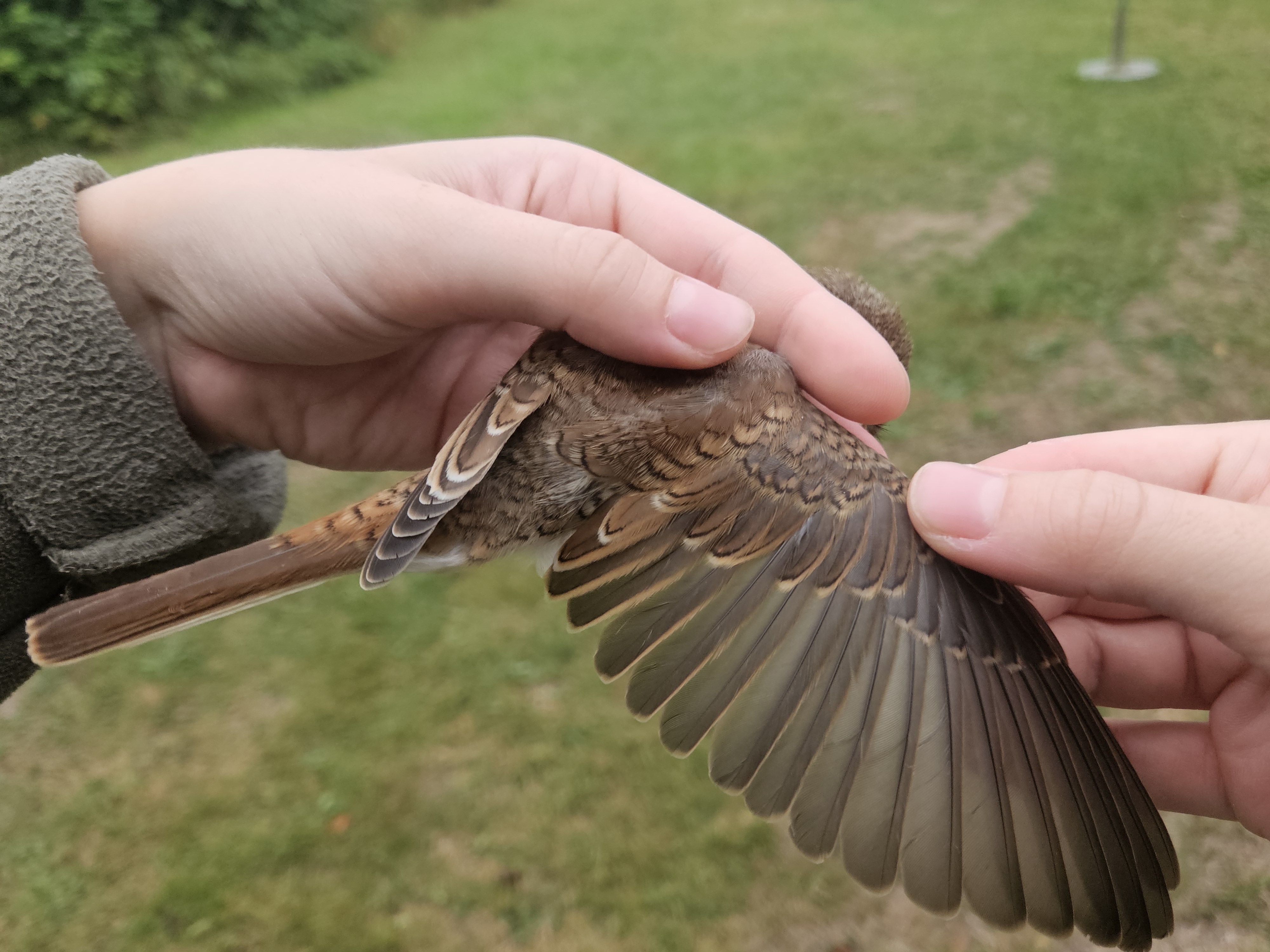
Tydelige mørke bånd og lyse spidser på dækfjerene hos ungfuglen.
Der var lovet regn og torden om formiddagen, hvilket startede kl 9. Vi var derfor pludselig nødt til at få lukket nettene. Fuglene reagerede også på vejrskiftet ved at flyve lavt for at søge i skjul, så på dagens sidste runde havde vi hele 16 fugle i nettene! Det er interessant hvordan antallet af arter skifter fra dag til dag. Gærdesangerne endte med at være de mest talrige i dag, med 12 nye ringmærkninger. Vi havde også lidt flere tornsangere men færre gulbug end vi har haft de andre dage. Derudover fik vi endnu et par meget unge jernspurv i nettene, højst sandsyndligt alle fra et kuld klækket her i haven.
Heldigvis mistede vi kun en times ringmærkning på grund af regnen og efter mange dages tørvejr og varme, gør det godt for planterne (og dermed også havens dyreliv). Strandturen blev udsat og vi har haft en stille eftermiddag indendørs. Jeg har udnyttet tiden med at læse lift op på fældningsmønstre blandt sangfuglene - noget, der virkelig har udfordret mig som nybegynder til ringmærkning! Ottenbys online ringmærkningsguide er en stor hjælp, både til at forklare begreber og sammenligne billeder for de mest hyppige arter: ringersdigiguide.ottenby.se
Dagens fangst
Net op: 05:00, Net ned: 09:00, Netmeter: 278
Jernspurv / Dunnock / Prunella modularis 2 (1)
Rødstjert / Common redstart / Phoenicurus phoenicurus 1
Kærsanger / Marsh Warbler / Acrocephalus palustris 1
Gulbug / Icterine Warbler / Hippolais icterina: 2
Gærdesanger / Lesser Whitethroat / Curruca curruca: 12 (1)
Tornsanger / Common Whitethroat / Curruca communis: 8
Munk / Blackcap / Sylvia atricapilla: 1 (1)
Løvsanger / Willow Warbler / Phylloscopus trochilus 1
Rødrygget tornskade / Red-Backed Shrike / Lanius collurio 1
I alt: 29 mærkninger, 3 genfangster, 32 fugle, 9 arter
På stationen: Storm Hauris Borum, Mathilde Lundt Larsen, Cyann Ménard
Flere fugle PÅ end i nettene
Dagen i dag var meget rolig og solrig, hvilket afspejles i ringmærkningen. Vi havde således et par fugle per runde, men det betød dog, at vi havde tid til at studere nogle detaljer på fældningsmønstre på især gærdesangere og tornsangere.
Første kalenderår (1k) tornsangere kan her i august udvise en fældningsgrænse i de inderste af dækfjerene, men dette er ikke tilfældet hos alle individer, hvilket leder til at man må vurdere den overordnede kvalitet af fjer samt se på de yderste halefjer, der på en voksen fugl er mere klar hvid. Også fuglenes øjne blev studeret i dag, da øjnene på gærdesangere og tornsangere ændrer sig med alderen, fra en grålig brun til en mere varm (nogen gange gullig eller orange) brun.
Vi har fulgt med de seneste par dage, hvordan en fiskehejre vandrer omkring i haven. Den har været forbi oppe ved huset, og i dag var den inde omkring nettene i haven - og på en af de sidste runder gik den rundt under nettet. Mens vi så på på behørig afstand, sprang den pludselig mod nettet! Inden jeg kunne nå at overveje andet, var den videre - men heldigvis ikke til skade for hverken net eller fugl.
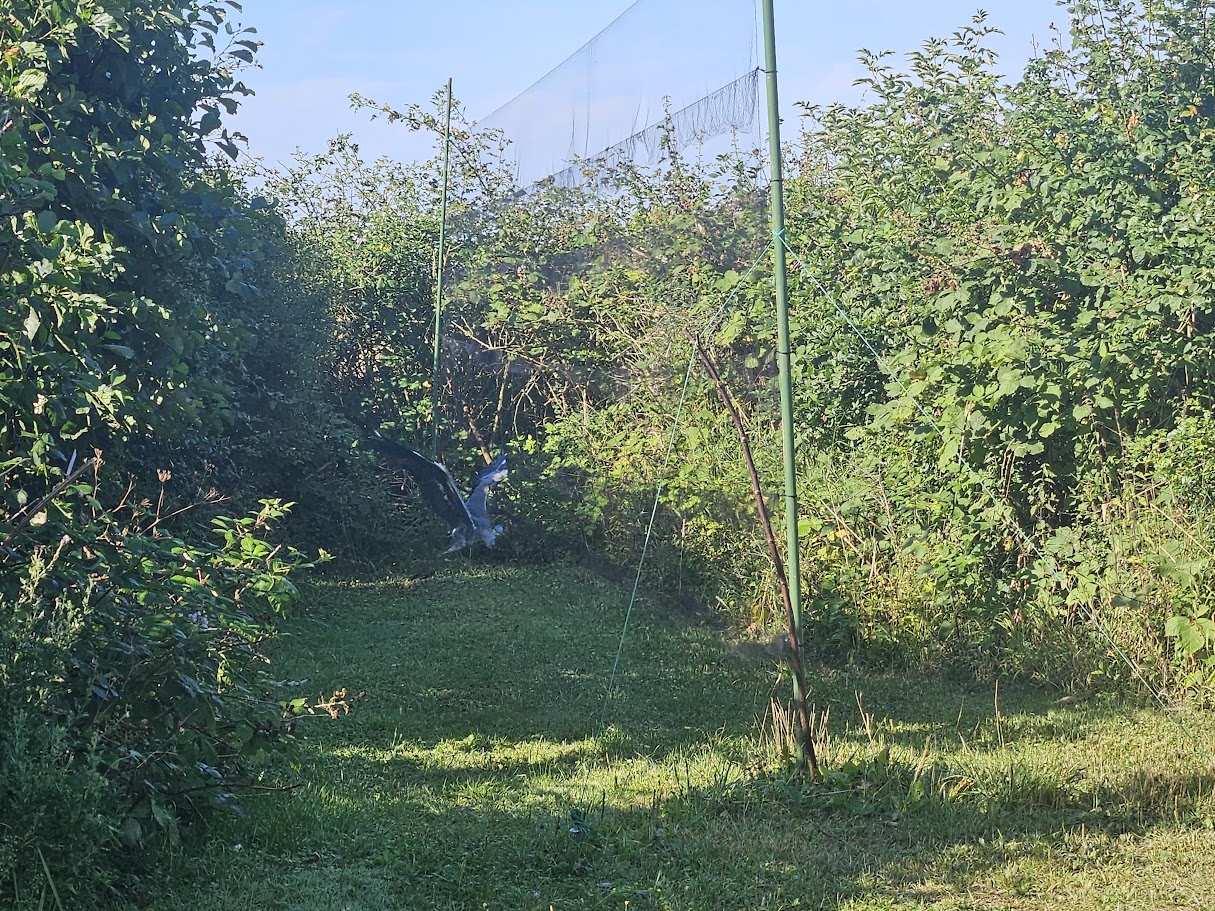
Næsten en fiskehejre i standardmærkningen.
Da standardringmærkningen sluttede og data var blevet indtastet, åbnede vi nettene vi har på engen lige uden for haven, for at forsøge at fange svaler. Med lydafspilning kunne vi lokke dem til at flyve lavt over engen, men trods disse forsøg, var svalerne simpelthen for intelligente eller hjemmevante her - de satte sig oven på nettenes øverste snor på række.
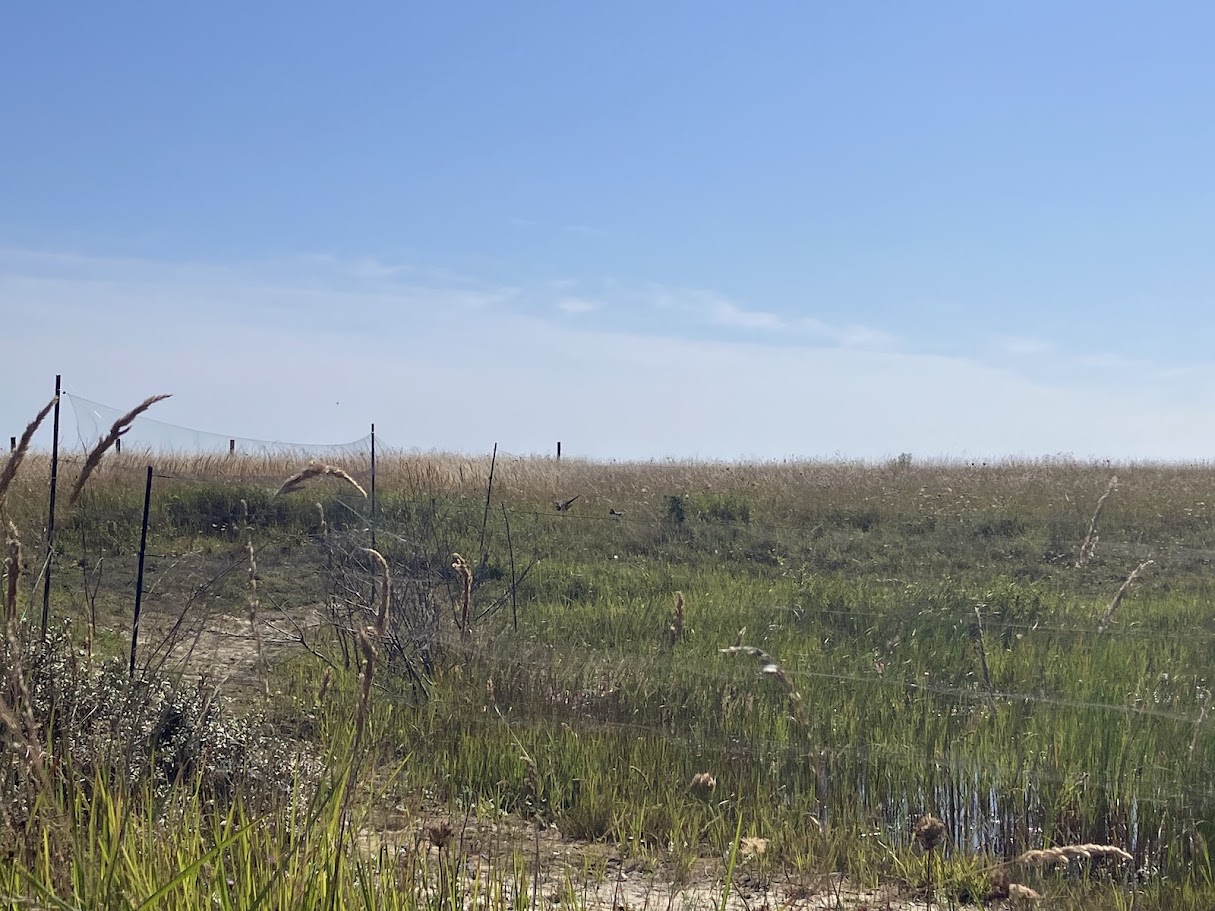
Landsvaler på række på netsnoren.
Dagens fangst
Net op: 05:00, Net ned: 10:00, Netmeter: 278
Jernspurv / Dunnock / Prunella modularis 1
Rørsanger / Common Reed Warbler / Acrocephalus scirpaceus: 2
Gulbug / Icterine Warbler / Hippolais icterina: 3 (1)
Gærdesanger / Lesser Whitethroat / Curruca curruca: 4 (1)
Tornsanger / Common Whitethroat / Curruca communis: 2 (2)
Havesanger / Garden Warbler / Sylvia borin: 5 (1)
Munk / Blackcap / Sylvia atricapilla: 1
I alt: 18 mærkninger, 5 genfangster, 23 fugle, 7 arter
På stationen: Storm Hauris Borum, Mathilde Lundt Larsen, Cyann Ménard
Sæsonens anden fluesnapper
Dagen gik rimelig stille for sig med blot 26 nye ringmærkninger sammenlignet med gårsdagens 56. Vi nyder selvfølgelig solskin og varme dage, men et vejrskifte ville være godt for vores fangst. Så bliver trækfuglene nemlig i haven frem for at flyve hen over hovedet på os og direkte videre til Tyskland. Vi havde en pæn samling af de typiske sangere på denne tid, dog med en del flere rør/kærsangere end de seneste par dage. Vi fik også et par lidt mere usædvanlige arter i dag: husrødstjert samt sivsanger og brogede fluesnapper. Sivsangeren og fluesnapperen er begge kun 2. ringmærkning denne sæson. Man kan godt mærke at vi er lige på grænsen til at efterårstrækket rigtig går i gang. For en kort stund kom svalenettene op nede på marken, men vi fik startet lidt sent og fik ikke nogen i denne gang. Vi håber på at vi har mere held med det de næste par dage.
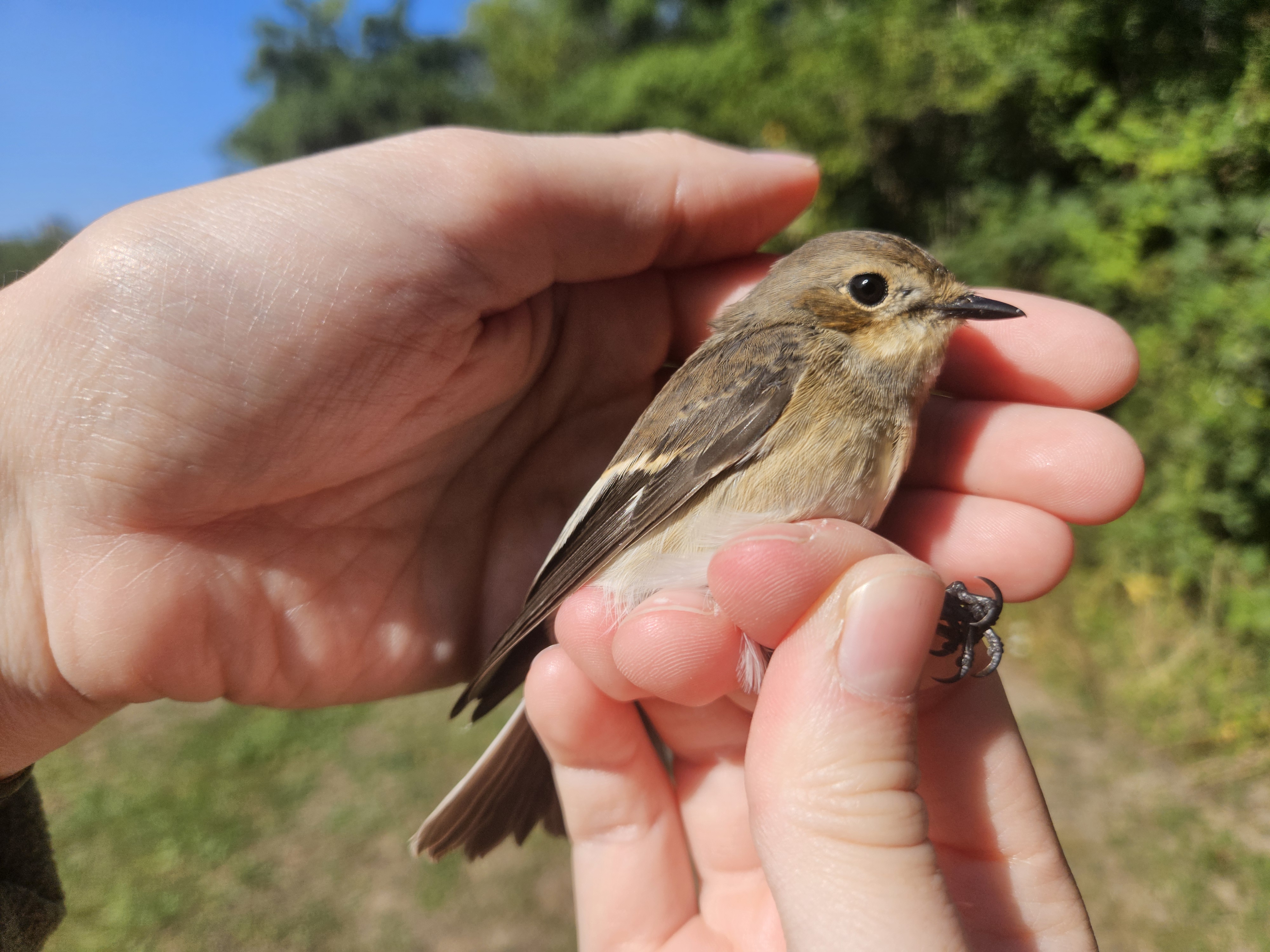
Broget fluesnapper, 1k. Han og hun ligner hinanden som ungfugl, men over vinteren vil hanne skifte sin dragt til den karakteristiske sort-hvide.
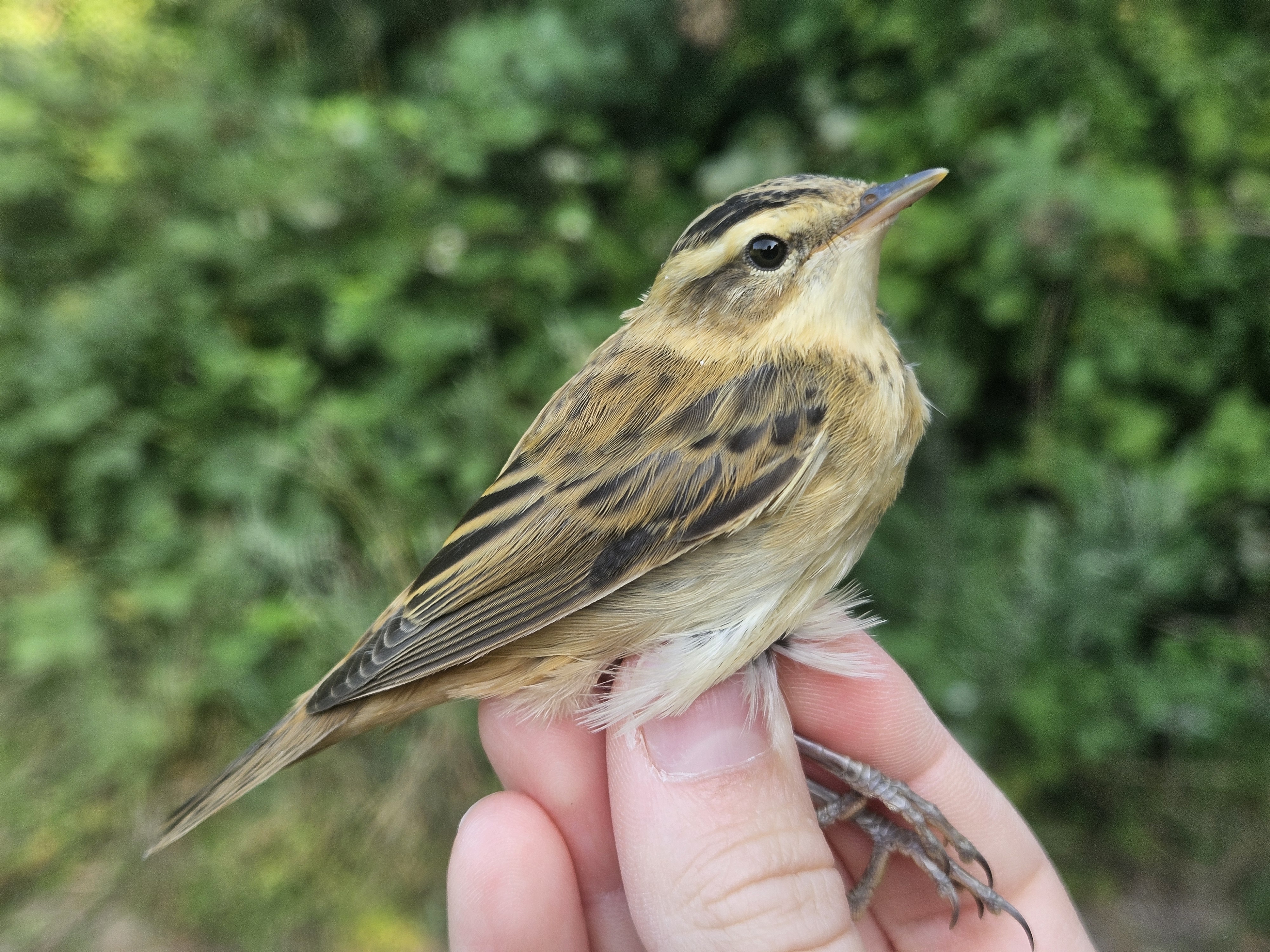 Sivsanger, 1k.
Sommerfuglebusken og kirsebærtræet foran huset har været meget livligt med sangere, der hopper rundt, fanger insekter, synger, og skælder hinanden ud. Det er hyggeligt at følge med i deres drama og se at de mæsker sig i haven tag-selv-bord. Vi har også besøg af en fiskehejre, der går runder i haven og omkring huset.
Eftermiddagen gik med en indkøbstur, vask af fugleposer, og besøg af lidt fuglekiggere, der ledte efter den brogede fluesnapper og forsøgte at fotografere duehale (sommerfugl: Macroglossum stellatarum) på sommerfuglebusken.
Dagens fangst
Net op: 04:30, Net ned: 09:45, Netmeter: 278
Husrødstjert / Black Redstart / Phoenicus ochuros 1
Rødstjert / Common Redstart / Phoenicus phoenicus 1
Sivsanger / Sedge Warbler / Acrocephalus schoenobaenus 1
Kærsanger / Marsh Warbler / Acrocephalus palustris: 3
Rørsanger / Common Reed Warbler / Acrocephalus scirpaceus: 7
Gulbug / Icterine Warbler / Hippolais icterina: 3 (1)
Gærdesanger / Lesser Whitethroat / Curruca curruca: 3 (1)
Tornsanger / Common Whitethroat / Curruca communis: 2 (4)
Havesanger / Garden Warbler / Sylvia borin: 2
Munk / Blackcap / Sylvia atricapilla: (1)
Løvsanger / Willow Warbler / Phylloscopus trochilus: 2
Broget Fluesnapper / Pied Flycatcher / Fidecula hypoleuca 1
Musvit / Great Tit / Parus major: (1)
I alt: 26 mærkninger, 8 genfangster, 34 fugle, 13 arter
På stationen: Storm Hauris Borum, Mathilde Lundt Larsen, Cyann Ménard
Efterårstrækket begynder
Min første ringmærkningsdag her i Gedser gryede med gode forhåbninger. Jeg ankom i går eftermiddag til stationen og skal ringmærke her de næste tyve dage. Jeg har tidligere ringmærket på Blåvand Fuglestation og Ottenby Fågelstation i Sverige. At bidrage til ringmærkningen her og at opleve en sensommer på Danmarks sydligste punkt ser jeg meget frem!
Dagens ringmærkning blev udført af undertegnede, Storm og Hans. Første runde kl. kvart i fem var ikke just imponerende - faktisk hel tom. Hurtigt derefter vendte morgenen dog, da vi fik fugle nok hver runde til at holde os beskæftigede med 56 nye ringmærkede fugle i alt. Vi fik alle fugle i hænderne, og Storm lærer hurtigt håndteringen og fik tilmeldt lært at lukke sin første stålring på dagens fugl - en rødrygget tornskade. Der var også stadig tid til at bemærke og dele detaljer omkring aldersbestemmelse. Efter en sommerpause fra ringmærkningen for mig, var det spændende at komme stærkt tilbage til sådan en god morgen med en fin variation af arter (13 arter) og en god mængde af netop det begyndede efterårstræk. Vi bemærkede til hinanden, at nu er trækket da rigtig begyndt!
Der var mange sangere og den talrigeste art i dag blev gærdesanger med 14 individer. Fuglene har bemærket at brombærene er ved at modnes, så en hel del af dagens fugle var godt smurt ind i bærsaft. Heldigvis er der rigelig at tage af for både fugle og til os, så Storm har samlet en god mængde brombær til en tærte her til eftermiddag.
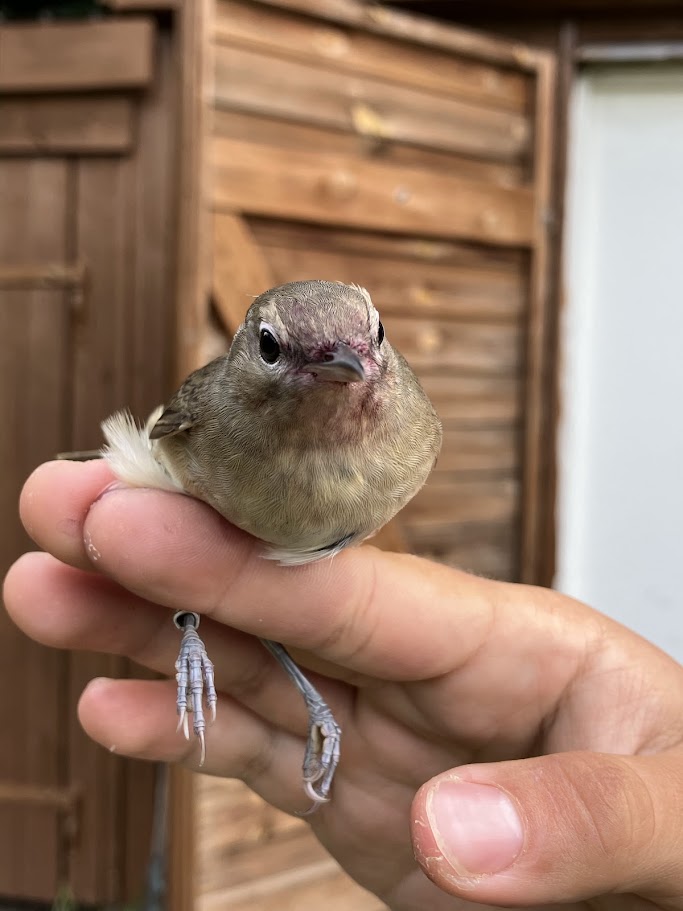
Havesanger med brombærsaft i hele krydderen.
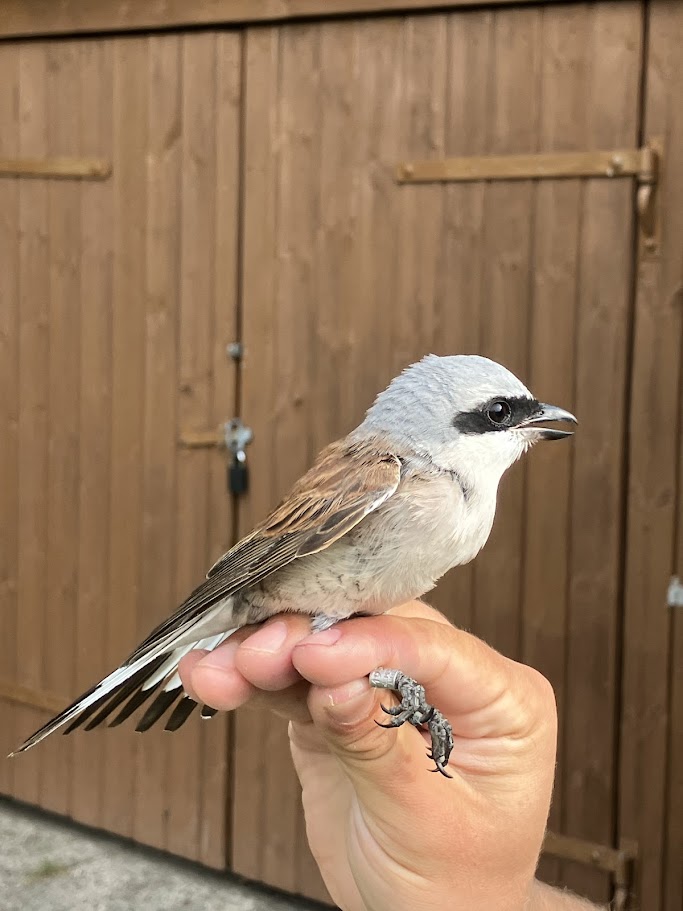
Rødrygget tornskade, 2k+ han.
Ud på eftermiddagen kom solen igennem skyerne, og jeg gik en tur ned til odden med teleskop og blev bekendt med området - der ligger mange ederfugle i mellemform-dragt. Også flot var det at se splitterner langs kysten og digesvaler flyve ind og ud af skræntsiden og over mit hoved.
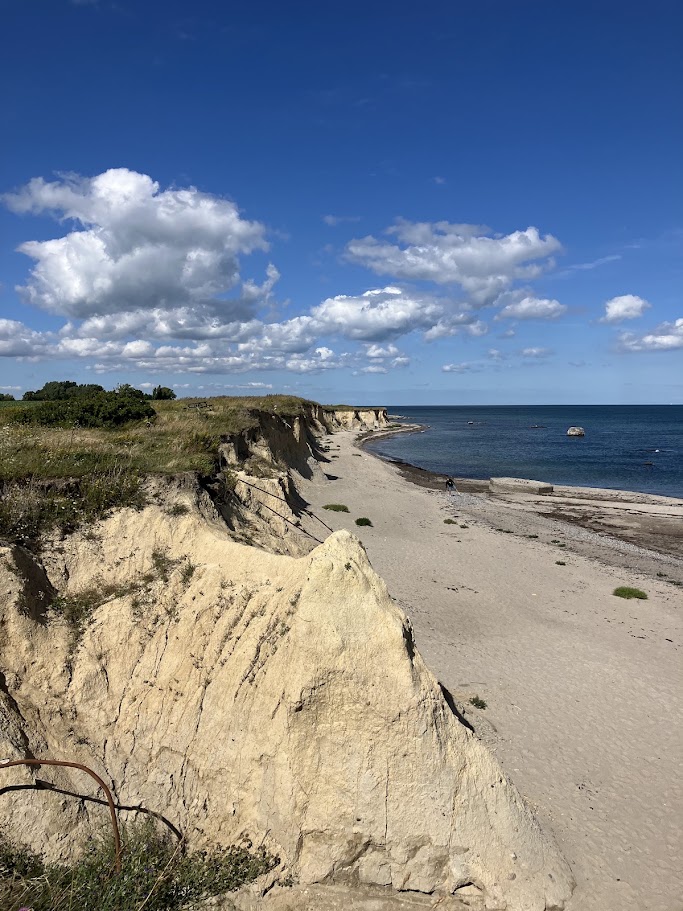
Digesvaler under blå sensommerhimmel.
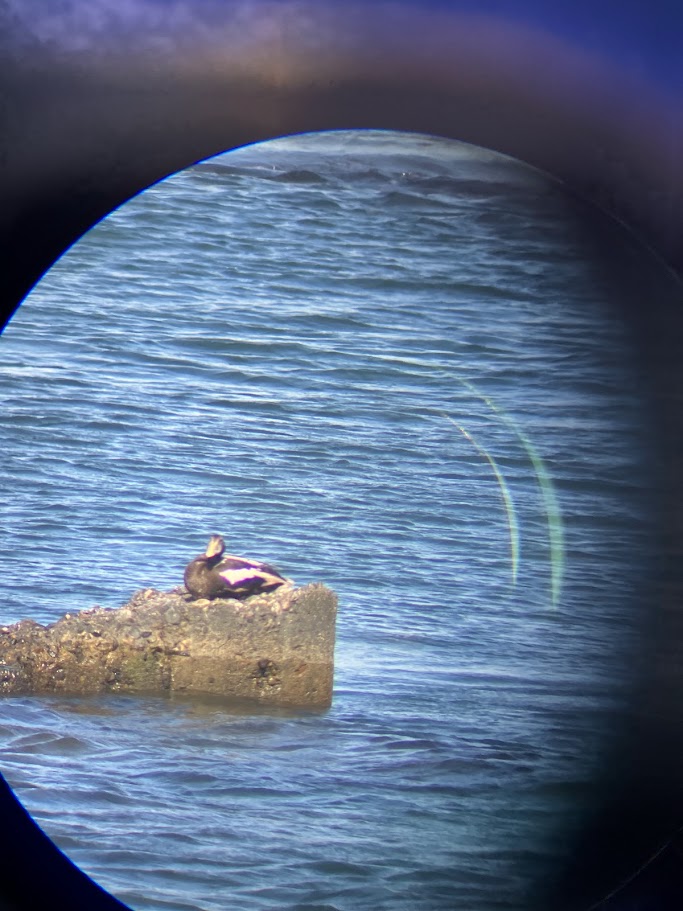
Ederfugl i eclipse-dragt.
Dagens fangst
Net op: 04:30, Net ned: 10:15, Netmeter: 254
Rødstjert / Common Redstart / Phoenicus phoenicus 1
Kærsanger / Marsh Warbler / Acrocephalus palustris: 2
Rørsanger / Common Reed Warbler / Acrocephalus scirpaceus: 1
Gulbug / Icterine Warbler / Hippolais icterina: 6 (4)
Gærdesanger / Lesser Whitethroat / Curruca curruca 14
Tornsanger / Common Whitethroat / Curruca communis: 8 (1)
Havesanger / Garden Warbler / Sylvia borin: 6
Munk / Blackcap / Sylvia atricapilla: 1 (1)
Gransanger / Common Chiffchaff / Phylloscopus collybita: 2 (1)
Løvsanger / Willow Warbler / Phylloscopus trochilus: 13
Musvit / Great Tit / Parus major: (1)
Træløber / Eurasian Treecreeper / Certhia familiaris: 1
Rødrygget tornskade / Red-backed Shrike / Lanius collurio: 1
I alt: 56 mærkninger, 8 genfangster, 64 fugle, 13 arter
På stationen: Storm Hauris Borum, Mathilde Lundt Larsen, Cyann Ménard, Hans Lind
Styr på sangerne
En fin dag på fuglestationen efter et ordentligt tordenvejr hen over natten. Jeg var heldigvis allerede gået i seng før det værste torden begyndte (Vi skal jo op kl. 4 på denne tid af året!). Amanda tog hjem i går for at tage på ferie og jeg var derfor med Hans rundt i haven. Det blev en sanger-dag, udover et par rødstjert og genfangst af musvitter ringmærket her i haven. Igen var det en god omgang gulbug (Hippolais icterina), gærdesanger (Curruca curruca), og tornsanger (Curruca communis). Det gav god øvelse i aldersbestemmelse, hvilket kan være den mest udfordrende del af ringmærkningen. Hans havde nogle gode råd til greb og jeg begynder at få godt styr på fuglene, selv når de spræller meget. Det er begyndt at gå en del hurtigere end bare for én dag siden.
Dagens fugl var en 1k (ungfugl) sivsanger, som tog lidt tid at bestemme korrekt, men som blev afsløret af sin varme rødbrune overgump.
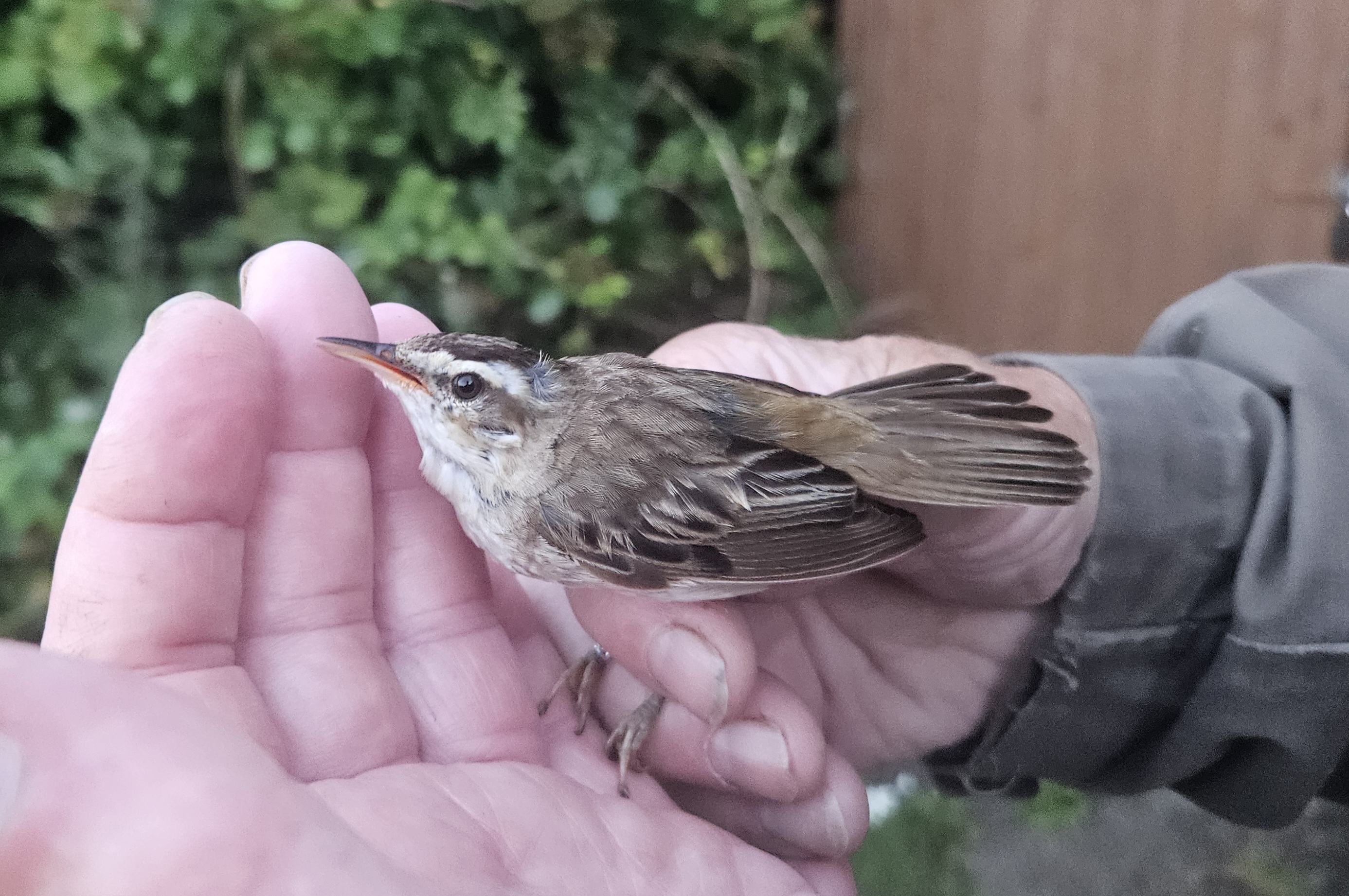
Sivsanger 2k+, med tydelig varm brun overgump
Til eftermiddag kom Mathilde for at tage over som hovedringmærker. Hun har tidligere været på Blaavand fuglestation, men det er første gang i Gedser. Derfor er Hans med i morgen for at vise hende rundt i haven og labbet. Cyann er også ankommet i dag for at arbejde videre på sit speciale om edderfugletræk og hjælpe til med træktællingen.
Dagens fangst
Net op: 04:45, Net ned: 10:15, Netmeter: 265
Rødstjert / Common Redstart / Phoenicus phoenicus 3
Sivsanger / Sedge Warbler / Acrocephalus schoenobaenus 1
Kærsanger / Marsh Warbler / Acrocephalus palustris: 1
Rørsanger / Common Reed Warbler / Acrocephalus scirpaceus: 3
Gulbug / Icterine Warbler / Hippolais icterina: 7
Gærdesanger / Lesser Whitethroat / Curruca curruca 9 (3)
Tornsanger / Common Whitethroat / Curruca communis: 7 (1)
Havesanger / Garden Warbler / Sylvia borin: 2 (1)
Gransanger / Common Chiffchaff / Phylloscopus collybita: 2
Løvsanger / Willow Warbler / Phylloscopus trochilus: 3
Musvit / Great Tit / Parus major: (2)
I alt: 38 mærkninger, 7 genfangster, 45 fugle, 11 arter
På stationen: Storm Hauris Borum,
Græshoppesanger og flyvemyre-buffet
Endnu en smuk dag på Odden og min tredje dag i oplæring som ringmærker på fuglestationen. Lav vind gjorde det muligt at åbne alle net igen, men det gik ret stille for sig udover én runde med 11 gulbug (Hippolais icterina) og en græshoppesanger (Locustella naevia), som blev dagens højdepunkt. Græshoppesangeren er kendetegnet med sin flotte stribede fjerdragt og vifteformede hale med tykke striber på underhaledækfjerene. Den er sjælden at se i felten, da den ofte sidder godt gemt blandt i højt græs og tætte buske, men kan nogle gange høres. Dog kan den også forveksles med insekter, da sangen er en lang rullende trille, ligesom en græshoppe. I dag fik jeg også ringmærket min første gransanger, løvsanger, og en helt ung jernspurv, som lige var fløjet fra reden. På sidste runde fik vi besøg af én fra DOF Ung, som fik overværet ringmærkning af tornsanger og jernspurv.
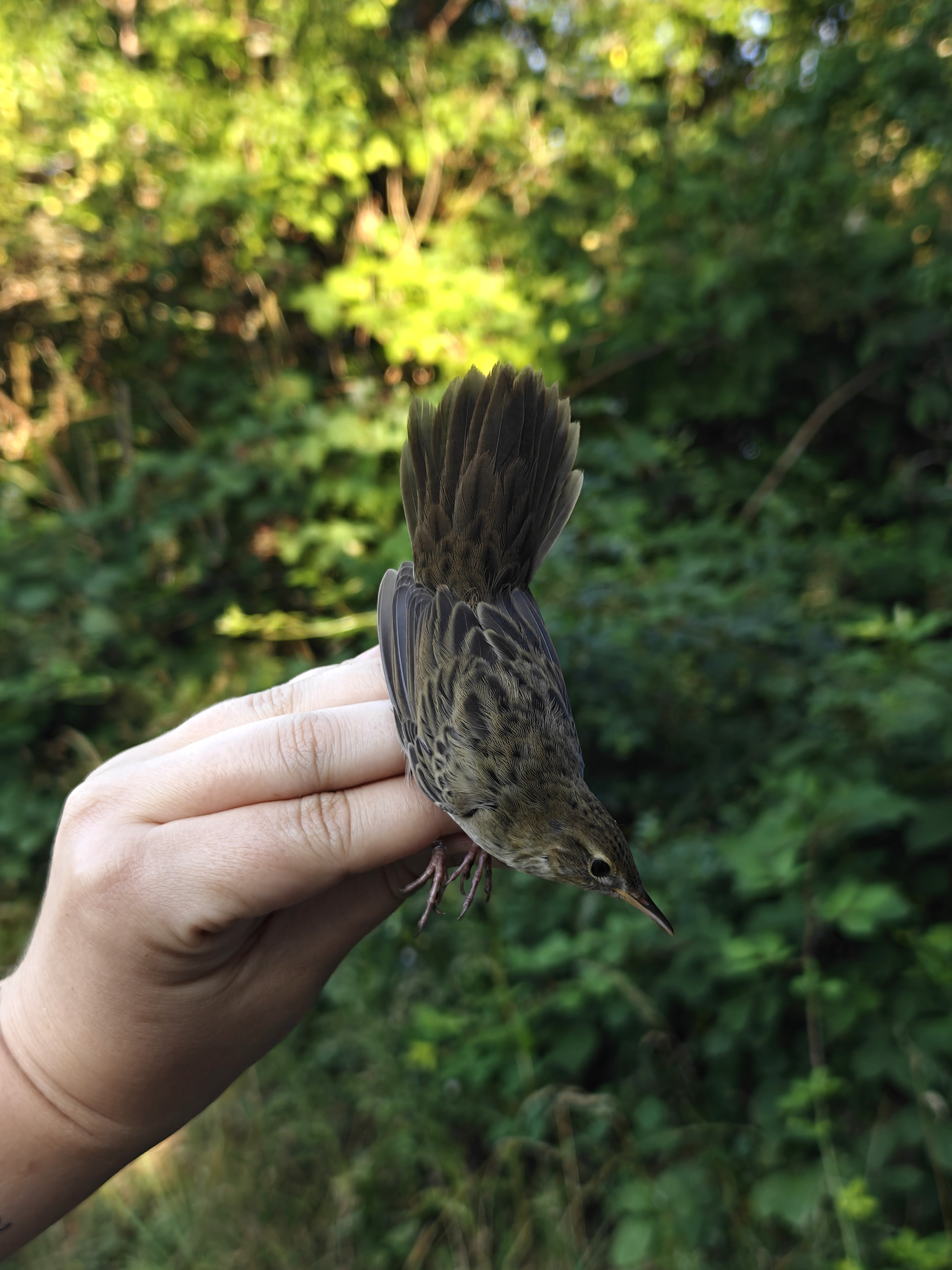
Græshoppesanger 1k
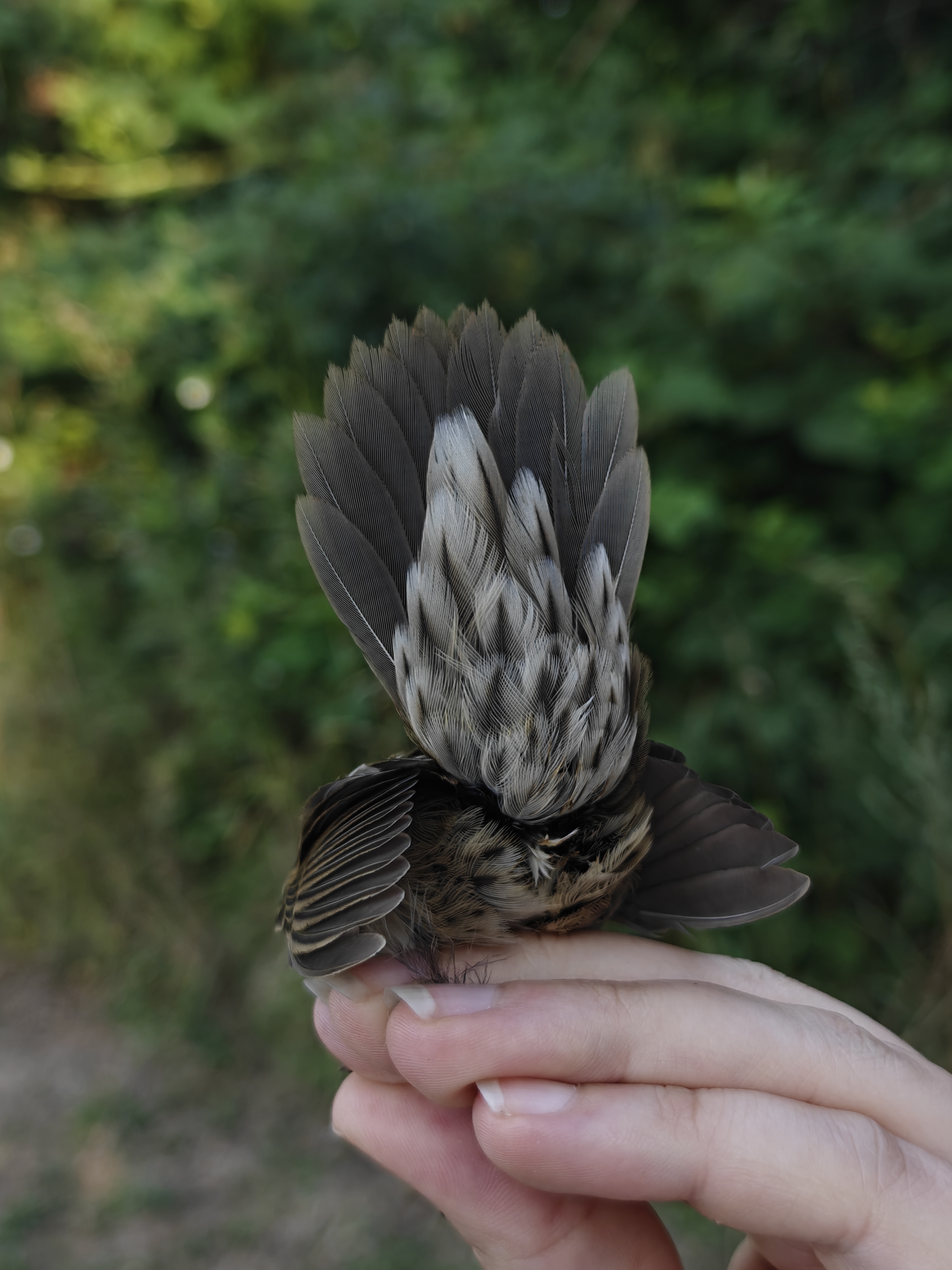
Græshoppesanger 1k, bagfra
Det er fedt at se den store insekt-diversitet her på fuglestationen. Det gode vejr bragte i dag flere sværme af flyvemyrer rundt om i haven til stor glæde for den store flok svaler, vi har flyvende omkring stationen, samt en masse måger, der kredsede i flere timer. En sværm af flyvemyrer tæt på huset gjorde at svalerne var meget lavtflyvende og en enkelt ungfugl var på et tidspunkt nær fløjet ind af døren. Myretuerne producerer (ofte synkront) et stort antal af bevingede hanner og dronninger, for at øge chancen for at der er nogle der overlever angrebet af fugle og andre insektædere og kan formere sig. Desværre bragte en google-søgning næsten udelukkende resultater om skadedyrsbekæmpelse og pesticider, men ikke meget om biologien bag myrenes parringsflugt. En øko-venlig bekæmpelse kunne jo være at man tiltrak en masse svaler til at yngle på sin grund :)
Derudover var der hele 3 duehaler (Macroglossum stellatarum) på sommerfuglebusken i dag, og jeg så en stor pileborerlarve (Cossus cossus), som søgte et sted at grave sig ned og forpuppe sig.
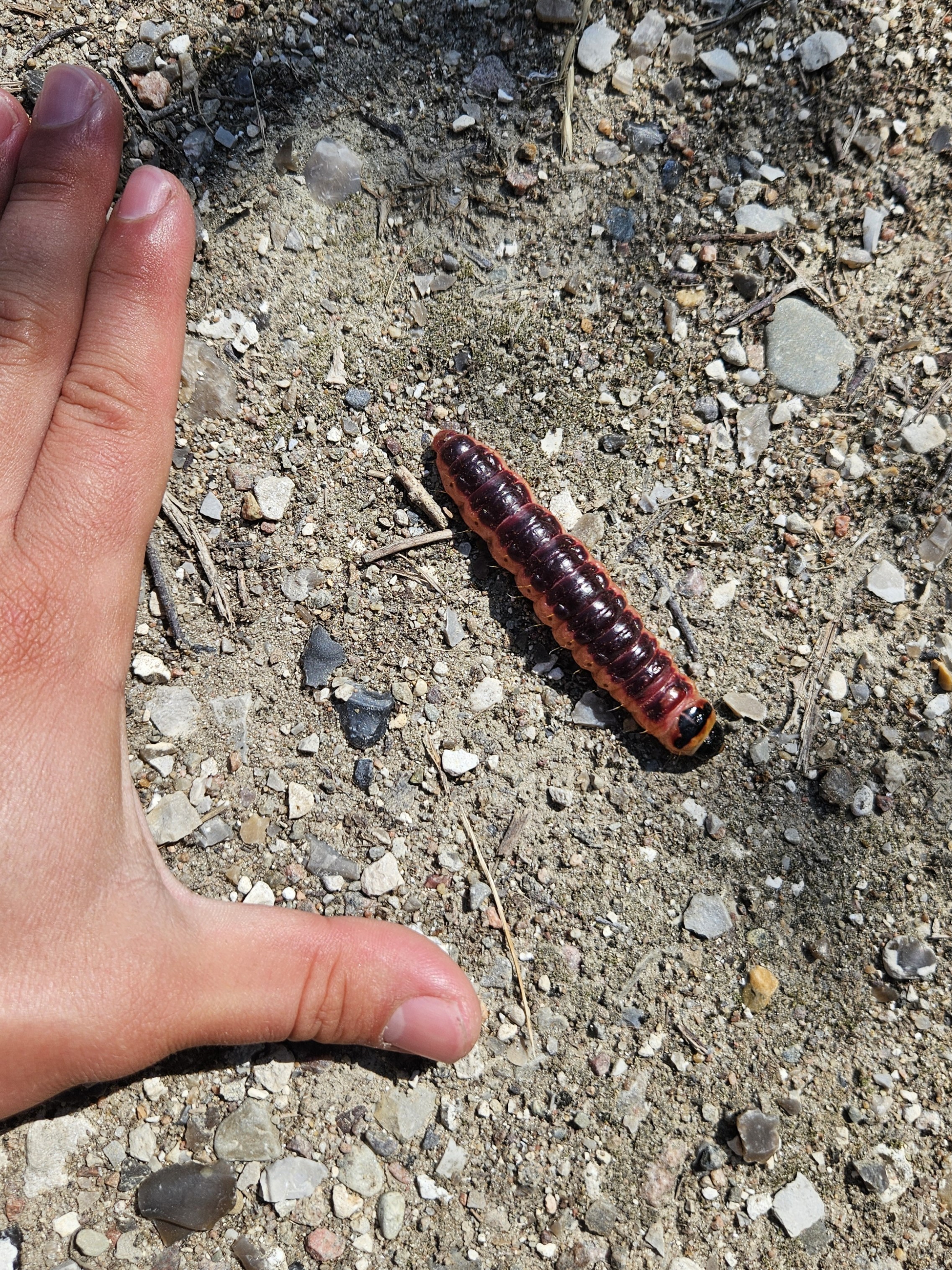
Pileborerlarve, ca. 8 cm!
Dagens fangst
Net op: 04:45, Net ned: 09:45, Netmeter: 253
Jernspurv / Dunnock / Prunella modularis 1
Græshoppesanger / Grashopper Warbler / Locustella naevia 1
Kærsanger / Marsh Warbler / Acrocephalus palustris: 1
Rørsanger / Common Reed Warbler / Acrocephalus scirpaceus: 1
Gulbug / Icterine Warbler / Hippolais icterina: 15
Tornsanger / Common Whitethroat / Curruca communis: 2
Havesanger / Garden Warbler / Sylvia borin: (1)
Munk / Blackcap / Sylvia atricapilla: 1
Gransanger / Common Chiffchaff / Phylloscopus collybita: 1
Løvsanger / Willow Warbler / Phylloscopus trochilus: 1
Musvit / Great Tit / Parus major: (1)
I alt: 24 mærkninger, 2 genfangster, 26 fugle, 11 arter
På stationen: Amanda Johannisson, Storm Hauris Borum
Gang i fuglene efter vinden har lagt sig
Vindes havde lagt sig i morges, så vi kunne åbne næsten alle net. Først gik det lidt stille til og vi havde god tid til at kigge på hver fugl mens Amanda viste mig alle de detaljer der skal overvejes når man beslutter art og alder. Selvom jeg allerede synes det går hurtigere med at ekstrahere fuglene, har jeg hurtigt lært at det er noget helt andet at identificere en fugl i hånden end i felten (og at der findes rigtig mange arter af sangere jeg kun har hørt og aldrig har tænkt over hvordan ser ud!). Højdepunktet for mig var at jeg fik ringmærket en korttået træløber (Certhia brachydactyla), én af mine absolut yndlingsfugle.
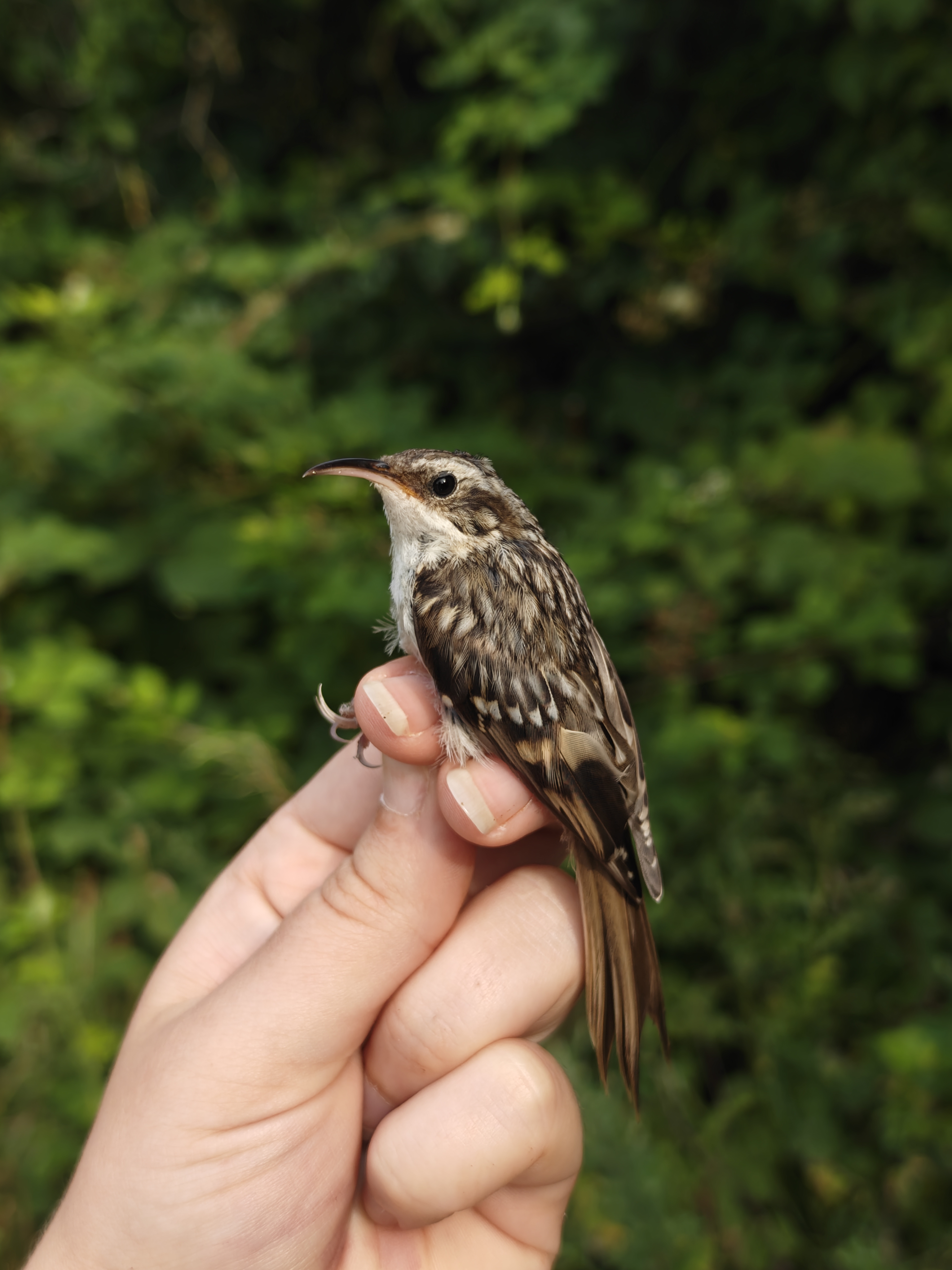
Korttået Træløber, 1k
Som morgenen skred frem, kom der dog pres på og der var rigtig gang i både gulbug og gærdesanger. Derfor måtte jeg sidde over et par runder mens Amanda fik gennemgået fuglene hurtigt og effektivt. Der var ingen tid til kaffepauser mellem runderne! Det var en stor ændring fra i går og vi endte også med at få hele 51 fugle i nettene. Vi havde i går set flere rødstjert omkring fuglestationen og håbet på der fjøj én i nettet. I dag var vi heldige og fik ikke kun ringmærket rødstjert, men endda også en husrødstjert. Af de to unge rødstjert fik vi en ung han, der var ved at få sin voksenfjerdragt med begyndelsen på en sort strube og rødt bryst. Husrødstjerten var også en ungfugl men nem at kende på sin mørkere fjerdragt.
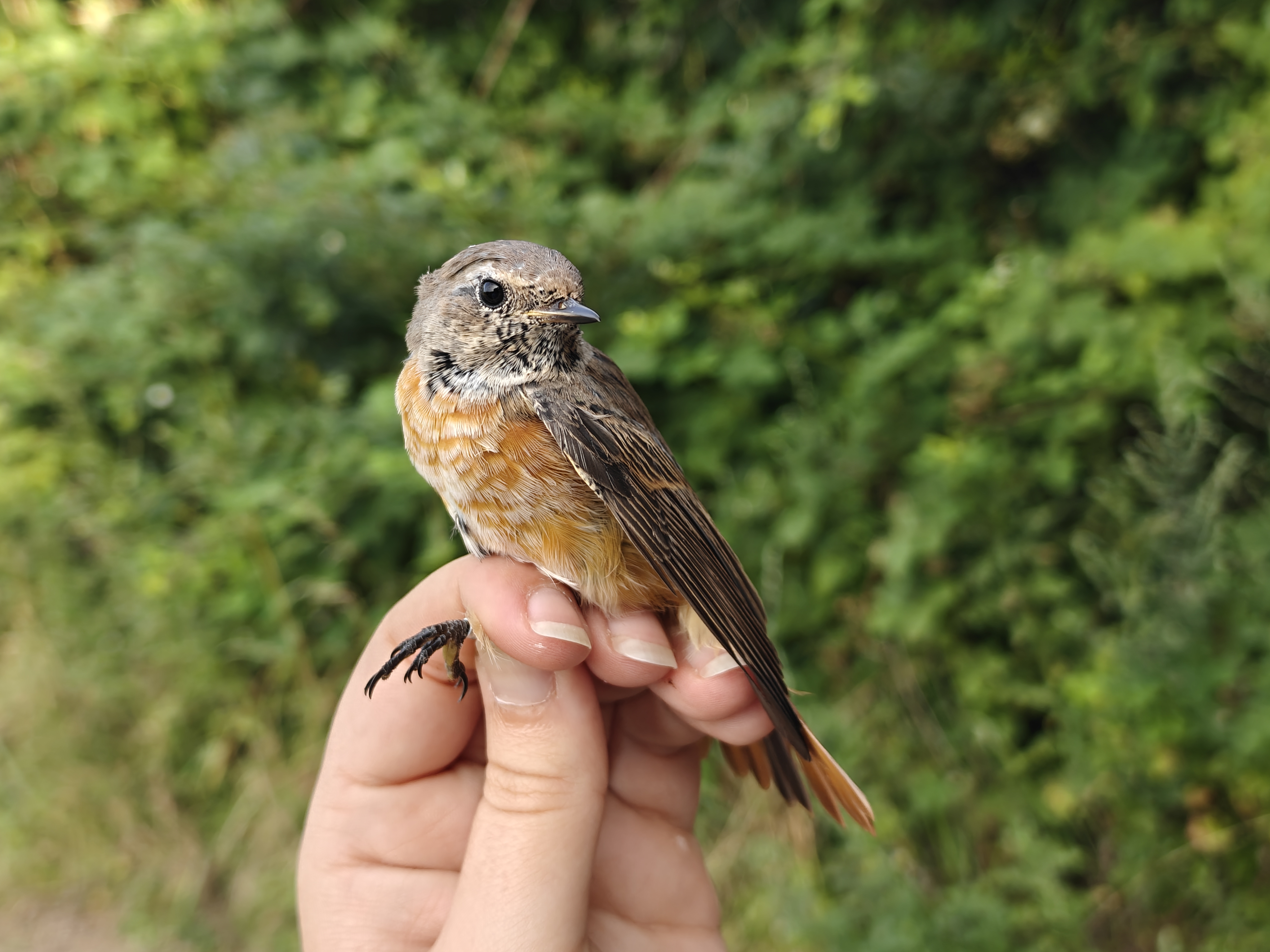
Rødstjert (han) 1k, med begyndelsen på adult fjerdragt
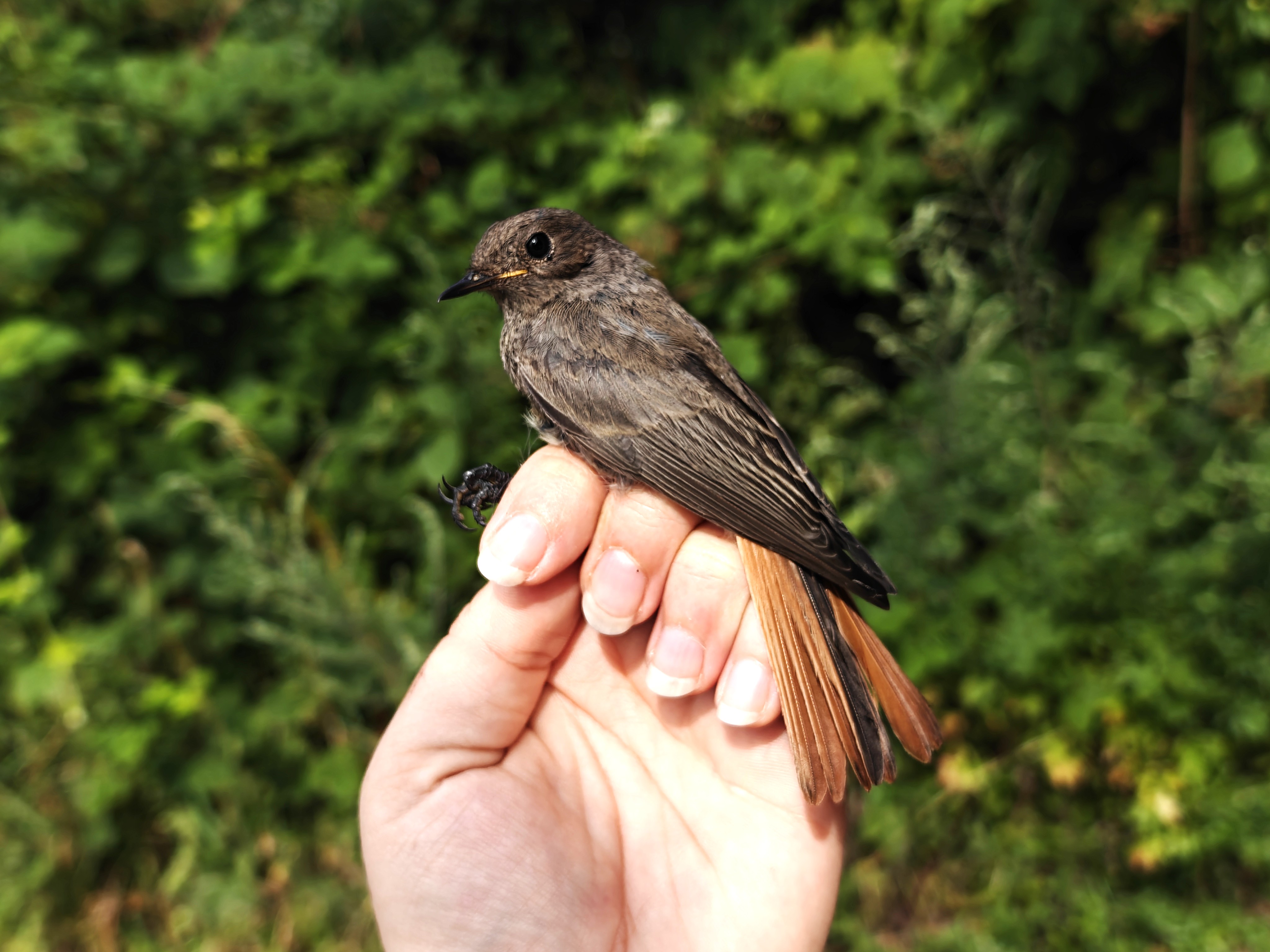
Husrøstjert 1k, med mørk fjerdragt
Om formiddagen fik vi besøg af en gruppe børn fra området til arrangementet Aktiv Sommer, hvor de kiggede på insekter og andre smådyr omkring fuglestationen. Der blev med stor begejstring fanget sommerfugle fra sommerfuglebusken, græshopper og edderkopper fra marken, og natsværmere fra en lysfælde i nat. Det lykkedes endda at fange en Duehale (Macroglossum stellatarum), en virkelig imponerende men rimelig sjælden sommerfugl, der svæver som en kolobri med hurtige vingeslag og den lange snabel nede i blomsterne.
Vi nyder det dejlige vejr ved fuglestationen og håber det holder ved!
Dagens fangst
Net op: 04:45, Net ned: 10:00, Netmeter: 253
Husrødstjert / Black Redstart / Phoenicurus ochruros: 1
Rødstjert / Common Redstart / Phoenicurus phoenicurus: 2
Solsort / Common Blackbird / Turdus merula: 1
Kærsanger / Marsh Warbler / Acrocephalus palustris: 3
Rørsanger / Common Reed Warbler / Acrocephalus scirpaceus: 1
Gulbug / Icterine Warbler / Hippolais icterina: 10
Gærdesanger / Lesser Whitethroat / Curruca curruca: 13
Tornsanger / Common Whitethroat / Curruca communis: 4
Havesanger / Garden Warbler / Sylvia borin: 2
Munk / Blackcap / Sylvia atricapilla: (1)
Gransanger / Common Chiffchaff / Phylloscopus collybita: 2
Løvsanger / Willow Warbler / Phylloscopus trochilus: 4
Blåmejse / Eurasian Blue Tit / Cyanistes caeruleus: (2)
Musvit / Great Tit / Parus major: 1 (3)
Korttået Træløber / Short-toed Treecreeper / Certhia brachydactyla: 1
I alt: 45 mærkninger, 6 genfangster, 51 fugle, 15 arter
På stationen: Amanda Johannisson, Storm Hauris Borum
Deja-vu og ny mærkningsart
Igår eftermiddag ankom Storm, som skal være på stationen til slut september og dermed tager hul på sin oplæring som ringmærker under mig. Storm har en naturvidenskabelig baggrund og har erfaring med feltarbejde, der blandt andet har involveret at assistere ringmærkning af fugle i udlandet. Her i Gedser fik Storm idag sat ring på sin første fugl under dagens ringmærkningsindsats.
Heldigvis så vejrudsigten noget bedre ud end igår, og vi kunne derfor åbne net til normal tid. Nettene stod åbne kl. 04.45 på slaget, og knap en halv time senere var vi igang med dagens strabadser. Efter at have overværet processen af både at tage en fugl ud af spejlnet, samt få den ringmærket, artsbestemt, aldersbestemt, målt og vejet kastede jeg Storm ud på dybt vand. Man lærer jo ikke at blive ringmærker hvis man ikke får en fugl i hånden! Derfor kunne han forsøge sig med sin aller første udtagning fra net - en tornsanger - og efterfølgende sin første mærkning - en gulbug. Klassisk Gedser i juli, og rigtig flot klaret af Storm!
Morgenen forløb godt, roligt og med en perfekt mængde fugle til at kunne bruge tid på at lade Storm håndtere fuglene i hans tempo, samtidig med at han blev belært med en masse teori om aldersbestemmelse (som man jo gør når man alligevel sidder med fuglen). Der blev også tid til et par tiltrængte pauser fra den dybe koncentration.
Højdepunktet for mig var, ud over Storms glimrende første dag som ringmærker, at jeg ENDELIG fik ringmærket min første Nattergal (Luscinia luscinia). Ja, med syv år som ringmærker bag mig har jeg simpelthen præsteret ikke at ringmærke en Nattergal selv - jeg gav ved en fejl et individ væk for to år siden og har ellers kun fanget allerede ringmærkede individer. Ja, jeg har endda formået at ringmærke arter som Høgesanger, Sorthovedet Måge og Toppet Skallesluger FØR jeg ringmærkede Nattergal. Så må I selv tænke om mig hvad i vil ;)
Dagens tal måtte lige dobbelttjekkes, da de lignede gårsdagens totaler uhyggeligt meget. Endnu en gang sluttede vi på 13 fugle, denne gang fordelt på 6 arter.
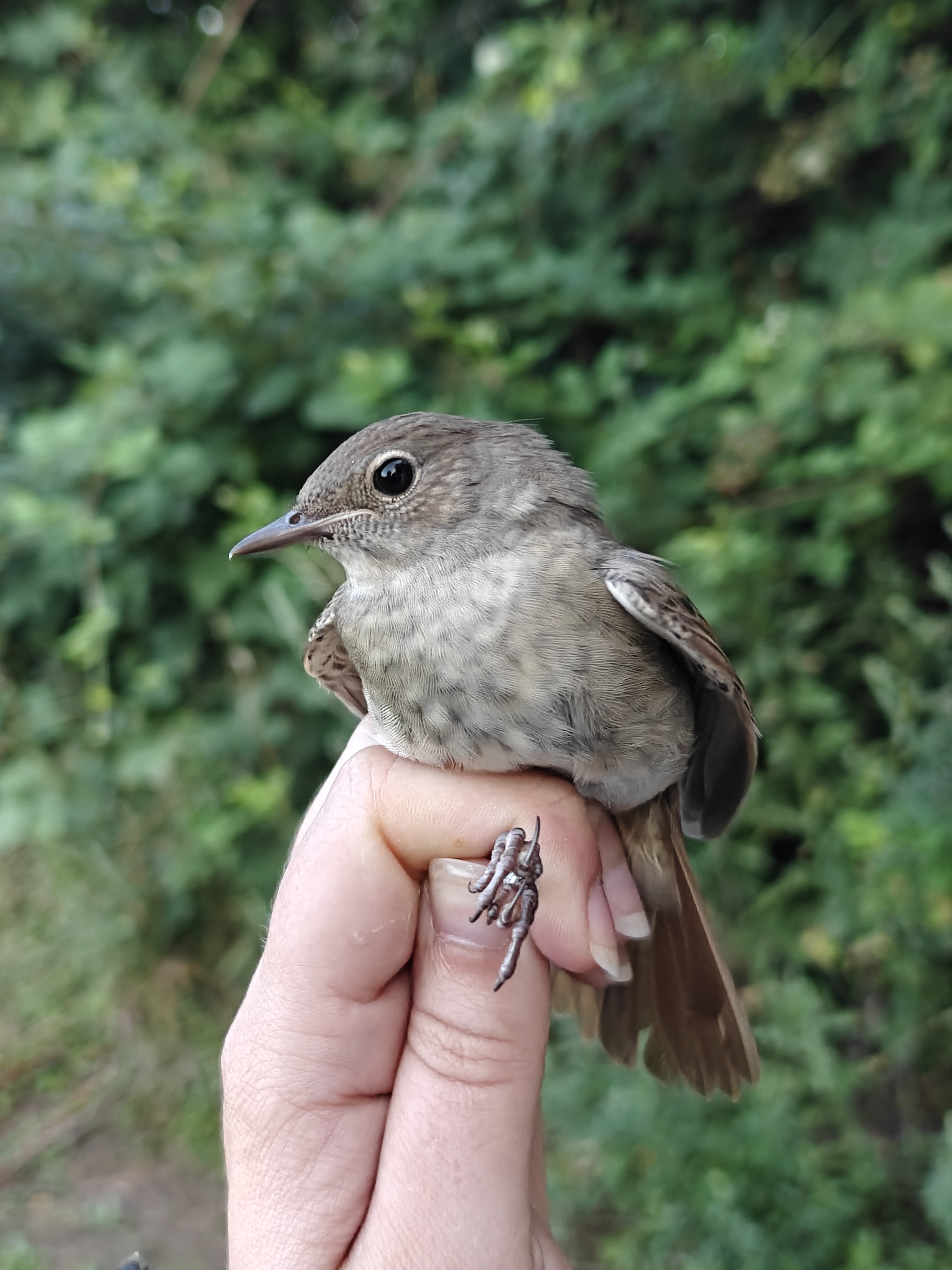
Nattergal, 1k, længe ventet ny mærkningsart for Amanda
Efter endt ringmærkning fik vi besøg af Hans, der naturligvis lige skulle hilse på, og derudover gøre klar til arrangementet Aktiv Sommer imorgen. Kort tid efter kom Gert trittende med lille Tulle, og vi fik en kop kaffe i solen med insekter fra sommerfuglebusken sværmende om os - dejligt det stadig er sommer! Storm benyttede eftermiddagen til at tage på opdagelse i nærområdet, imens jeg fik arbejdet så snart mænderne var smuttet hjem igen.
Dagens fangst
Net op: 04:45, Net ned: 09:45, Netmeter: 213
Nattergal / Thrush Nightingale / Luscinia luscinia: 1
Gulbug / Icterine Warbler / Hippolais icterina: 3 (1)
Gærdesanger / Lesser Whitethroat / Curruca curruca: 1 (1)
Tornsanger / Common Whitethroat / Curruca communis: 2 (2)
Munk / Blackcap / Sylvia atricapilla: (1)
Musvit / Great Tit / Parus major: (1)
I alt: 7 mærkninger, 6 genfangster, 13 fugle, 6 arter
På stationen: Amanda Johannisson, Storm Hauris Borum